
By Shumo Chu
0
Share
Newsweek is a Trust Project member
See more of our trusted coverage when you search.Prefer Newsweek on Googleto see more of our trusted coverage when you search.
An opposition party in the nation of Georgia made waves recently when it promised to implement a blockchain-based national voting system. If implemented, the program would use zero-knowledge (ZK) technology—which allows blockchain networks to verify that information is true without revealing the information itself—to confirm voters' identity and record their anonymous votes.
The party went down in a controversial defeat, but its pledge is indicative of a burgeoning wave of blockchain adoption on the part of governments and large institutions around the world. From El Salvador to the United States, national authorities are increasingly moving to incorporate blockchains into the basic functioning of society.
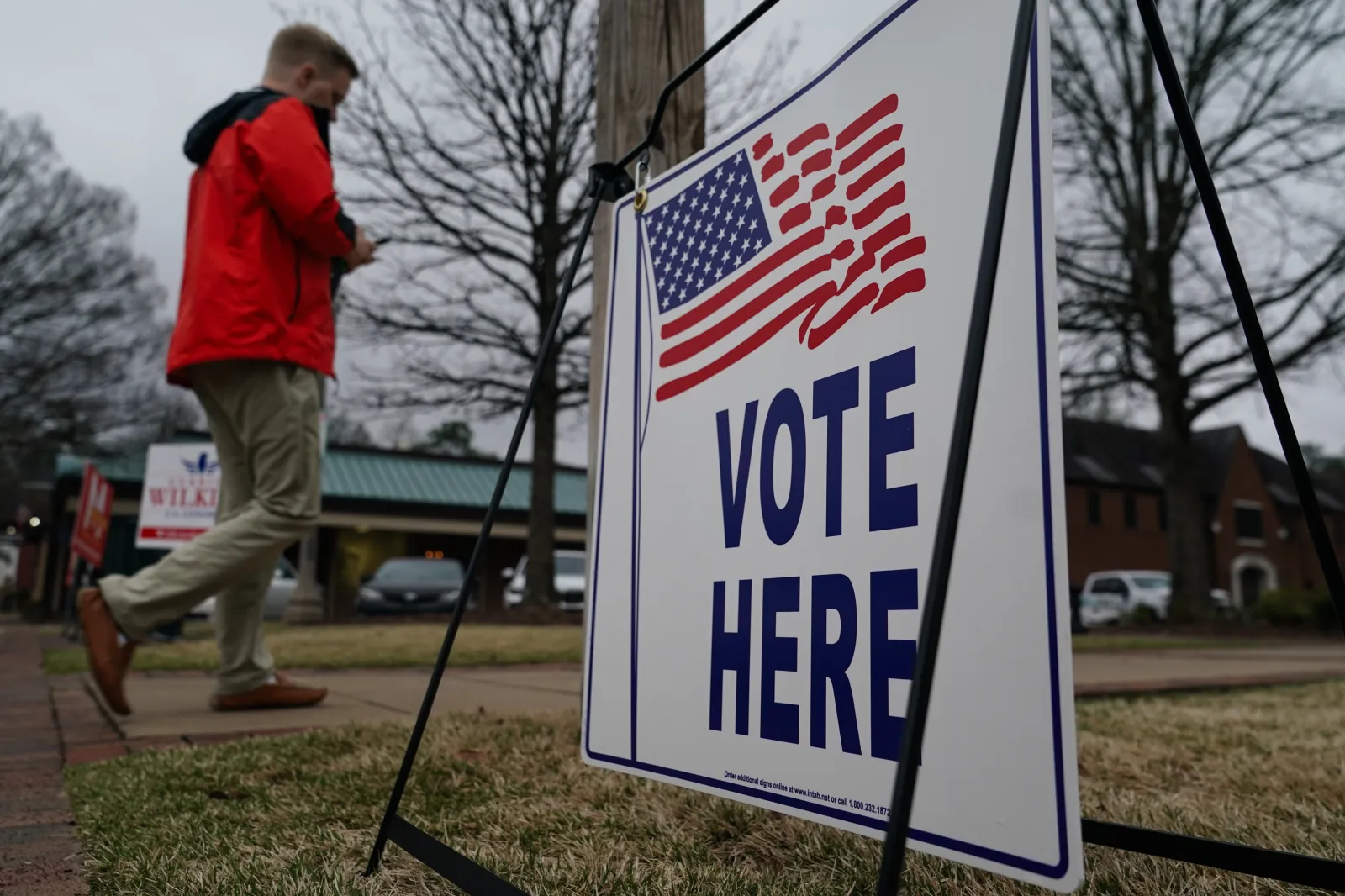
ZK technology could transform how we protect our sensitive information online. Imagine being able to prove your age at a bar without showing your ID, verify that you qualify for a loan without revealing your exact salary or vote in an election without leaving any record that ties your identity to your choice. ZK technology makes all this possible. But for it to succeed, it needs to be as easy to use as tapping your phone to pay for coffee.
Read More on Essays
...
ZK's first big rollout could be make-or-break. A successful debut could pave the way for its adoption in areas ranging from finance to social media to public governance. But if the experience is subpar—if users encounter slowdowns, technical glitches or privacy issues—the public could quickly write off the technology entirely.
Blockchain developers and entrepreneurs must be clear-eyed about what needs to happen for ZK technology to succeed with everyday users. As a technology accelerationist who has spent years working on the problem, I believe success hinges on two critical components: user experience and scalability.
Blockchains Must Be Invisible to the User
The hard truth is that most people still think of blockchains as complex and esoteric—if they think of them at all. People working in crypto often point out the benefits of transparency and immutability that are built into blockchain systems. And it's true that many "eat their own dog food," preferring the Brave browser to Chrome or Firefox, for instance.
But most people in the world prioritize convenience and efficiency over other considerations. If we want blockchains to succeed, we need to offer the seamless experience users expect in addition to the benefits of decentralization.
A notable recent example of this is Polymarket, the decentralized betting market that rose to prominence in the run-up to the November election. People used it because it provided a service they wanted, not because of its underlying technology. Many were not even aware of Polymarket's crypto-native architecture at all.
Think of how you use your phone to pay for things today. The average user doesn't want to think about private keys, gas fees or cryptographic proofs. A ZK-powered voting system should look and feel like any other mobile app. Users scan their ID, verify their identity with a quick biometric scan similar to Apple's Face ID and cast their vote with a single tap. That's it. The privacy-preserving technique and decentralized blockchain should operate entirely in the background.
Call it the Tesla principle: The best way to get people to use something is to provide a superior user experience. It's simple enough as a concept. The trick, as always, is to execute.
Scaling ZK technology to handle millions of transactions—as a national election would require—remains a significant technical challenge. ZK verifications today often require substantial computing power, making them costly and slow. Imagine standing in line to vote, scanning your ID and then waiting for 10 minutes for your vote to be processed.
It's impractical and frustrating—precisely the kind of experience that would turn users against a blockchain voting system before it even gets off the ground. This is why current systems tend toward low security standards such as asking for the first three letters of a person's first and last names. Given a choice between security and speed, most people choose speed.
ZK, though, can provide both.
Protect Privacy Without Compromising Usability
The core function of ZK technology is to prove information without revealing it. In the context of voting, this means allowing citizens to verify their identities without revealing personal details that could compromise their anonymity. There are a number of technical pitfalls here that could threaten privacy if ZK proofs aren't implemented with security in mind.
One major issue is that many current applications require bespoke designs for each specific application. This makes things unnecessarily complicated, like having many different railroad gauges instead of a single standard. Elections, finance, social media—all could benefit from ZK technology, but none requires a perfectly unique infrastructure. The more widely adaptable ZK systems are, the more scalable they will be.
Generalizable solutions allow for efficient operations. This thesis has been proved in prior technological development waves: For instance, central processing units allowed the internet to scale, while graphics processing units make it possible for AI agents to perform multiple rapid calculations in parallel. Developing a general-purpose ZK virtual machine (zkVM) that can handle a variety of use cases would be similarly transformative for blockchains.
A zkVM could make it simple for voting apps, identity databases (such as driver's licenses) and financial infrastructure to all run on the same infrastructure. This flexibility would greatly lower the barrier to adoption for businesses and would provide developers with a ready-made tool kit that could be used for a wide variety of applications.
It should come as no surprise that a number of talented teams are already hard at work to solve these challenges. World's use of biometrics for personhood verification has proved that ZK identity can be as easy as scanning a QR code. Semaphore—whose proofs undergird the World ecosystem—and the Rarimo protocol are doing excellent work as well. Taken as a whole, the sum of the efforts of these groups, and my particular area of focus, is to show the growing power of ZK proofs for secure, anonymous, user-friendly identity systems.
But technology alone isn't enough. Success requires a relentless focus on user experience without compromising on privacy and security. The next few years will be crucial as these systems move from experimental technology to mainstream applications. Those of us building these solutions must remember that ultimate success won't be measured by technical achievements but by whether we can make privacy protection as natural as tapping your phone to pay.
Shumo Chu is one of the co-founders of NEBRA Labs. A former assistant professor at the University of California, Santa Barbara, he obtained his Ph.D. from the University of Washington and was a research scientist at Algorand. His current research interest is privacy-preserving systems.
View 0 Comments
Submit Correction
View Editorial & AI Guidelines