...

By Theo Burman
Live News Reporter
0
Share
Newsweek is a Trust Project member
See more of our trusted coverage when you search.Prefer Newsweek on Googleto see more of our trusted coverage when you search.
With the 2024 YR4 asteroid scheduled to near Earth by 2032, several methods of averting a collision have already been proposed.
The asteroid, being monitored by multiple space agencies across the world, is about 90 meters in diameter.
Newsweek contacted the European Space Agency for more information on the asteroid's timeline.
Read More on News
Why It Matters
The YR4 asteroid is currently the most dangerous space object near Earth, according to NASA, and its impact on the planet would have the same power as a nuclear bomb. While the chance of an impact is low, contingencies will need to be put in place in the event those chances rise.
What To Know
When approached for comment by Newsweek, the European Space Agency provided data indicating that the probability of Earth impact is 2.2 percent.
One solution to a potential impact, proposed by Dr. David Whitehouse, would be to use nuclear weapons to redirect the asteroid away from the planet.
The astronomer told Sky News: "I think this has the potential to be very serious indeed. So, we have to keep a close eye on this object because it could turn out to be the most dangerous thing in space."
...
"It's the highest probability of an impact I can recall. And it has the potential, the possibility for being an emergency for planet Earth."
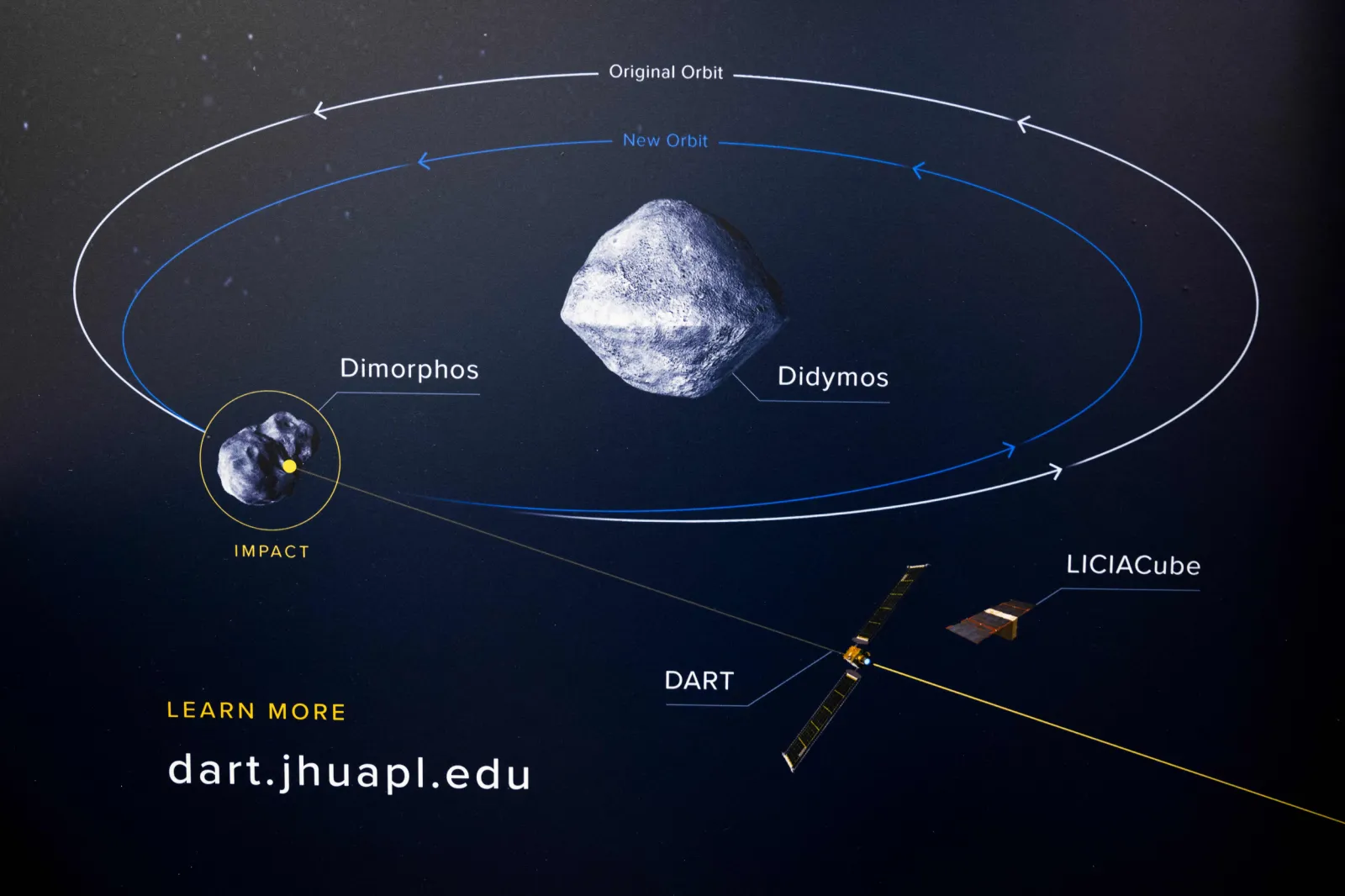
Another potential solution is NASA's Double Asteroid Redirection Test, also known as the DART mission. DART was first used in 2022 to alter the course of an asteroid, using kinetic impactors.
DART was tested on an asteroid that was about 160 meters in diameter, meaning the technology is well placed to be used on YR4, which is smaller.
Commenting on the asteroid's size, which he compared to the size of a soccer pitch, Robert Massey, deputy executive director of the Royal Astronomical Society, told Newsweek that if there was a collision, the asteroid would have the energy of an 8-megaton nuclear bomb. However, he said that there is "at least 98 percent chance that the asteroid won't hit the Earth.
"The other thing to bear in mind is that we can deflect these things. If it's done early enough and if we have enough warning, we can divert asteroids."
NASA has theorized that laser ablation could be used to deflect asteroids, though this technology has not been tested. It works by heating up parts of the asteroid enough that it releases gases, propelling it off-course.
What People Are Saying
Robert Massey, deputy executive director of the Royal Astronomical Society, told Newsweek: "I'm not really concerned at all. It's the kind of thing that should concern policymakers and astronomers, particularly, whose job it is to track these things and refine orbits. The odds are very, very low and as observations get better it's very likely that the probability will drop to zero, so I don't think the public should be unduly concerned."
What Happens Next
The European Space Agency is supplying regular updates on the asteroid's movements. It is not expected to near the Earth until 2032.
Do you have a story we should be covering? Do you have any questions about this article? Contact LiveNews@newsweek.com.
View 0 Comments
Submit Correction
View Editorial & AI Guidelines