...


By Daniel Orton and John Feng
0
Share
Newsweek is a Trust Project member
See more of our trusted coverage when you search.Prefer Newsweek on Googleto see more of our trusted coverage when you search.
The United Arab Emirates announced on Tuesday that it will withdraw its remaining forces from Yemen following an ultimatum from Saudi-backed factions, amid a rare public rift between two key U.S. allies in the Gulf.
In a statement, the UAE’s defense ministry said the decision was driven by “recent developments and their potential repercussions on the safety and effectiveness of counter-terrorism operations.” The ministry did not specify a timeline for the withdrawal.
Why It Matters
The clash between two of Washington’s closest Middle East partners threatens to fracture the coalition fighting Iran-backed Houthis and open a new front in Yemen’s decade-long war.
Read More on World
The confrontation also underscores a widening rift between Saudi Arabia and the UAE, two Gulf powers and key U.S. partners long aligned on security and energy but increasingly at odds over regional influence. Their competition has spilled into Yemen, Sudan, and the Red Sea corridor.
What To Know
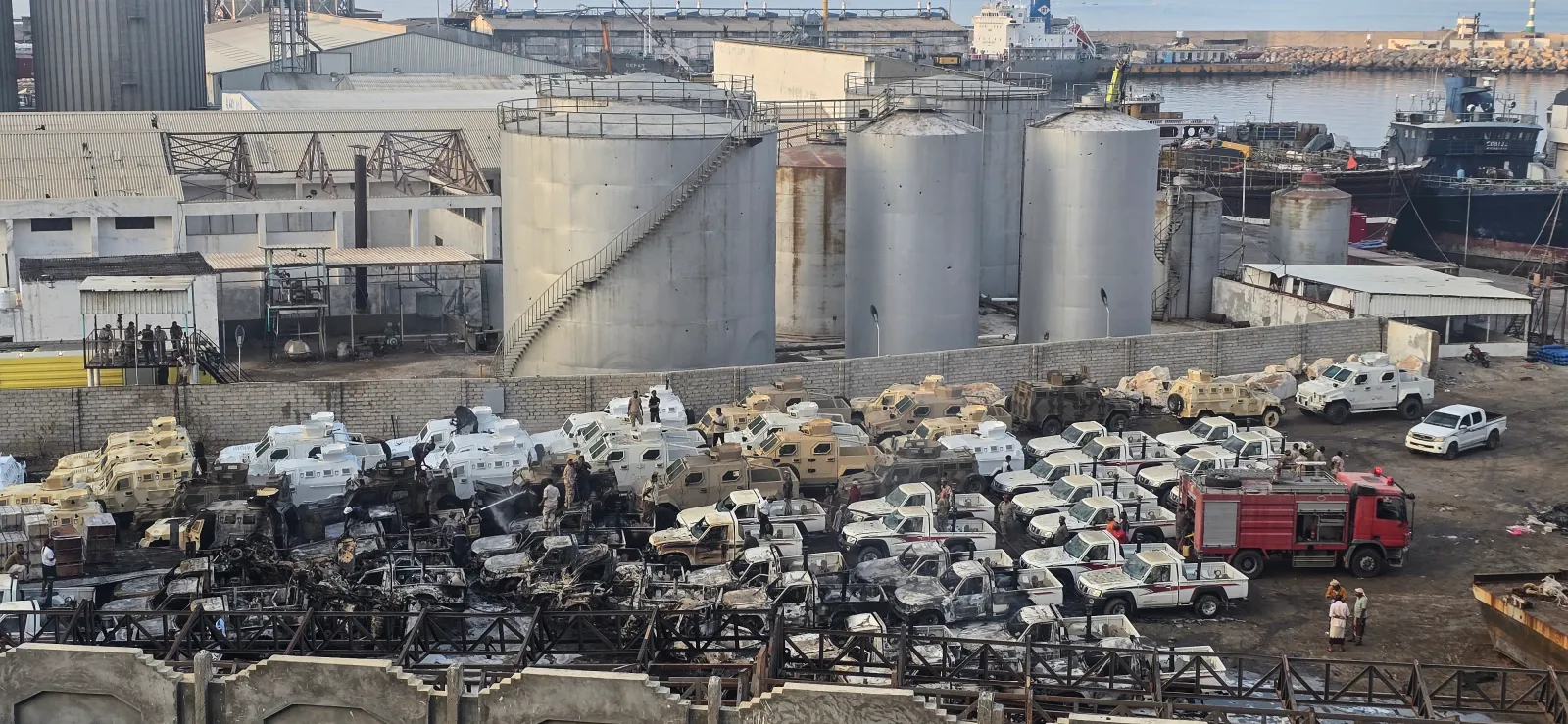
Saudi Arabia launched airstrikes on the Yemeni port of Mukalla on Tuesday after, according to Riyadh, a shipment of weapons and combat vehicles arrived from the UAE to support the Southern Transitional Council (STC)—a separatist force advancing in Yemen’s Hadramout region. The Saudi government labeled these alleged Emirati actions “extremely dangerous.”
The strikes reportedly targeted materiel unloaded from vessels arriving from Fujairah, a port on the UAE’s eastern coast. A statement from the Saudi military shared with the country's state press agency said, “The ships’ crew had disabled tracking devices aboard the vessels, and unloaded a large amount of weapons and combat vehicles in support of the Southern Transitional Council’s forces…
"Considering that the aforementioned weapons constitute an imminent threat, and an escalation that threatens peace and stability, the Coalition Air Force has conducted this morning a limited airstrike that targeted weapons and military vehicles offloaded from the two vessels in Mukalla.”
Surveillance footage aired on Saudi television appeared to show the vehicles moving through Mukalla to a staging area. There were no immediate reports of casualties from the strike.

...
The UAE responded by urging “restraint and wisdom,” while disputing the Saudi allegations, denying it had shipped weapons to separatist forces and stating instead that it had sent vehicles “for use by the UAE forces operating in Yemen.” The Emirati Foreign Ministry claimed that Saudi Arabia was informed of the shipment in advance.
The UAE, however, did not indicate it would withdraw from Yemen as demanded by Saudi-allied Yemeni anti-Houthi forces. These forces declared a state of emergency, ended cooperation with the UAE, and ordered Emirati personnel out of their territory within 24 hours, additionally imposing a temporary ban on border and port entries not pre-authorized by Saudi Arabia.
Recent advances by the STC, which the UAE supports, have increased instability in Hadramout and Mahra, displacing the Saudi-backed National Shield Forces. These moves have led to open calls among some Yemenis for the re-establishment of a South Arabian state, and large public demonstrations. Analysts suggest this confrontation could sharply curtail the flow of weapons into Yemen and spur further consolidation of separatist control.
What People Are Saying
Mohammed al-Basha, an expert on Yemen, said: “I expect a calibrated escalation from both sides. The UAE-backed Southern Transitional Council is likely to respond by consolidating control…At the same time, the flow of weapons from the UAE to the STC is set to be curtailed following the port attack, particularly as Saudi Arabia controls the airspace.”
The Saudi Foreign Ministry directly linked the separatist advances to the UAE, stating: “The kingdom notes that the steps taken by the sisterly United Arab Emirates are extremely dangerous.”
The UAE’s Foreign Ministry said: “These developments raise legitimate questions about how to deal with them and their repercussions, at a stage that requires the highest levels of coordination, restraint and wisdom, taking into account the existing security challenges and threats.”
What Happens Next
The airstrike marks the most serious confrontation between Saudi Arabia and the UAE in decades, raising concerns about the future of their alliance and wider regional stability.
With Yemen’s anti-Houthi coalition fracturing, experts warn this could open a new front in the war, complicating efforts to contain the conflict and address the ongoing humanitarian crisis in Yemen—a country where the war has killed more than 150,000 people and left tens of thousands more at risk from famine and disease.
This article contains reporting by The Associated Press.
Update, 12/30/2025, 8:39 a.m. ET: This article has been updated with additional information.
Update, 12/30/2025, 10:24 a.m. ET: This article was updated with additional information.
View 0 Comments
Submit Correction
View Editorial & AI Guidelines