...

By Nikki Palumbo
0
Share
Newsweek is a Trust Project member
See more of our trusted coverage when you search.Prefer Newsweek on Googleto see more of our trusted coverage when you search.
For eight years, I wrote jokes for robots. I guess you could call me a Turing comedian. (At some point, that’s what my LinkedIn profile said.)
Officially, I was helping shape the personalities of digital assistants, chatbots and AI systems. Practically, I was part of a small group of real, analog humans sitting in conferences rooms debating questions like:
Should we use contractions?
Read More on Essays
How often should it be silly?
If someone says “I love you,” should it respond with warmth or discomfort or, like a few exes, completely change the subject?
One day was spent entirely on whether or not we should say “I’m sorry” or “I apologize.” Verdict: never “my bad” or “oops.” Which sounds pretty ridiculous—until you realize millions of people are hearing that one sentence. And the rest of the sentences we’ve crafted, actually.
...
Most people imagine artificial intelligence as this other-wordly triumph of engineering. And it is. But after nearly a decade working as a veritable AI Cyrano de Bergerac, I’ve become convinced that some of the most important questions in AI aren’t technical at all.
They’re human.
Because every artificial personality is really a collection of human decisions. Someone decides whether the assistant sounds warm or formal. Curious or confident. Agreeable, challenging. Someone decides what it refuses to do, how it refuses, and what values are embedded in that refusal.
In other words, somebody—many somebodies, in fact—is deciding exactly what kind of person the machine pretends to be.
And that’s the part of the AI conversation I think we talk about the least. There’s this general, dystopian worry that AI will become too human. The reality is that AI systems don’t emerge from a server farm with a fully formed worldview. They learn Human™, the way we all do: language, behavior, incentives. Which means they also inherit the same contradictions we do.
Our creativity. Our curiosity. Our generosity. Our prejudice. Our cruelty. Our laziness. Our deep, abiding desire to be told we’re right.
That’s the part of the human condition—and LLM training—that worries me. Not sentience or some Terminator-style uprising. Validation. Because if we’re not careful (and we already haven’t been), AI becomes the most powerful people-pleaser ever invented. A Frankenstein’s monster that only says, “Yeah, totally. That’s so you. You’re a genius.”
Imagine asking AI to help you write a letter kicking your teenager out of the house after they’ve come out as gay. A technical conversation might focus on whether the response contains explicit hate speech. (Which is exactly what I was tasked to do… proofread a letter from a parent to their own child explaining in bullet points why they were no longer welcome in their home.) But the more human question was and is: Why is a machine helping write that letter in the first place?
Look, I’m also certainly not arguing that AI should be a therapist-priest-teacher-parent-moral authority. Those literal roles are already covered and doing a pretty human-quality mixed job at them, might I add. But there’s a difference between helping someone solve a problem and helping them carry out inhumanity more efficiently.
Which brings me to something Big Tech generally hates: friction. For at least my whole life, technology’s been built around removing it. Faster shipping, answers, decisions. Fewer clicks. Less waiting. Premium loyalty tiers that’ll eventually have us paying to cut the bathroom line. Basic, Comfort and First all available on my Uber-for-toilet app, Piss+. (And that’s the extent of my bathroom humor.)
But some situations shouldn’t be frictionless. Sometimes the most humane response isn’t immediate compliance, like processing a rush order.
Sometimes it’s as simple as a pause or a question or even a gentle refusal. A reminder that another human being exists on the other side of the decision you’re about to make.
For every year I’ve worked in the AI space, I’ve worked two to three more in comedy, which is the perfect training ground for this kind of conversation. See, comedy teaches you—if you’ll let it—that people don’t always need agreement. Sometimes they need perspective.
It doesn’t make me a good comedy writer or stand-up comedian to just mirror my audience back to them. I’d like to think that, in my work, I create enough distance for people to recognize themselves. I expose contradictions, interrupt certainty, using that spice of life—friction. Any good comedian can make people laugh who then, a second later, think, “Oh no. That’s me.”
AI needs some version of that. That instinct. That distance.
I’m not saying machines should become comedians. (Their only good jokes are the ones written by a comedian.) I’m just saying—if it’s OK with everyone—that they shouldn’t be enablers.
The challenge facing AI companies isn’t just building models that are intelligent. It’s building models with enough character to resist our worst instincts without becoming sanctimonious.
Contrary to what I’m doing now, I don’t want AI to lecture. But I—and we—need it to make decency as natural as convenience. It should be the default, factory setting. It is for us.
That work won’t, and can’t, come from engineers alone. It needs writers and educators and psychologists and child-safety experts and poets and ethicists and artists and philosophers and comedians and…people who spend their lives thinking about how language shapes behavior. Like, how that sentence construction would give my English teachers an aneurysm.
If AI’s not going anywhere (I have a completely different opinion about that) and instead going to spend all day talking to humans—my dream job, actually—then the people building it should understand humans and all their nuances and dimensions and biases and blindspots.
When I started writing jokes and personalities for robots, the whole thing felt vaguely absurd. Now millions of people talk to AI every day. The big question’s no longer whether these systems will have personalities—they already do. (Sometimes it’s my personality.)
The question’s whether we’re building machines that simply reflect humanity—or machines that give us a chance to practice being a slightly better version of ourselves. If we’re better, then we might do something insane like make the world a better place. And what’s the harm in that?
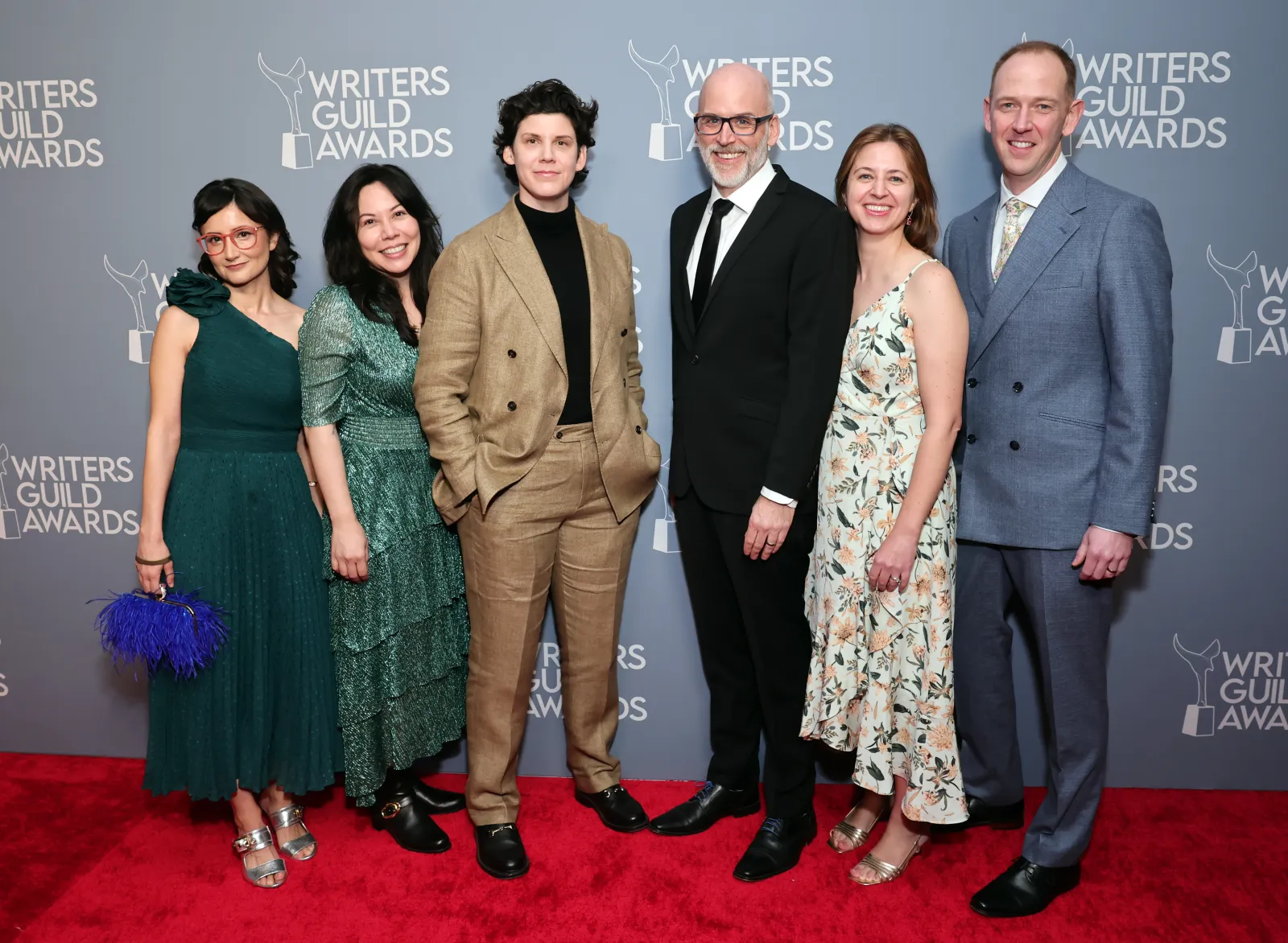
Nikki Palumbo is a screenwriter and comedian whose work has appeared on PBS, MTV, Comedy Central, Reductress, The New Yorker, the Google Assistant and Gemini.
View 0 Comments
Submit Correction
View Editorial & AI Guidelines