
By Eileen Falkenberg-Hull
Senior Editor, Autos, Travel and Lifestyle
0
Share
Newsweek is a Trust Project member
See more of our trusted coverage when you search.Prefer Newsweek on Googleto see more of our trusted coverage when you search.
The automotive industry is more global today than ever before. Brands from Asia, Europe and North America are selling in each other’s regions and far beyond.
Focusing on the rise in prominence of companies from China and decline of competitiveness from U.S. brands doesn’t tell the whole story. As it was at the dawn of the 20th century, the 21st century began with a number of brands entering the market, giving new car buyers more options than ever.
...
Read More on Autos
Though BYD is commonly mentioned when analysts discuss new Chinese brands aiming for a worldwide presence, the company has been making cars for over 20 years. In that time, dozens of automakers have sprung up in BYD’s backyard: Xpeng, Nio, Leapmotor, Lynk & Co, Wey, Arcfox, Haval, Maxus and Ora among them.
China-based umbrella corporations selling multiple brands have had more sticking power in the global market than its independent carmakers. SAIC Motor sells cars under the IM Motors, Maxus, MG, Rising Auto and Roewe brands. Geely Auto’s umbrella includes Lotus, Lynk & Co, Polestar, Proton, Smart (part of a joint venture with Mercedes-Benz), Volvo Cars and Zeekr. They also make London’s famous LEVC black cabs.
Korea’s Hyundai Motor Group has expanded its footprint, including its maturing Genesis premium brand. Launching gas, hybrid, plug-in hybrid and battery-electric vehicles on shores near and far from its home base under the Kia, Hyundai and Genesis brand names, the automaker has excelled at keeping prices relatively low while raising mass market technology and safety expectations for such vehicles.
European automakers are walking the line between global market powertrain diversity that ensures better overall company business health and looming regulations from governments close to home.
“With a firm end date for the combustion engine set for 2035—although that’s under increasingly desperate criticism from customers and the industry—Europe operates in its own bubble,” Jens Meiners, chairman emeritus of the World Car Awards and a German Car of the Year juror, told Newsweek.

...
“The success of EV is usually tied to aggressive incentives and regulation,” he continued, “but the forced transition has taken away the competitive edge of European carmakers: they were ahead of everyone else with their powerful, clean and efficient combustion engines, but their EV offerings didn’t particularly stand out. The next generation of EVs, like the GCOTY winner Škoda Elroq, proves that Europe can still pull it off. Meanwhile, Chinese carmakers are slowing and carefully moving in, deliberately protecting their margins with elevated price positions. Their presence will grow even if the EU decides to abolish or temper the EV mandate because they have used the last decade to catch up on combustion engines.”
Rethinking Vehicle Strategies
The 2021 merger of PSA Group with FCA to form Stellantis brought together 14 automotive brands. In the three years that followed, the company struggled under CEO Carlos Tavares, losing steam in multiple markets and brands that had booming prepandemic sales—like Jeep and Ram—saw their market share slide south.
With Tavares ousted and new CEO Antonio Filosa in place, Stellantis is becoming more agile, focusing on regional design and product planning. The fresh approach is already paying off, with net revenues up 13 percent in Q3 2025 compared with a year ago. The company cites growth in North America, Europe, the Middle East and Africa as the reason.
Michigan-based Ford Motor Company, one of America’s “legacy” automakers, has seen its overseas relevance tumble, with only a few bright glimmers of product hope after less-than-enthusiastic adoption of its new Capri, Explorer EV and Mustang. The company’s global chief marketing officer, Lisa Materazzo, recently told Newsweek that the company has undergone a complete product lineup analysis for the first time in a decade.
Across town, General Motors has also been rethinking its product lineup, including strategies focusing on new hybrid powertrains rather than pushing forward with an all-electric portfolio. The company, which includes the Buick, Cadillac, Chevrolet and GMC brands, also recently folded its BrightDrop electric commercial van operations and shut down Cruise, an autonomous vehicle technology subsidiary.
And it’s formed an EV joint partnership with Hyundai Motor Group to co- develop five new vehicles: a compact SUV, a car, a compact pickup truck and a midsize pickup truck for the South American market and an electric commercial van for North America. The first vehicle from the partnership is expected in 2028.
General Motors is also pushing into new markets, albeit with America-focused products. Its Cadillac EV lineup is now available in Europe and the U.K., and some models will be coming to Asia in 2026. Rather than be known for its Chevrolet badge, the Corvette is being sold as a standalone brand in Europe with sales of the Stingray, E-Ray and Z06 performance variants of the model underway.
New Vehicles Are Leading With Electricity
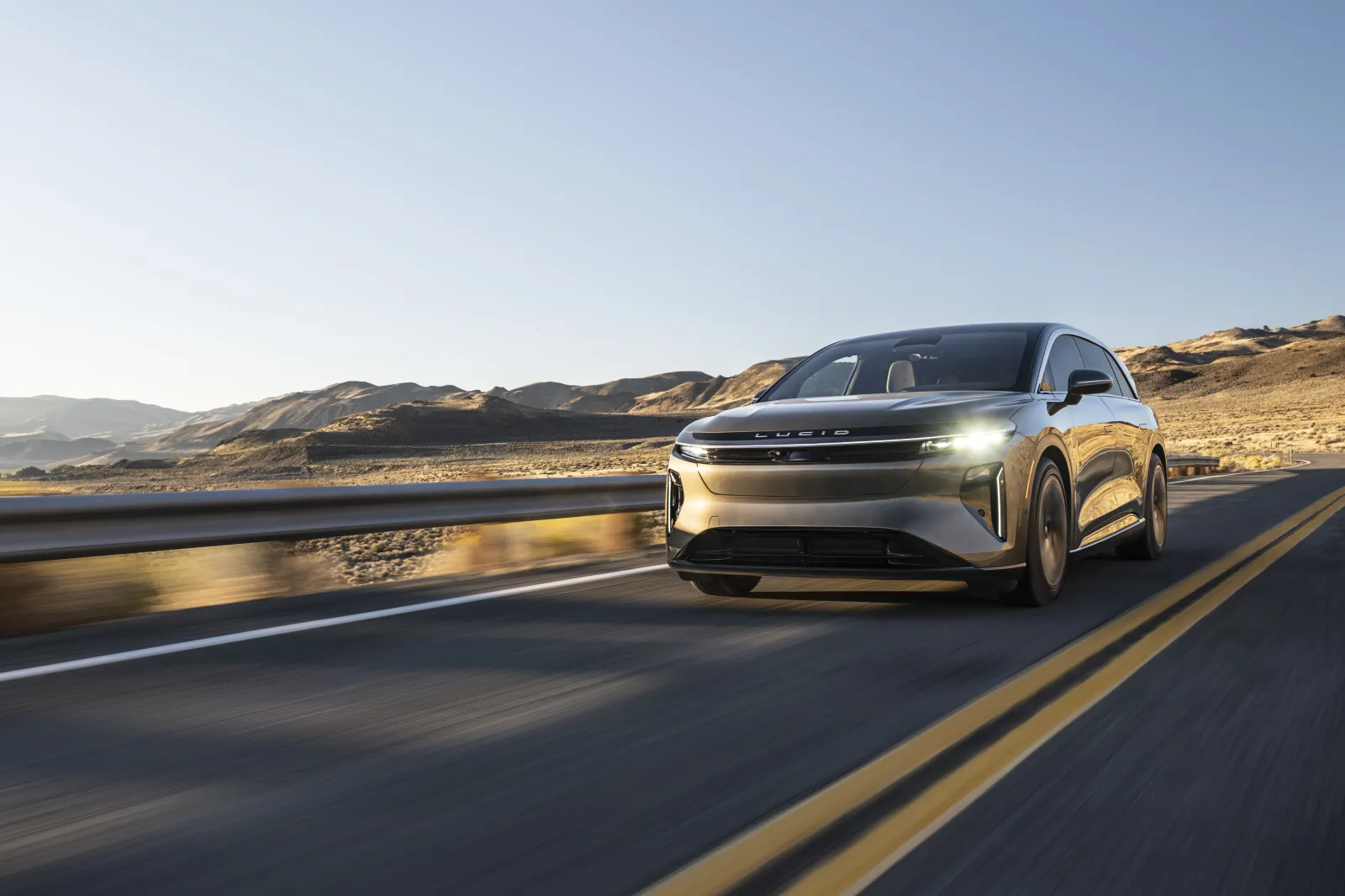
While Ford and GM have been rethinking their EV strategies, Lucid Motors and Rivian, both based in California, have been working to carve out their own market share while selling only EVs. The companies rolled out their first models at about the same time four years ago, but Rivian is far more successful than Lucid, delivering more than three times as many vehicles in Q3 as Lucid.

...
Rivian is not only turning a profit, but it has created varied revenue streams, helping the company work toward long-term financial stability. In addition to partnering with Amazon to create an electric delivery van that can now be sold to other companies, too, it has entered into a $5 billion joint venture with Volkswagen Group to put its software stack technology into future Group models. One example using its software stack is Scout, which is expected to sell its first vehicle in 2028.
Honda—which pulled out of a General Motors EV partnership in 2023—has been developing its own global EV strategy, culminating in a lineup of Honda 0 products that are expected to hit the market starting in 2026. The dedicated battery-electric lineup uses an EV-specific nomenclature and platform strategy similar to those adopted by BMW and Mercedes-Benz before the two brands pivoted away from expensive separate, dedicated EV powertrain and platform strategies.
Nissan, another Japan-based brand with heavy interests in the North American market, has had its cash flow troubles extensively documented. Like Filosa at Stellantis, Nissan’s longtime product lead and new CEO Ivan Espinosa has been tasked with turning around the company. Nissan is fighting an uphill battle, but has pushed out a long list of new products in the last year: the Armada, Murano, Kicks, Qashqai and Leaf SUVs and Sentra and Micra cars.
Nissan has numerous additional new products on the horizon, including a trio of models specifically for the growing India market.
“For a while it seemed like the only attention India was getting [was] as a low-cost manufacturing destination for entry cars, or as the option to putting all eggs in the China investment basket. Today the market has many new dimensions,” Siddharth Vinayak Patankar, editor-in-chief of Acko Drive, told Newsweek.
“Not only is it already the world’s third-largest market, but [it] also has attained status as a major exporter,” he continued. “India now takes the lead on research and development for global products—especially compact cars—destined for many markets. This means India is not only important now in terms of scale, its strong and demanding consumer, but also long-term investments—which are also seen by many as ‘safer bets’ given the country’s status also as the world’s largest democracy.”
Trucking to Success for Auto Companies
Global rival Toyota has been one of the few companies to successfully take on China’s new automakers. Its large product portfolio is undergoing a modern renaissance. Backed by Chairman Akio Toyoda’s long-held belief that battery-electric vehicles wouldn’t be as quickly adopted as analysts predicted a decade ago, the company has gone from being labeled as ill-prepared for the anticipated future to being one of the best-positioned for modern market realities.

...
Those market realities include shifted timelines for the rollout of autonomous vehicles and solid-state batteries, as companies work to prove out the technologies and governments globally grapple with how to regulate everything from emissions regulations to EV adoption incentives to hands-free, eyes-off conditional self-driving—an integral precursor to autonomous vehicles that is still not widespread in its regulated rollout in Europe and America, let alone less mature market regions.
Autonomous commercial trucking seems to be the lone exception in the autonomous technology game. Paired with a rising market for battery-electric and hydrogen fuel cell-powered large trucks, the industry’s future is well in hand.
“In the next five years, we see autonomous trucks becoming an integral part of the transport network, delivering much-needed capacity, especially for long-haul routes where they can operate without breaks or hours-of-service regulations. Human drivers will still play a crucial role on shorter and more complex routes, but the greatest value of autonomy will be realized in long-distance freight. The future will also be defined by industrialization, moving beyond retrofits to purpose-built, scalable solutions,” Nils Jaeger, president of Volvo Autonomous Solutions, told Newsweek.
Looking Ahead for Car Makers
While many automakers and technologies are largely talked about in generalities, the world is waking up to the fact that what is good for one region today may not even be an option for another region for a half-century or more.
Today’s automakers have been focused on EVs and promoting zero-emissions figures, even though large swaths of the Earth still lack stable electric power and the incomes to purchase such new-age models. Those areas are considered used vehicle sales strongholds and less important for new vehicle sales markets.
In the past year, policies have begun to ease up a smidge to allow companies to continue making gas and hybrid vehicles, a move that pulls back on the reins of the relentless pursuit of progress in the face of practical infeasibility, and allows automakers to reevaluate the expensive prospect of going all-electric by close deadlines.
See the World's Most Anticipated New Vehicles 2026 list and read more about how vehicles are tested in extreme weather and Newsweek's interview with General Motors President Mark Reuss.
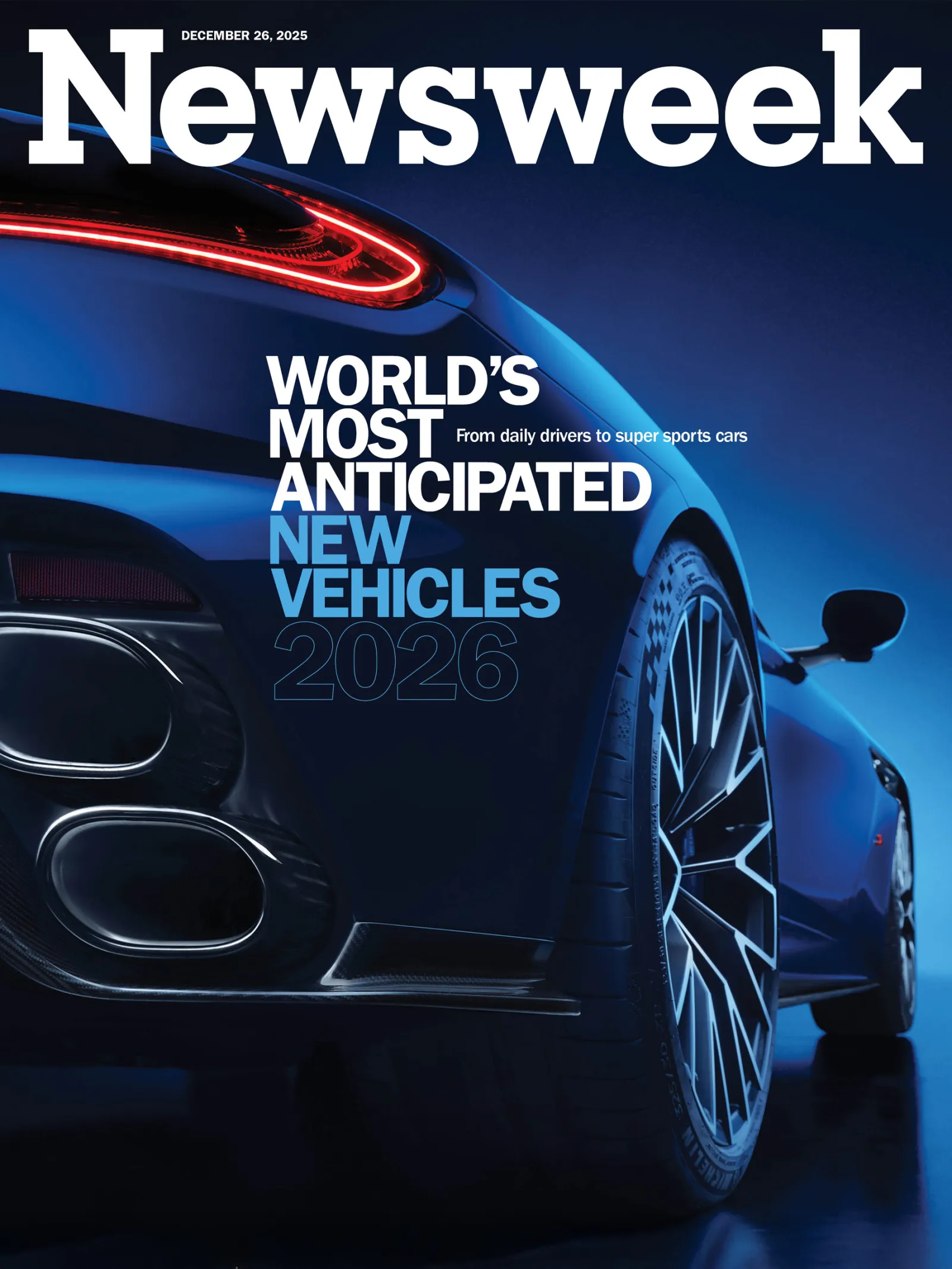
Photography courtesy of Aston Martin
View 0 Comments
Submit Correction
View Editorial & AI Guidelines