...

By Alice Gibbs
Senior Reporter
0
Share
Newsweek is a Trust Project member
See more of our trusted coverage when you search.Prefer Newsweek on Googleto see more of our trusted coverage when you search.
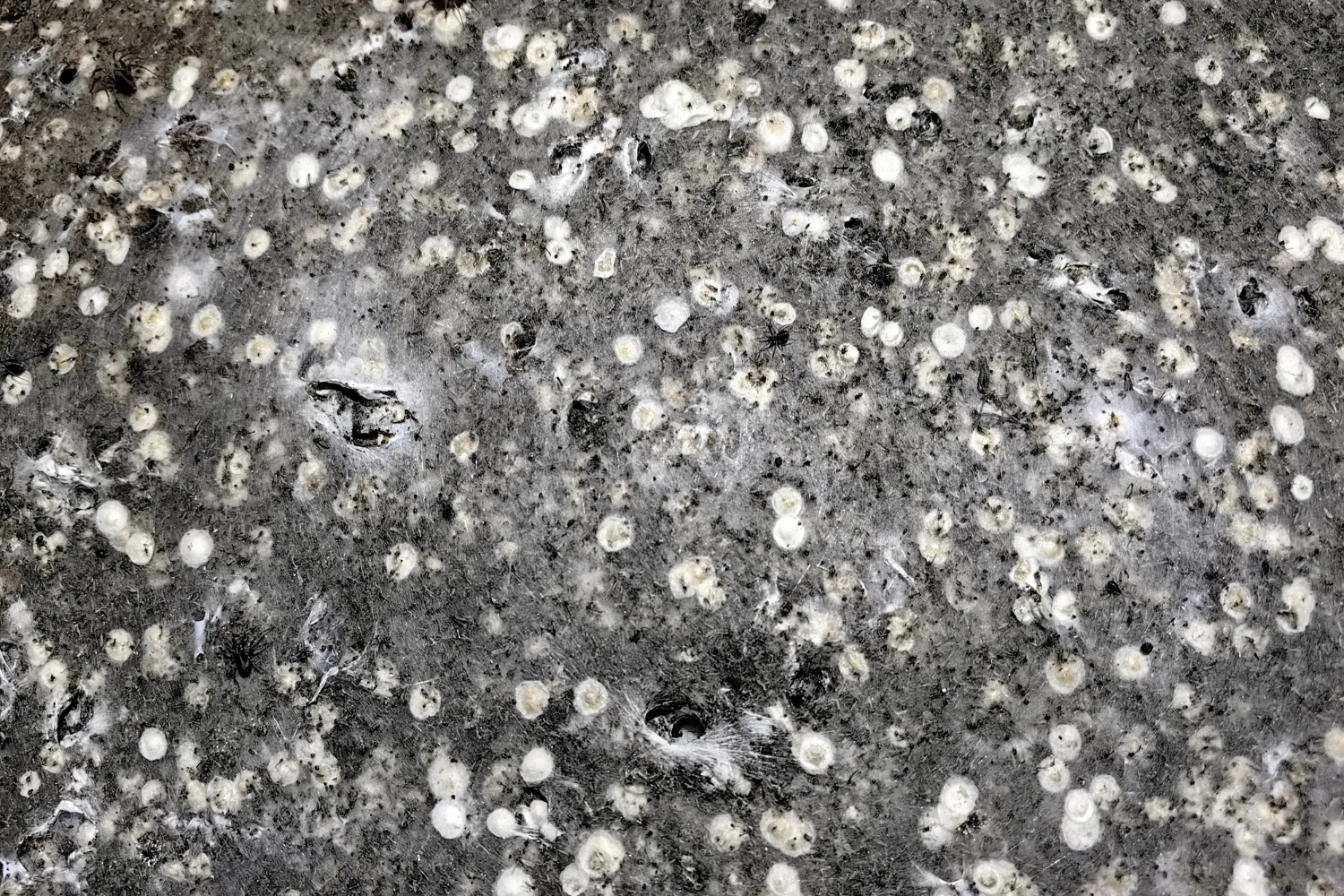
Arachnophobes look away now. Deep inside a pitch-black cave straddling the Albanian-Greek border, researchers have uncovered what may be the largest spider web ever recorded—teeming with more than 111,000 spiders.
“This discovery is remarkable from several perspectives,” paper author István Urák told Newsweek. “First of all, it likely represents the largest spider web in the world and constitutes one of the largest-known spider colonies.”
The web, described in the journal Subterranean Biology on October 17, stretches across 1,140 square feet of the cave’s wall.
Read More
Map Shows Most Popular Thanksgiving Side Dish in Every State15 min read

Woman Films OOTD, Watches Footage Back and Realizes She Wasn’t Alone2 min read

A Tiny U.S. Town was Just Named Travel Destination of the Year by Expedia4 min read

It is not a single sheet of silk, but a vast patchwork of thousands of interconnected, funnel-shaped webs—a rare case of cooperation among spiders that are usually solitary.
...
A Hidden Spider World
The web was discovered inside Sulfur Cave, a cavern sculpted over time by sulfuric acid formed from the oxidation of hydrogen sulfide in groundwater. The eerie, low-ceilinged passage where the web thrives is a permanently dark, sulfur-rich environment—a place where only the hardiest organisms can survive.
Although the discovery has only now been formally studied, cavers from the Czech Speleological Society first stumbled upon the phenomenon in 2022 during an expedition in Vromoner Canyon.
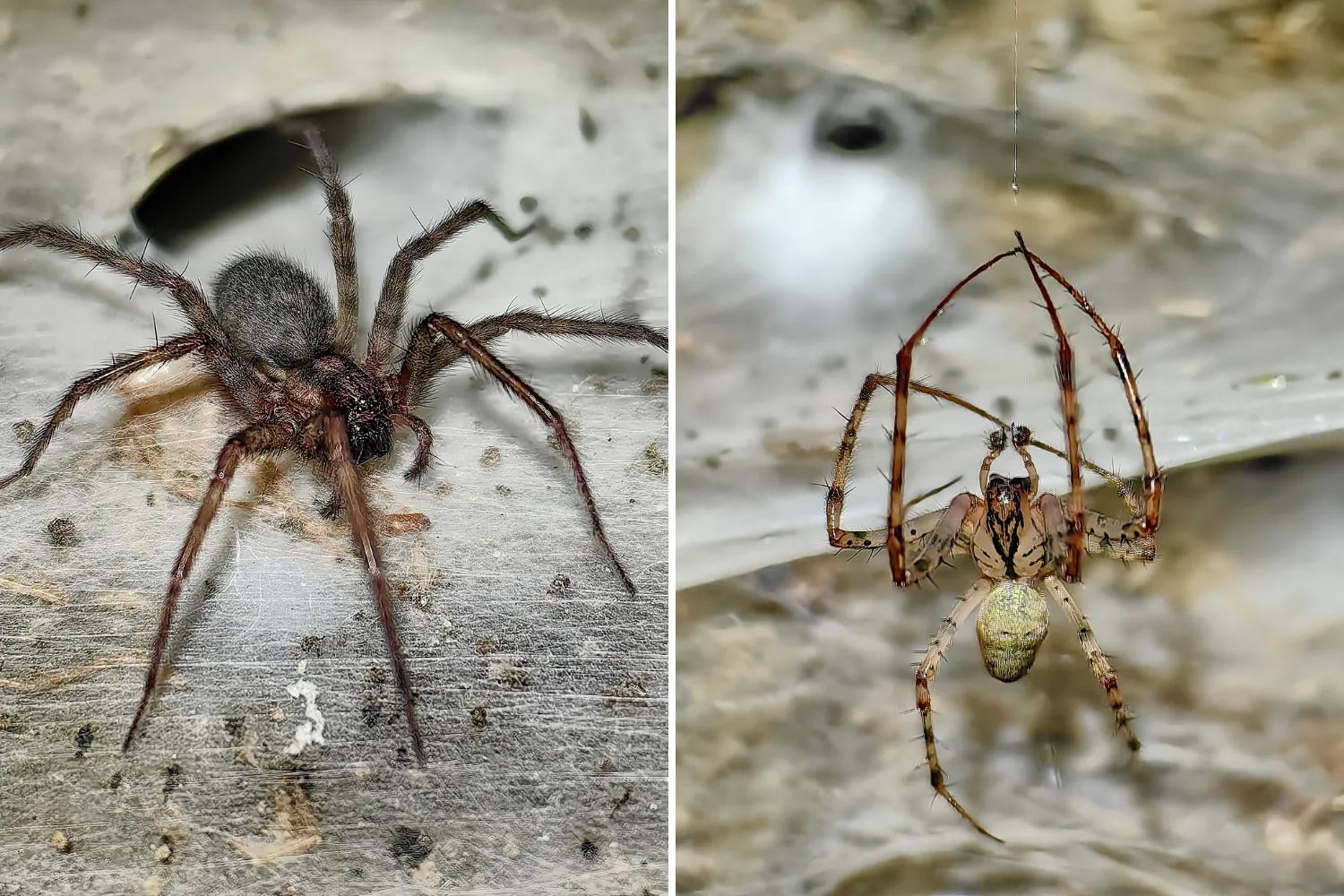
Analysis of the web revealed two species at the heart of the creepy collaboration: Tegenaria domestica, commonly known as the barn funnel weaver or domestic house spider; and Prinerigone vagans, another funnel-web builder.
“The web, exceeding 100 square meters [1,076 square feet) in size, is constructed by individuals of a common species—the domestic house spider or barn funnel weaver (Tegenaria domestica)—yet previously not known to exhibit colonial behavior,” Urák said. “It is also a unique case of two species cohabiting within the same web structure in such large numbers: approximately 70,000 Tegenaria domestica coexist with about 40,000 Prinerigone vagans on this single enormous web.”
DNA testing confirmed both species dominate the colony in the cave, and, together, the two form a bustling arachnid world.
Such large-scale cooperation is virtually unheard of among these spiders, which normally live alone. The researchers say this discovery could reshape our understanding of spider behavior, especially in extreme environments.
“It shows that nature still holds many surprises for us,” Urák said. “Often, we think we know a species completely, that we understand everything about it, yet unexpected discoveries can still occur. Some species exhibit remarkable genetic plasticity, which typically becomes apparent only under extreme environmental conditions.”

...
A Toxic Ecosystem
The spiders’ survival depends on a delicate underground ecosystem. They prey on nonbiting midges, which themselves feed on white microbial biofilms—slimy coatings formed by sulfur-oxidizing bacteria lining the cave walls.
The sulfur-rich stream, fed by natural springs and winds through the cavern, releases hydrogen sulfide that sustains this unexpected chain of life. From bacteria to midges to spiders, the entire system depends on chemical reactions that most living things would find lethal.
...
“This cave is truly a wonder,” Urák said. “It is one of the very few caves in the world that is shared by two countries: Greece and Albania. Its entrance is in Greece, and most of the cave passages are in Albania—and, of course, there is no border checkpoint inside the cave. The cave fauna does not know borders and it does not care about lines we humans draw on maps.”
For arachnophobes, the thought of 111,000 spiders working together in total darkness may sound like something out of a horror movie. But, for scientists, it is a window into how life can adapt, and even thrive, in one of the planet’s most-inhospitable environments.
Update 11/10/25 09:45 a.m.: This article was updated with new pictures and additional comment from István Urák.
Reference
István Urák, Blerina Vrenozi, Głąbiak, Z., Ninon Lecoquierre, Eiberger, C., Maraun, M., Andrei Ştefan, Flot, J.-F., Brad, T., Dainelli, L., Sarbu, S. M., & Băncilă, R. I. (2025). An extraordinary colonial spider community in Sulfur Cave (Albania/Greece) sustained by chemoautotrophy. Subterranean Biology, 53, 155—177. https://doi.org/10.3897/subtbiol.53.162344.
View 0 Comments
Submit Correction
View Editorial & AI Guidelines