10
Loading video...

By Rachael O'Connor
Reporter
0
Share
Newsweek is a Trust Project member
See more of our trusted coverage when you search.Prefer Newsweek on Googleto see more of our trusted coverage when you search.
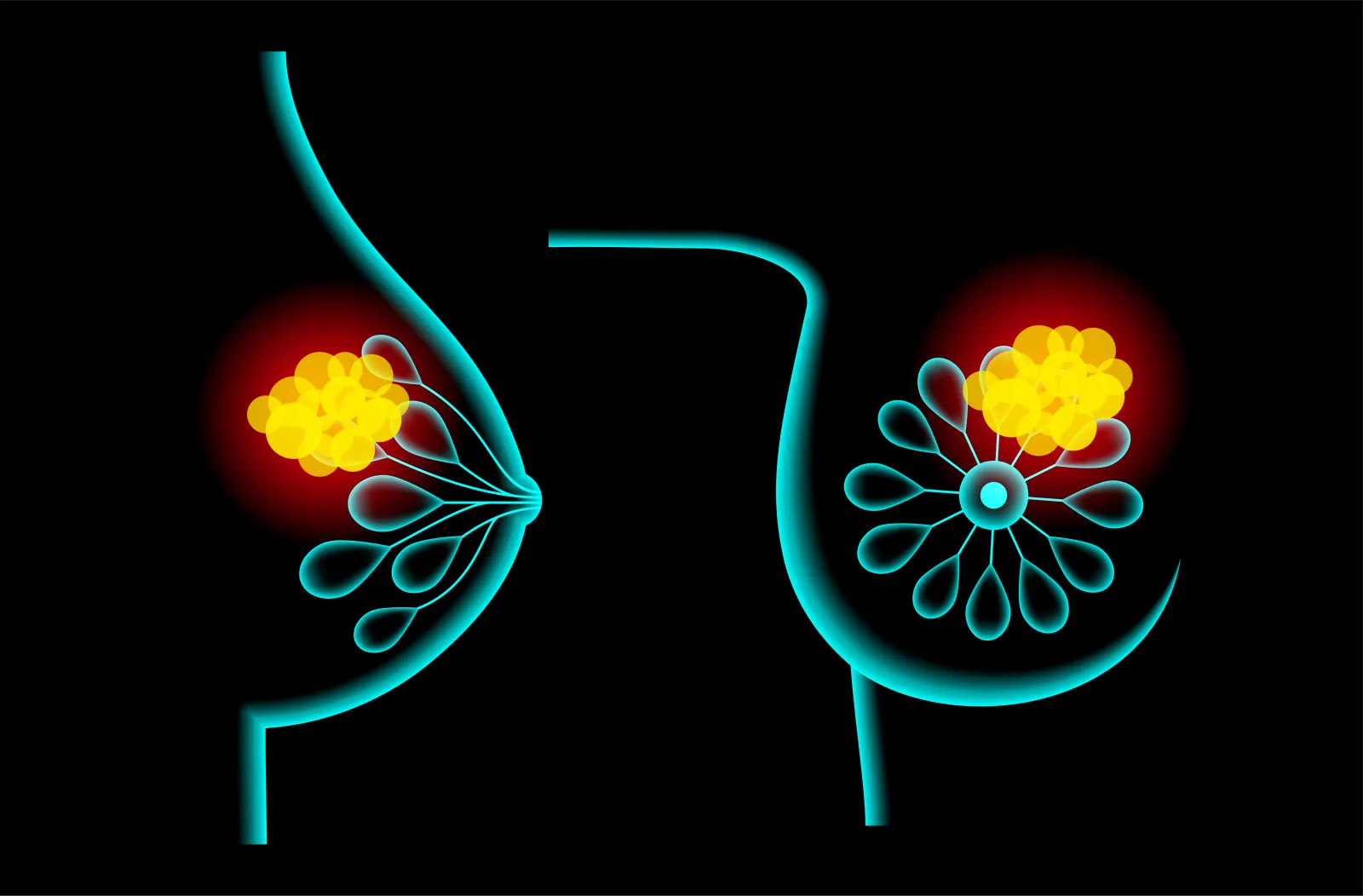
Women with a family history of breast cancer may still have a much greater risk of developing the disease than the general population, even if they get a negative gene mutation test, a new study shows.
BRCA1 and BRCA2 testing is generally recommended for women with a personal or family history of certain cancers. Up to 10 percent of breast cancer cases are thought to be hereditary, caused by gene changes passed on in families, according to the American Cancer Society.
Women with a BRCA1 or BRCA2 gene change have a higher risk of being diagnosed with cancer in their lifetime; they are also more likely to have cancer in both breasts, be diagnosed at a younger age, and have an increased risk of other cancers, such as ovarian cancer.
Read More on Health
However, a new study led by Cedars-Sinai Health Sciences University Investigators has suggested that even if a person with a family history tests negative for the gene mutations, they are still at a much greater risk of developing breast cancer in their lifetime.
Lead author Fahima Dossa, a surgical oncologist at Cedars-Sinai Cancer, told Newsweek that experts "have good estimates of the risk of breast and ovarian cancer among women who test positive for cancer risk-increasing mutations in the BRCA1 and BRCA2 genes; however, the majority of women who undergo testing either receive a negative result or are found to carry a variant of unknown significance (VUS)."
She said that while it "may be reassuring" to know that you do not have a BRCA gene mutation, women who are recommended to undergo this test "typically have a strong family history of cancer."
...
There is far less of an understanding of future cancer risk among women "who test negative or have a VUS but also have a strong family history of breast or ovarian cancer," she said.
Now, however, their study has shown that "the risk of cancer in these women is elevated as compared to the general population, though not as high as seen in those who test positive."
Their study analyzed health records of almost 16,000 women who underwent BRCA testing in Ontario, Canada, between 2007 and 2016. It found that women who tested negative for the mutation still had a 25 percent lifetime risk of developing breast cancer.
Lifetime risk for those who tested positive for a variant of unknown significance—meaning little is known about that variant—was 30 percent. This is in comparison to the average population: according to the National Cancer Institute, the average woman has around a 13 percent chance of developing breast cancer.
A positive test for BRCA1 or BRCA2 raises that risk to between 30 percent and 70 percent.
The study, published in JAMA Network Open, found that each patient's risk for breast cancer was significantly affected by their family history. Of the women in the study, those who tested positive for a BRCA mutation were between 56 percent and 86 percent likely to develop breast cancer depending on the number of family members who had breast or ovarian cancer.
Related Story
New Breast Cancer Test Spots Hidden Pattern Linked to Survival Chances
Dossa told Newsweek that the data in their study should be an "important starting point" for talks between doctors and their patients "on the role of risk-reducing strategies." These could include high-risk screening, chemoprevention and surgery, and "should account for an individual's personal and family cancer history."
Looking to the future, Dossa said the "large and unique" cohort of women they collected the data from gives them the opportunity to explore numerous other questions about the "downstream implications of BRCA1 and BRCA2 testing."
"We are currently working on estimating cancer risk over time, conditional on whether a woman has developed cancer by a certain age," she said.
"These results will be important for discussions around timing and need for preventive surgery."

...
Dossa said there is also "emerging data" around a potential relationship between BRCA genes and heart health, which cancer treatments such as chemotherapy can impact.
"We are therefore seeking to evaluate whether women with BRCA mutations are at increased risk of cardiovascular disease and how breast cancer treatments modify that risk."
Reacting to the new study, Kotryna Temcinaite, senior research and impact communications lead at Breast Cancer Now, told Newsweek: "Identifying women at increased risk of breast cancer can help to prevent some breast cancers or detect them earlier, when treatment is more likely to be successful."
She said the study highlighted that family history of disease "remains an important factor in assessing breast cancer risk," but added that most breast cancers "aren't linked to inherited gene changes and don't run in families."
Therefore, Temcinaite said, it remains vital that women regularly check their breasts, contact their doctor if they notice any changes, and attend breast screening when invited.
"A few small changes to your lifestyle can also help reduce your risk of breast cancer," she said, "like limiting the amount of alcohol you drink, keeping to a healthy weight and being physically active regularly."
Reference
Dossa F, Metcalfe K, Ante Z, et al. Breast and Ovarian Cancer Among Individuals Undergoing BRCA1 and BRCA2 Testing. JAMA Netw Open. 2026;9(7):e2626334. doi:10.1001/jamanetworkopen.2026.26334
Contact Newsweek editors on this story: Kara Dolman and Sam Wilson.
View 0 Comments
Submit Correction
View Editorial & AI Guidelines