10
Loading video...

By Alyce Collins
Senior Reporter
0
Share
Newsweek is a Trust Project member
See more of our trusted coverage when you search.Prefer Newsweek on Googleto see more of our trusted coverage when you search.
A “vampire” woman with a rare case of Stevens-Johnson Syndrome triggered by the sun has revealed how she copes knowing that just 30 seconds of UV exposure would leave her hospitalized.
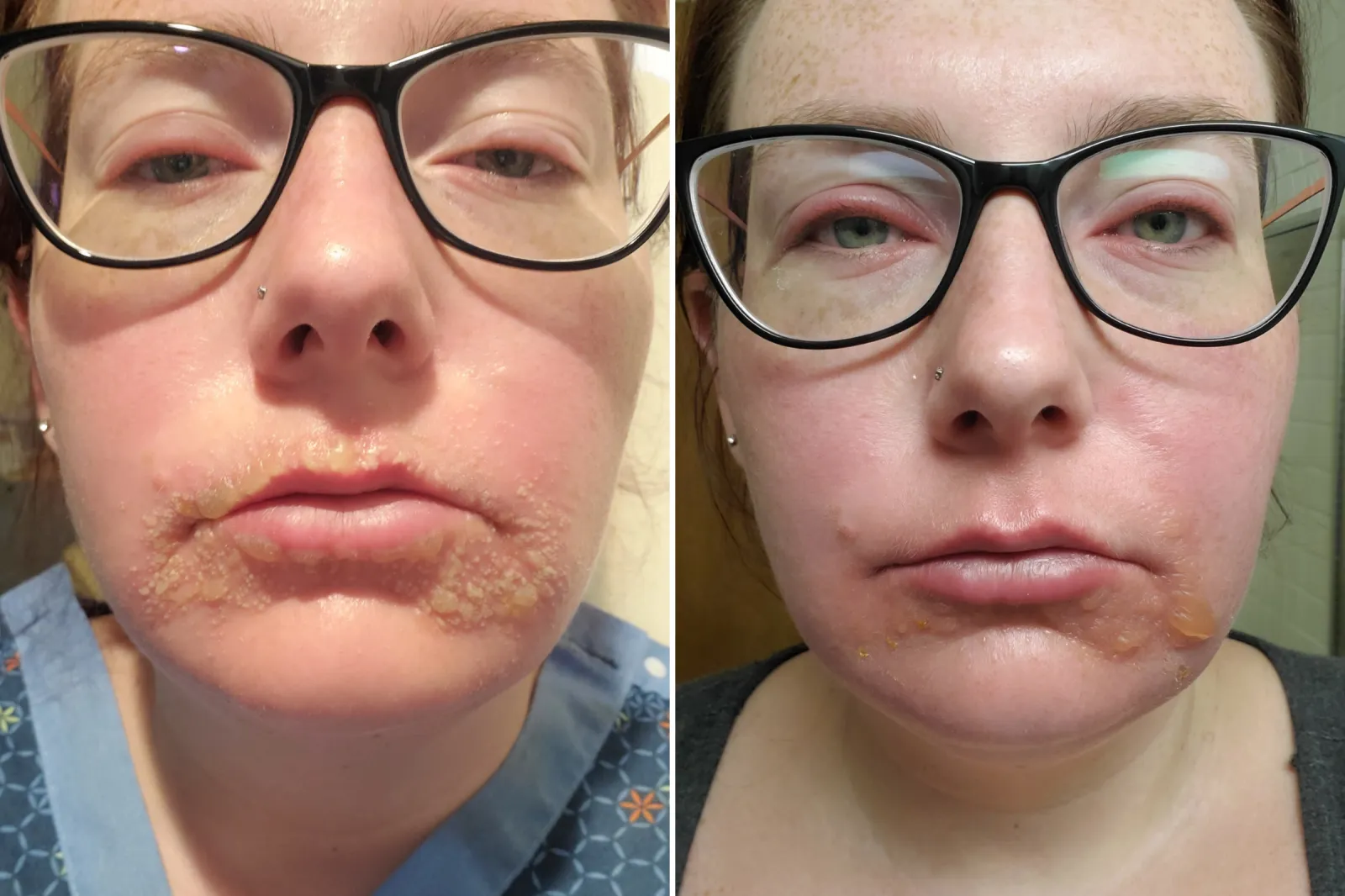
Although Emily Richardson, 36, was only officially diagnosed with Stevens-Johnson Syndrome (SJS) last year, she has been living with it for almost her entire life. Her first reaction occurred when she was just a year old, causing ulcers in her mouth. At the time however, doctors insisted that someone with a cold sore must have kissed her and caused a herpes outbreak.
“It happened again at 13 and 27, and every time I was misdiagnosed with herpes. By the time I was 27, I started to question whether it was herpes or not, but I still had no idea what was going on,” Richardson, of Murfreesboro, Tennessee, told Newsweek.
Read More on Health
Little did they know, Richardson had been treated for an illness each time it happened and was taking medication, causing the ulcers as a SJS reaction.
...
SJS is a rare disorder of the skin and mucous membranes that can cause a painful rash and blisters to form. The top layer of affected skin dies, sheds, and finally begins to heal several days later.
The condition is usually triggered by medication, which is how it started for Richardson. However, since contracting COVID in 2021, she’s been hospitalized four times with SJS.
Richardson has spent the last four years insisting that it isn’t just triggered by medication, but getting doctors to believe that she’s also allergic to the sun hasn’t been easy.
“Doctors think I was born with an auto-inflammatory disease that’s causing me to have this rare allergic reaction to the sun. Every time I’ve had a reaction has been another major blow to my immune system and it’s never fully recovered. Each reaction has broken my immune system down, allowing more reactions to occur,” Richardson said.
“Most doctors still don’t believe me when I tell them the sun is causing SJS. About three years ago, they finally acknowledged that I was having sun sensitivity, but photo-induced SJS is practically unheard of, so most of the doctors refused to acknowledge both sun sensitivity and SJS.”
Despite being dismissed for years, Richardson kept doing tests, scans, biopsies, examinations and bloodwork to find answers. It was only after testing through the Undiagnosed Disease Network (UDN) that a specialist also suggested that it might be SJS in 2024.
Until that point, Richardson felt completely alone as she tried to convince medical professionals.
She continued: “My initial reaction was overwhelming joy and tears, but that has since turned into anger. Anger that it took four hospitalizations, a lifetime of medical trauma, and repeated dismissals from doctors for them to finally listen to what I was saying.”

...
Dr. Daniel Atkinson, the clinical lead for Treated.com, tells Newsweek that sunlight sensitivity related to SJS is uncommon, and may “significantly impact” an individual’s quality of life. The trigger is usually UV radiation, but as it’s not typically recognized as a common trigger of SJS, it can be difficult to diagnose.
While diagnosis often involved taking a biopsy or blood tests, he notes that there are no specific tests for sun exposure.
Atkinson said: “SJS is a rare skin condition characterized by painful rashes, blisters, and peeling skin. It’s often triggered by medications, such as antibiotics, or by infections that cause the immune system to overreact.
“Treatments typically focus on addressing the underlying causes, specifically, the triggers of the condition. Managing this can be difficult when the trigger is sunlight. And as [Richardson] is allergic to many medications, this may also pose a risk, which could worsen her conditions and leave few options for effective treatment."
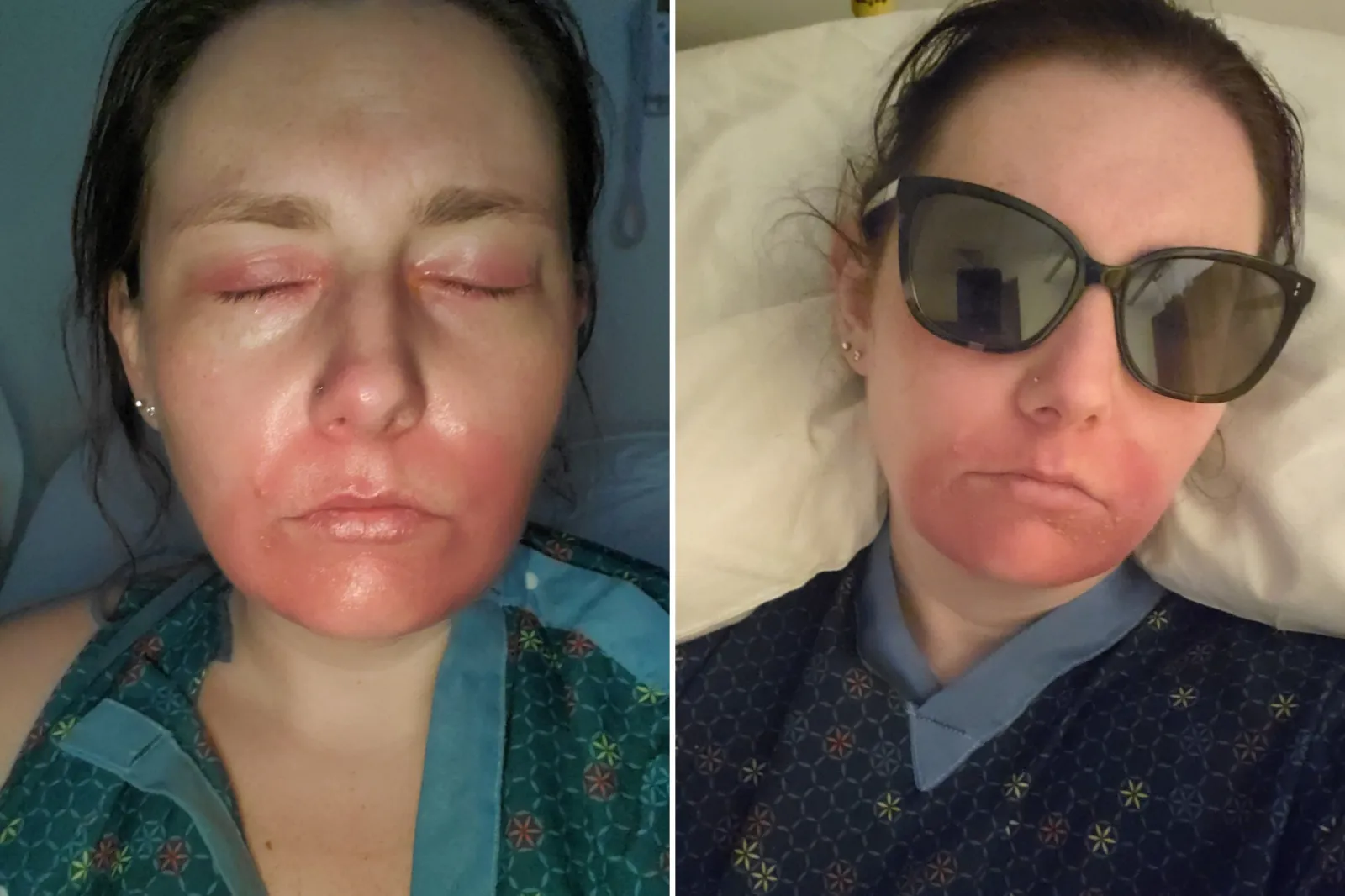
During an SJS reaction, Richardson develops ulcers in her mouth. But as each reaction is worse than the last, the affected area has grown to include Richardson’s throat too. She’s been warned that the next time it happens, she’ll need a feeding tube because speaking and swallowing will be too painful.
The reactions also affect her face and go up her nose, causing lesions on her skin that are similar to third degree burns. She told Newsweek that the lesions are “extremely painful” and all she can do is try to avoid UV exposure.
Since her diagnosis, Richardson has also tried three immunosuppressant medications but has experienced adverse reaction to each.
“All I can do is avoid any UV exposure and hope that the longer I go between mild reactions, the more time it gives my immune system to recover,” Richardson said.
“Unfortunately, going outside is inevitable. When I leave the house, I dress head to toe in UV protection gear. Just 10 seconds of sun exposure would cause a reaction, and 30 seconds would put me in the hospital. I stay hyper-vigilant, which causes a lot of anxiety. This is why I only leave the house about once a week.”
Of course, Richardson gets her fair share of reactions from people when they see her completely covered up. Most passersby seem uncomfortable, but Richardson tries to be positive and is happy to educate people if they ask questions.
Living with SJS is like “living on a double-edged sword” for Richardson. Not to mention, she’s allergic to multiple medications used to treat the symptoms, so her only options include morphine and Valium.
...
Richardson has started documenting her life as a “vampire” on TikTok (@vampireisem) as she hopes to raise awareness and educate others about SJS. It took years to be heard, but she hopes that others won’t have to fight for so long to finally get answers.
She has also set up a GoFundMe page because her savings have been decimated by medical bills and she’s too sick to go out to work.
“I operate on survival mode most of the time, and I tend to forget how shocking my story is because I’m just trying to make it through the day. Sharing my story has changed my outlook on life,” Richardson said.
She continued: “If doctors aren’t going to make sure that their patients aren’t developing a severe allergic reaction when they come in with mouth ulcers or genital itching, then it’s up to the patients to be informed. I hope my story encourages people to keep fighting for medical answers, because no one else is going to do it for you.”
Is there a health issue that's worrying you? Let us know via health@newsweek.com. We can ask experts for advice, and your story could be featured on Newsweek.
View 0 Comments
Submit Correction
View Editorial & AI Guidelines