...

By Rachael O'Connor
Reporter
0
Share
Newsweek is a Trust Project member
See more of our trusted coverage when you search.Prefer Newsweek on Googleto see more of our trusted coverage when you search.
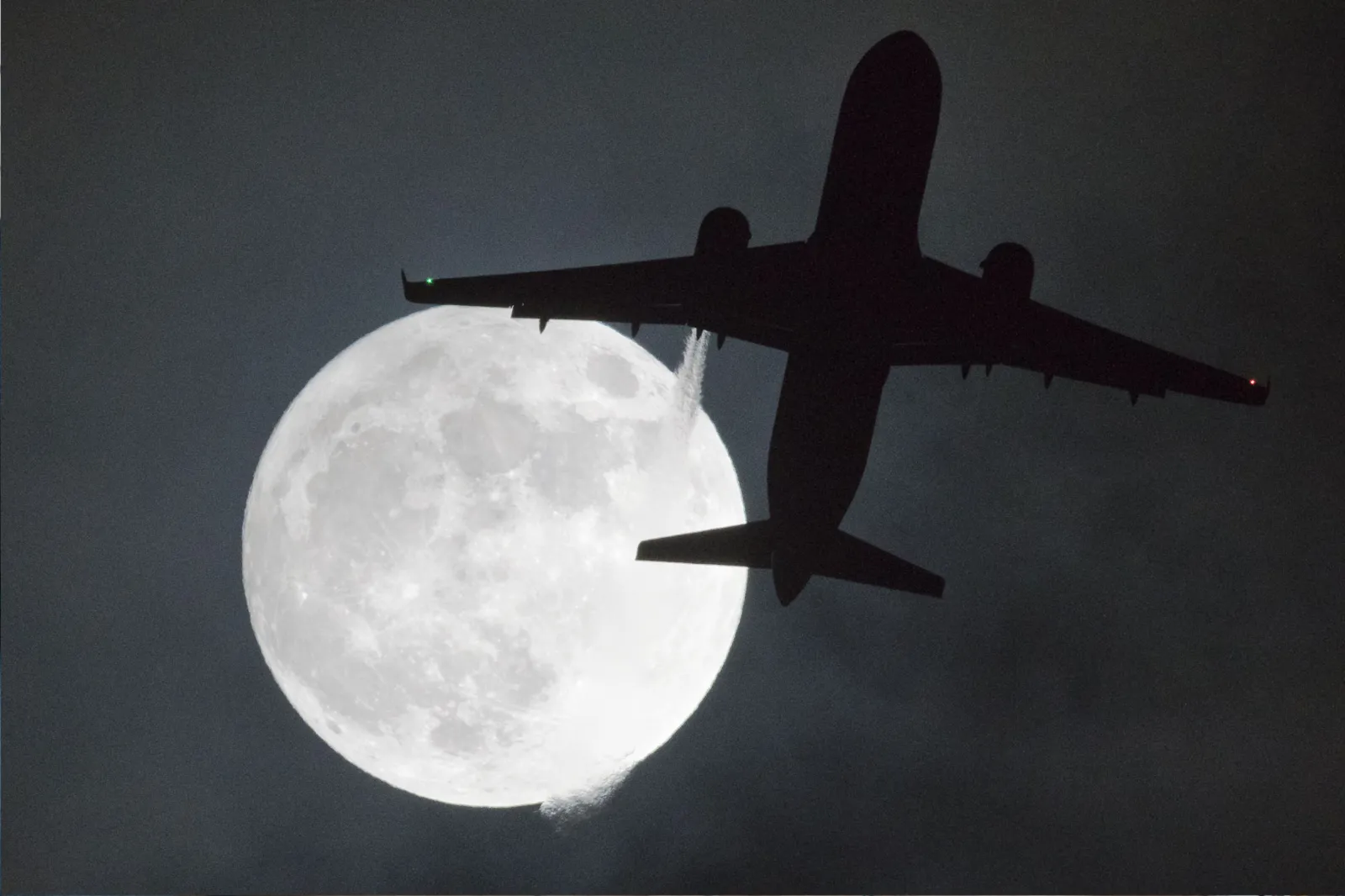
The first full moon of 2026 is set to dazzle stargazers this weekend. Named for the association with howling wolves, the first moon of the new year is always called the wolf moon**—**but this upcoming display will also be a supermoon.
Supermoon is the term given to a full moon that appears particularly large in the sky, coinciding with the point in its orbit that the moon is closest to the Earth.
...
Read More on Science
How To Best See the Wolf Moon
The wolf supermoon will rise on January 3. It will be full all day, starting from around 5:00am EST**—**but as always, the best time to see it is when it rises at night, after the sun has set.
Like the sun, the moon rises in the east, and sets in the west. Look to the east when darkness falls to see its rise above the horizon, as it will appear the brightest and fullest after sundown.
In North America, the moon rises more to the Northeast in winter, and moves across the sky in a southern arc.
The wolf moon can be seen with the naked eye and is best viewed with a clear sky without clouds. Viewing it as it begins to rise is best, as it will appear larger and more vivid than when it is high in the sky.
Check the times of sunset and moonrise for your area for the best time to see the rising: on January 3. New York's moonrise is at 4.55pm, Los Angeles is at 5:24pm and Dallas is at 5.58pm.
What is a Supermoon?
A supermoon is when a full moon or new moon is near perigee**—**the closest the moon's orbit gets to Earth—and accordingly appears some seven percent larger than usual.
Specifically, the moon must be within 90 percent of perigee to count as a supermoon, according to astrologer Rochard Nolle, who first coined the term in 1979.
Seeing the moon as it begins its ascent over the horizon is always the most impressive, because our minds see it as bigger when near the skyline: this optical effect is known as the moon illusion.
Do you have a tip on a science story that Newsweek should be covering? Do you have a question about space? Let us know via science@newsweek.com
View 0 Comments
Submit Correction
View Editorial & AI Guidelines