...

By Hollie Silverman
News Editor
0
Share
Newsweek is a Trust Project member
See more of our trusted coverage when you search.Prefer Newsweek on Googleto see more of our trusted coverage when you search.
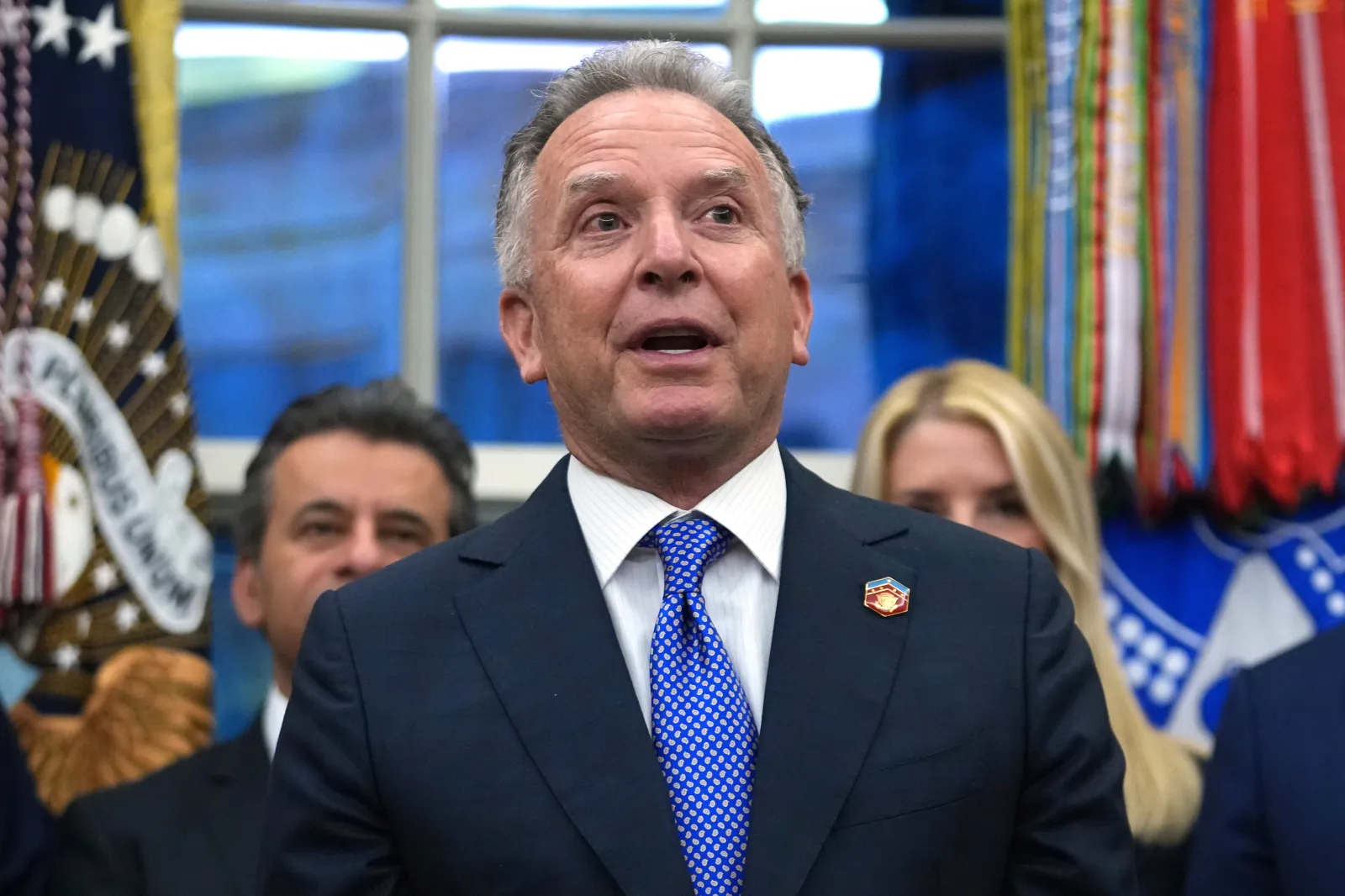
U.S. Special Envoy to the Middle East Steve Witkoff said Iran was “probably a week away” from having enough enriched uranium for “industrial-grade bomb-making material” in an interview aired Saturday on Fox News Channel’s My View With Lara Trump.
Witkoff said Iran had enriched uranium to 60 percent, stopping short of 90 percent weapons-grade but close enough that a further push could be rapid despite U.S.-Israeli strikes in June 2025 that destroyed large parts of Tehran’s nuclear infrastructure.
In a speech this past October, Trump hailed the strikes, saying that "many of Iran’s top terrorists" have been "extinguished from this earth" and its nuclear program obliterated.
Read More on News
Witkoff's warning came as the U.S. and Iran prepare for a possible resumption of nuclear talks in Geneva, Switzerland, with the U.S. pressing a “zero enrichment” line and suggesting it could review a narrowly defined “token enrichment” proposal if every pathway to a weapon was verifiably blocked, Axios reported.
Why It Matters
Witkoff’s comments underscored U.S. concerns that, despite reported damage to Iran’s centrifuges and facilities, Tehran could rapidly reconstitute the capacity to reach weapons-grade uranium.
Iran has denied seeking a nuclear weapon and said its program is peaceful, a claim at odds with U.S. demands that Tehran end enrichment and accept broader limits alongside curbs on missiles and regional activities. The U.S. has increased its military presence in the Middle East as talks continue.
The U.S. wants Iran to give up uranium enrichment altogether—the process by which fuel is created for atomic power plants but also provides material for a warhead. Washington and its regional ally Israel have also voiced demands for Iran to concede its ballistic missiles, withdraw support for its network of allies around the Middle East and face accountability for the deadly crackdown on protesters at the turn of the year.
Iran has said it was willing to accept some curbs in exchange for sanctions relief, while rejecting limits tied to missiles and regional groups, Reuters reported.
...
What To Know
June's military strikes destroyed specialized centrifuges and damaged nuclear sites in Iran, with the White House saying facilities were “obliterated.” In addition, experts estimated Iran's nuclear program was set back by one to two years.
During his interview, Witkoff said Iran had amassed a stockpile enriched up to 60 percent, which analysts said accounts for most of the work needed to reach 90 percent weapons-grade, though Iran had not reached that purity.
Witkoff added the regime was “probably a week away” from having “industrial-grade bomb-making material,” adding "that's really dangerous."
Although Iran could theoretically move quickly to weapons-grade enrichment, the country “currently has no access to its material, no machines to enrich it, and no weapons program to use it for any operational purpose,” the Jerusalem Post reported.
The U.S. has built up forces in the region and prepared for a potential multi-week air campaign, while Iran threatened to strike U.S. bases if attacked.
"He’s [Trump] curious as to why they [Iran] haven’t capitulated...under this sort of pressure, with the amount of sea power, naval power, that we have over there,” Witkoff told Lara Trump.
Meanwhile, Iran's foreign minister Abbas Araghchi has warned the U.S. against launching a war to restrict its nuclear powers, noting "there is no military solution to Iran's nuclear program."
Araghchi told MS Now, formerly MSNBC, this military build-up is “absolutely unnecessary and unhelpful” and is classed as “hostility shown to us by the United States.”
He also pushed back on Friday regarding Trump's claim that U.S. strikes on Iran's nuclear and military sites had "decimated" the country's nuclear program, adding that during the “huge attack" by the U.S. and Israel, “they killed and assassinated our scientists, but they couldn't kill our nuclear program.”
What People Are Saying
President Donald Trump said Thursday, per CBS News: “Now is the time for Iran to join us on a path that will complete what we’re doing...If they join us, that’ll be great. If they don’t join us, that’ll be great, too. But it’ll be a very different path.”
He added: “If it doesn’t happen, it doesn’t happen. But bad things will happen if it doesn’t."
Iranian Foreign Minister Abbas Araghchi said on MSNBC’s Morning Joe: “We have not offered any suspension, and the U.S. side has not asked for zero enrichment. What we are now talking about is how to make sure that Iran's nuclear program, including enrichment, is peaceful and would remain peaceful forever.”
Senator Lindsey Graham, a South Carolina Republican, told Axios Saturday: “I understand concerns about major military operations in the Middle East, given past entanglements. However, the voices who counsel against getting entangled seem to ignore the consequences of letting evil go unchecked.”
What Happens Next
U.S. negotiators said they would meet Iran in Geneva, Switzerland, on Friday if a detailed proposal from Iran arrives within 48 hours, according to a report from Axios.
In a polarized era, the center is dismissed as bland. At Newsweek, ours is different: The Courageous Center—it's not "both sides," it's sharp, challenging and alive with ideas. We follow facts, not factions. If that sounds like the kind of journalism you want to see thrive, we need you.
When you become a Newsweek Member, you support a mission to keep the center strong and vibrant. Members enjoy: Ad-free browsing, exclusive content and editor conversations. Help keep the center courageous. Join today.


View 0 Comments
Submit Correction
View Editorial & AI Guidelines