...

By Jasmine Laws
Reporter
0
Share
Newsweek is a Trust Project member
See more of our trusted coverage when you search.Prefer Newsweek on Googleto see more of our trusted coverage when you search.
Cases of norovirus, also known as the "winter vomiting disease," have been surging ahead of schedule this year, according to data from the U.S. Centers for Disease Control and Prevention (CDC).
Typically, norovirus cases spike following the Christmas and New Year period; however, this year, cases at the end of November notably increased, CDC data showed.
Why It Matters
Norovirus is highly contagious, and in severe cases, hospitalization may be required to treat severe dehydration from excessive vomiting and diarrhea. The virus is responsible for nearly 60 percent of foodborne illnesses in the U.S. and is the leading cause of vomiting and diarrhea from acute gastroenteritis.
Read More on News
Each year, there are 900 deaths due to the virus, mostly among those over the age of 65, and 109,000 hospitalizations, and 465,000 emergency department visits, mostly in young children.
Foodborne norovirus illness also costs about $2 billion each year, mainly due to lost productivity and health care expenses.
...
What To Know
For the week of November 15, about 13 percent of norovirus tests were positive, double the rate from around three months earlier, according to the CDC's NoroSTAT program. The number of people with the virus is likely much higher, as not everyone with the virus will choose to get tested.
There was a decline in positive test results for the week starting November 22, and overall, the norovirus positivity rate at the end of November was similar to last year, the data show.
Last December saw a record number of norovirus outbreaks, with 495 recorded from August to December 2024, a sharp increase from 363 during the same period in 2023.
"There are some signs that another big norovirus season is ahead of us," Ben Lopman, a professor of epidemiology and director of the Emory Center for Infectious Disease Modeling and Analytics and Training Hub at Emory University, told Newsweek.
"Viral activity is high for this point in November. The peak of the season is usually around early January, so we’ll have to keep watch to see how this year pans out," he said.
However, not all experts agree. Christiane Wobus, a professor of microbiology and immunology at the University of Michigan, told Newsweek that there is "no reason to be concerned" about this data.
"What we are seeing is the typical seasonal pattern," she said, adding that the total number of outbreaks at the end of November was "within the average over many years of reporting."
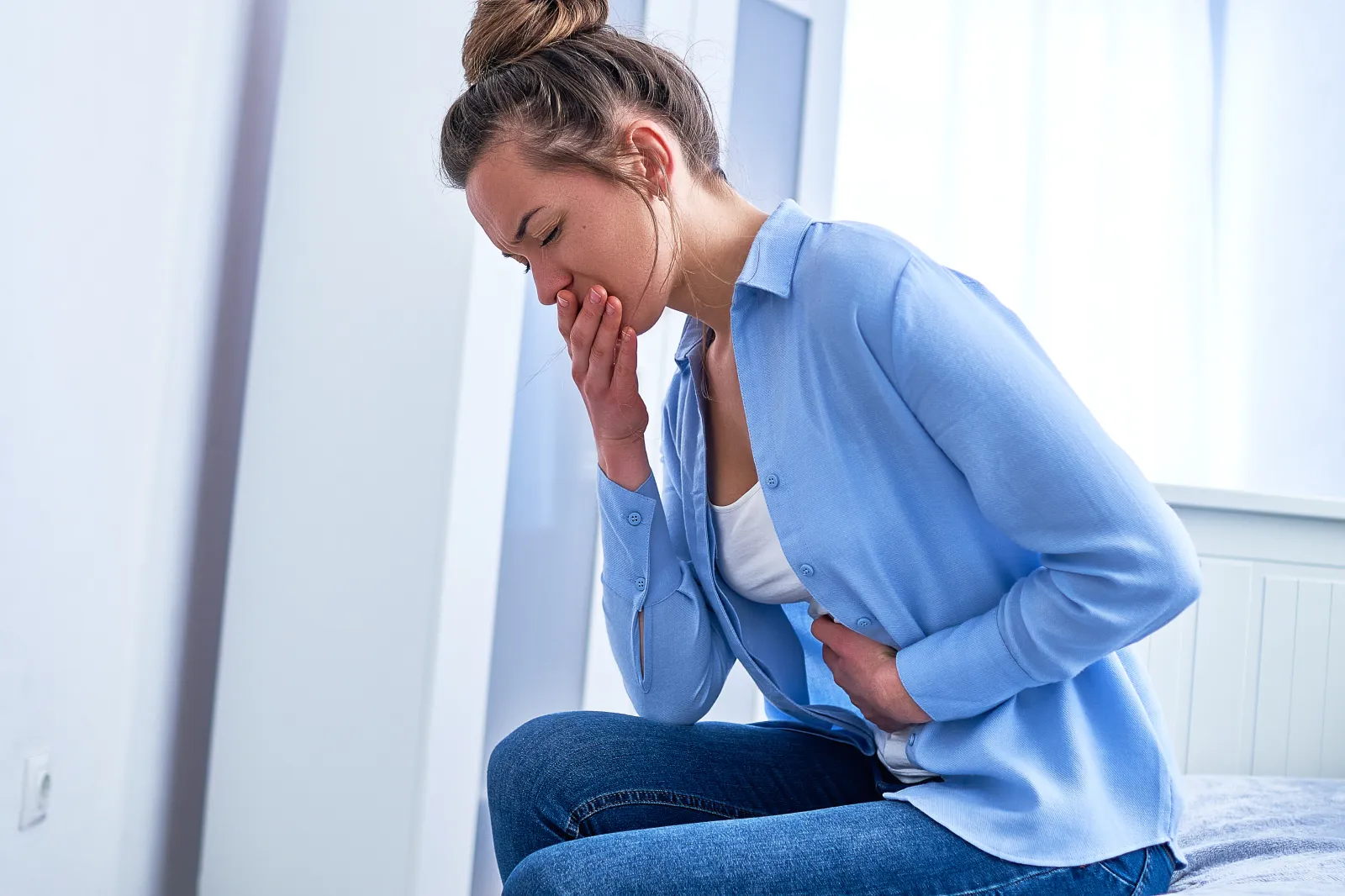
Norovirus causes symptoms including diarrhea, vomiting, nausea, stomach pain, and, less commonly, fever, headaches and body aches. Dehydration is also often caused by excessive vomiting and diarrhea. While anyone can get the virus, those under the age of 5 and over the age of 85 are more likely to have an outpatient or emergency department visit due to the virus.
People can get norovirus from direct contact with someone who has the virus, eating food or drinking liquids contaminated with the virus (such as raw shellfish), and touching contaminated surfaces and not washing their hands afterward.
The virus also tends to spike during winter months in the northern hemisphere, "since people are closer together in the winter months as more of us are indoors," Wobus said.
Avoiding raw shellfish, washing hands thoroughly, washing fruits and vegetables, and cleaning contaminated surfaces are a few ways to prevent infection. Wobus also advised wearing a mask while "cleaning up vomit or diarrhea as particles can be aerosolized."
What People Are Saying
Lee-Ann Jaykus, a professor in the Department of Food, Bioprocessing and Nutrition Sciences at North Carolina State University, told Newsweek: "Most people who get norovirus are miserable for a few days but recover fully. The illness can be more severe in people having serious underlying medical conditions or the elderly, and there is concern when it is present in, say, nursing homes. People can experience rapid fluid loss due to vomiting and diarrhea, which can cause dehydration. This is particularly of concern in babies and young children."
She added, "We are seeing more cases due to last year's emergence of a new strain of norovirus called GII.17. When new strains emerge, people are exposed to a strain that they have not previously been exposed to, and hence are more likely to get infected. Historically, new strains emerge every seven to 10 years, and we were due for one so this is not surprising."
Matthew Moore, a professor of food science at the University of Massachusetts, Amherst, told Newsweek: "There is always cause to be cautious about this, and the public should be aware. I would not panic, but the public should be sure to maintain proper hand hygiene as well as stay home if sick as this virus is quite transmissible. Every few periodic sets of years we get the emergence of a new pandemic strain of norovirus that appears to have started with the season last year. It will be interesting to see if significant mutations are occurring in this new strain this year that differ from the spike we saw last year and if they may have a functional benefit. One thing to note about this virus is that is can mutate relatively rapidly compared to many other viruses."
He added, "I think it is possible there could be more cases than there were last year, though based on wastewater surveillance, it looks like the rate may be down a little from last year. That said, there are a lot of factors in terms of estimating cases that can make it difficult. Regardless, the takeaway is that we are seeing a relatively high spike again this year so people should be cautious."
What Happens Next
Wobus said that one big question for this winter season is whether the GII.17 strain of the virus "will remain predominant," as last year there was an increase in cases "because of a re-emerging genotype GII.17," or whether a predominant strain of previous years, GII.4, "will regain its predominance."
View 0 Comments
Submit Correction
View Editorial & AI Guidelines