...

By Hugh Cameron
Reporter
0
Share
Newsweek is a Trust Project member
See more of our trusted coverage when you search.Prefer Newsweek on Googleto see more of our trusted coverage when you search.
Experts have warned that the winter storm which battered multiple U.S. states over the weekend could result in a financial fallout exceeding $100 billion.
In a recent update, the weather forecaster AccuWeather said Storm Fern was "poised to be, by far, the costliest severe weather event since the Los Angeles area wildfires," and one its experts predict could lead to damages and economic losses totaling between $105 billion and $115 billion.
"This winter storm will shut it all down, and its effects will be widespread, impacting 200 million people in the United States," AccuWeather’s chief meteorologist Jonathan Porter said on Friday. “The historic storm will result in tens of thousands of canceled flights, school and business closures for days and supply chain disruptions that will be significant and costly."
Read More on News
Why It Matters
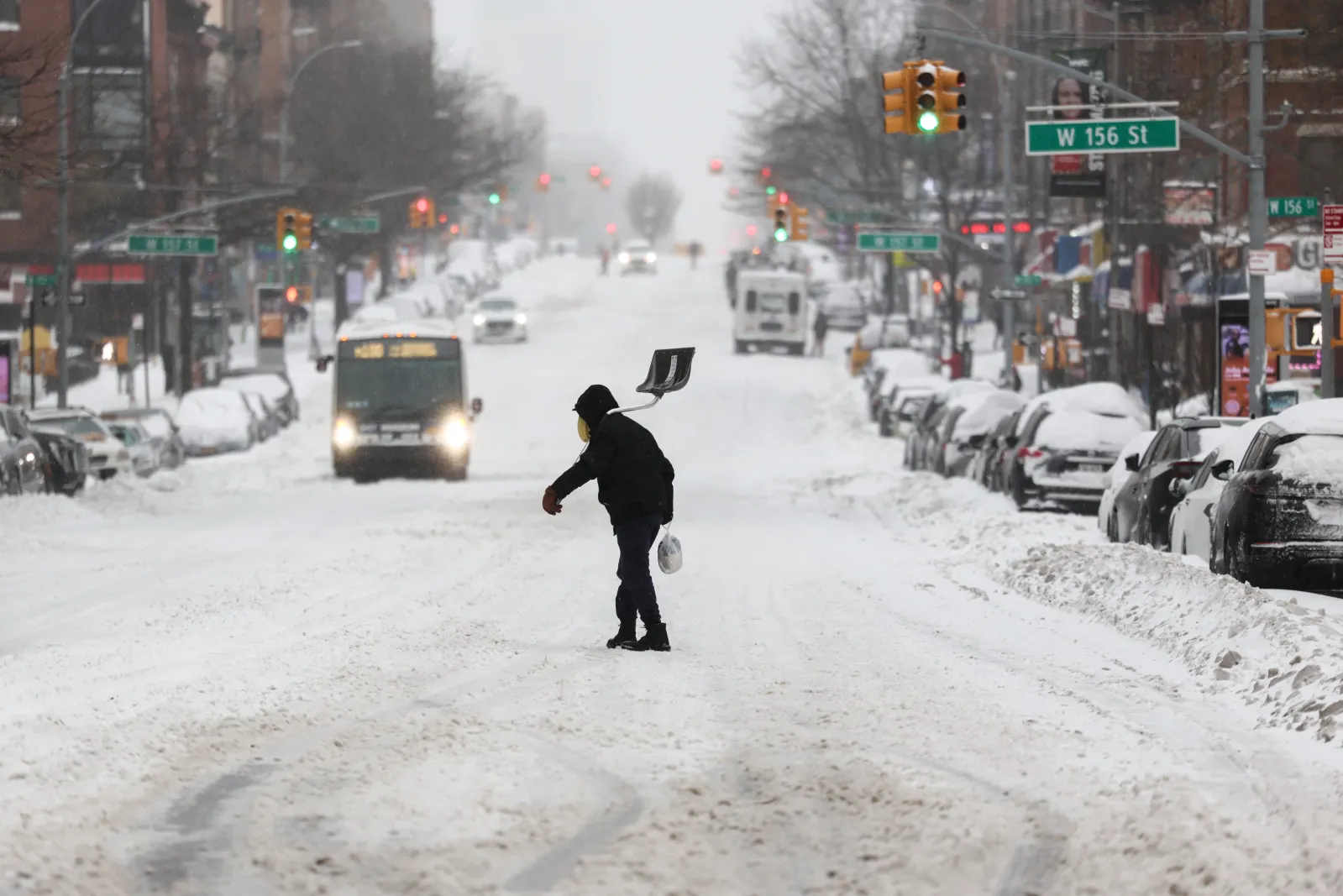
The "life threatening and historic" storm, AccuWeather notes, has already led to canceled flights, school and business closures as well as widespread power outages across the U.S. While snowfall is expected to taper off after hitting the Northeast on Monday, the forecaster said this will be followed by days of "bitter cold," which could "rapidly turn power outages, blocked roads and delayed emergency response into life-threatening emergencies."
What To Know
AccuWeather said its preliminary estimates were based on anticipated "damage to homes and businesses, disruptions to commerce and supply chain logistics, tourism losses, impacts to shipping operations at major hubs, financial losses from extended power outages, major travel delays, as well as damage to infrastructure."
Airlines were forced to cancel over 10,000 flights on Sunday, according to FlightAware, and the storm left hundreds of thousands without power over the weekend. The extreme weather conditions have also severely disrupted inbound and outbound cargo shipments, and the travel-info service CruiseMapper reported that Fern had "affected cruise operations at several major homeports, prompting itinerary adjustments, early returns and passenger advisories as lines respond to hazardous travel conditions."
...
Susana Duarte, Senior Vice President at the National Association of Mutual Insurance Companies (NAMIC) told Newsweek on Friday that the Southern Plains and parts of the Southeast would face the greatest financial risk "because limited winterization raises vulnerability to burst pipes, roof collapses, and power outages."
"Historically, ice storms in these regions have generated outsized insured losses because many homes and businesses are not designed for sustained subzero temperatures over extended periods of time," she said.
Duarte said insurers should anticipate a "surge" in claims relating to property damage, business interruption and secondary losses such as auto accidents. She added that the total insurance cost could easily surpass that of past weather events—such as the 2021 Texas "Freeze," which resulted in an estimated $17.9 billion in insured losses—especially if "ice accumulation leads to cascading infrastructure failures."
"When homes lose heat, they have no ability to keep interior water pipes from bursting," she told Newsweek. "That can lead to significant water damage claims."
What People Are Saying
AccuWeather chief meteorologist Jonathan Porter said: "The historic storm will result in tens of thousands of canceled flights, school and business closures for days and supply chain disruptions that will be significant and costly. The bitter cold following the storm will prolong suffering and dangers. Long after the storm is gone, prolonged power outages in the hardest-hit areas that experience significant icing could last for weeks."
NAMIC Senior Vice President Susana Duarte told Newsweek: "The property/casualty industry is navigating a ‘new era of risk,’ marked by more frequent and severe weather events, inflation-driven repair costs, and rising litigation. While insurers maintain strong capital positions, these systemic challenges underscore the importance of mitigation strategies—such as improved building resilience and consumer education—to reduce loss potential."
Climatologist Michael E. Mann, director of the Center for Science, Sustainability & the Media at the University of Pennsylvania, told Newsweek: "We could potentially be looking at yet another billions-of-dollars extreme weather disaster. We are seeing more and more of these billion+ weather extremes because of human-caused warming."
What Happens Next
Cities in the Northeast are to expect up to two feet of snow through Monday, AccuWeather said, followed by "life-threatening" cold conditions after the storm itself subsides.
Correction 1/27/26 10:48 a.m. ET: This article was updated to attribute comments from the National Association of Mutual Insurance Companies to Susana Duarte, rater than president and CEO Neil Alldredge.
View 0 Comments
Submit Correction
View Editorial & AI Guidelines