...

By Hugh Cameron
Reporter
0
Share
Newsweek is a Trust Project member
See more of our trusted coverage when you search.Prefer Newsweek on Googleto see more of our trusted coverage when you search.
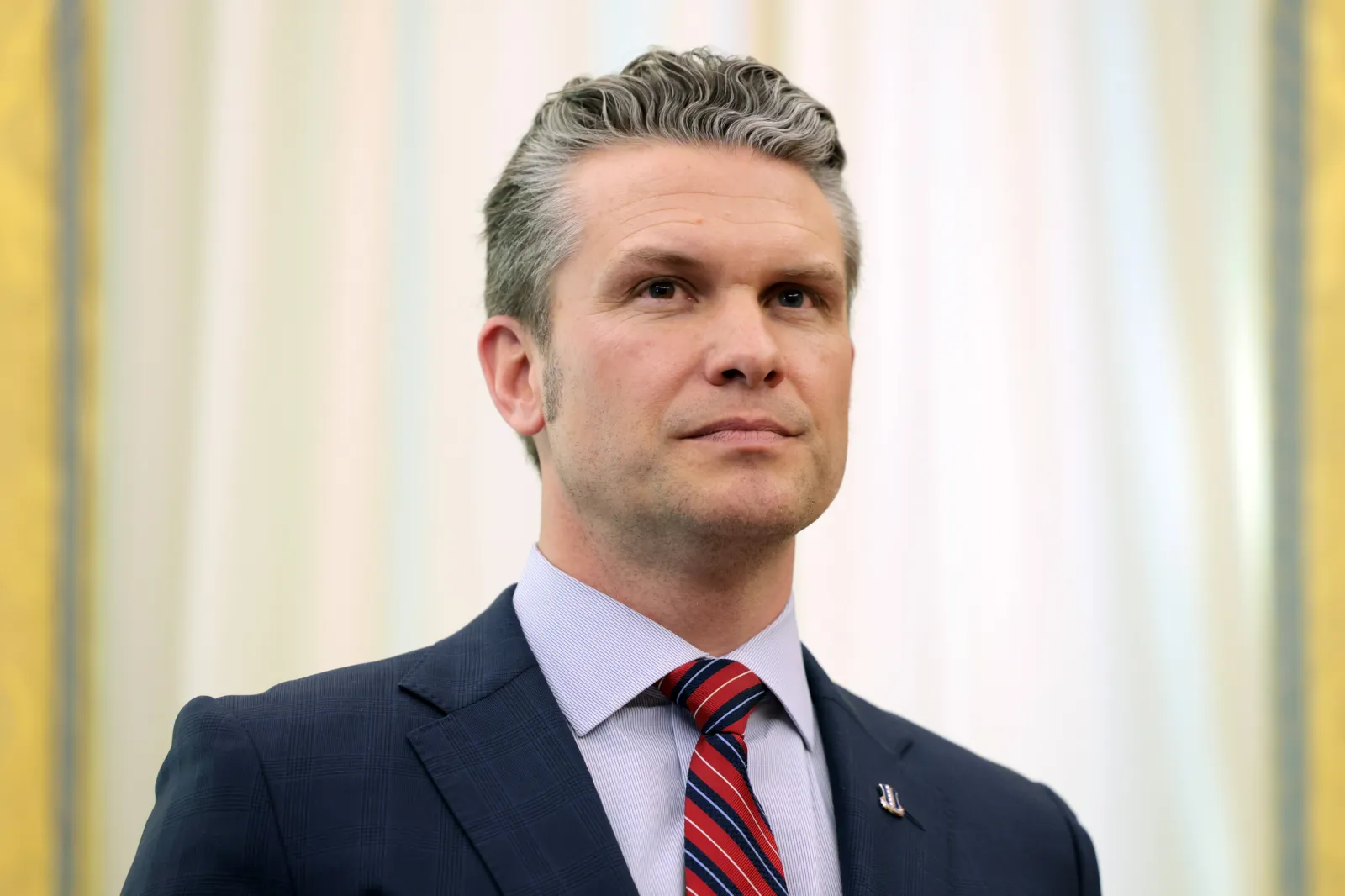
Calls are growing for Secretary of Defense Pete Hegseth to step down from his post, after he shared sensitive military information in a Signals group chat to which journalist Jeffrey Goldberg was accidentally added.
The Department of Defense declined to comment on the issue and directed Newsweek to the National Security Council (NSC) for further information. Newsweek has reached out to the NSC via the White House contact form and will update this article if a response is received.
Why It Matters
The chat to which The Atlantic's editor-in-chief Goldberg was added included other high-level officials within the Trump administration, and was discussing specifics of upcoming air strikes on Houthi-held areas of Yemen.
Read More on Politics
While Goldberg did not share the contents of the chat before the operation went ahead, those calling for Hegseth's resignation have pointed out that the breach could have compromised the operation while also posing a wider risk to U.S. national security.
What To Know
According to his article in The Atlantic, Goldberg was added to a Signal chat group named "Houthi PC small group" on the open-source encrypted messaging platform. On March 15, a user with the name "Pete Hegseth" reportedly shared details to the group regarding strikes on Yemen.
As well as Hegseth, accounts bearing the names of other administration officials—including Vice President JD Vance, National Security Advisor Michael Waltz and CIA Director John Ratcliffe—were active on the chat and shared their views on the strikes, which occurred on March 15.
Brian Hughes, a spokesperson for the NSC, confirmed the authenticity of the message chain to Goldberg.
...
Following the revelation, lawmakers have demanded answers as to how a civilian gained access to a chat reserved for senior U.S. national security officials that included specific details about a military operation. Many Democrats have called for Hegseth to resign from his post over the incident.
Democratic National Committee Chair Ken Martin said in a statement that Hegseth and the other members of the group chat "put on a stunning display of recklessness and disregard for our national security."
"Hegseth should resign, and if he doesn't resign, he should be fired," he continued.
Republicans, meanwhile, have largely downplayed the severity of the incident, some calling for an investigation but refraining from calling for Hegseth to quit.
Senator Shelley Moore Capito said that "some kind of internal investigation" was needed, while Roger Wicker, Chair of the Senate Armed Services Committee, told CNN that the Committee and Congress would be "looking into" the incident before making a decision as to whether Hegseth should stay in his position.
Hegseth has given no indication that he intends to step down, and has tried to discredit the authenticity of The Atlantic's reporting. Speaking to reporters on Monday, he called Goldberg a "deceitful and highly discredited so-called journalist, who has made a profession of peddling hoaxes time and time again."
When asked to comment, President Donald Trump claimed he had not heard about the incident, while also dismissing The Atlantic as "not much of a magazine."
In a statement shared with news outlets, White House Press Secretary Karoline Leavitt said that the president "continues to have the utmost confidence in his national security team." Leavitt singled out National Security Advisor Waltz without mentioning Hegseth.
Waltz is the one who Goldberg said had originally sent him a connection request on Signal, and may suffer the consequences should the administration decide to dismiss anyone over the scandal.
On the crypto-based prediction platform Polymarket, users have been betting on who Trump is most likely to fire from his administration within the first 100 days. Hegseth now leads the pack, the odds of him being dismissed rising from 3 percent to 16 percent following the publication of the report on Monday.
What People Are Saying
Speaking to reporters on Monday, Secretary of Defense Pete Hegseth said: "No one was texting war plans, and that's all I have to say about that."
Speaking to CNN on Monday evening, Jeffrey Goldberg called Hegseth's statement "a lie."
"He was texting war plans. He was texting attack plans: When targets were going to be targeted, how they were going to be targeted, who was at the targets, when the next sequence of attacks were happening."
Goldberg said he excluded certain details shared in the chat from his reporting as these were "not necessarily in the public interest."
"It's an obvious, ridiculous security breach," he added.
Brian Hughes, a spokesperson for the NSC told Goldberg: "This appears to be an authentic message chain, and we are reviewing how an inadvertent number was added to the chain. The thread is a demonstration of the deep and thoughtful policy coordination between senior officials. The ongoing success of the Houthi operation demonstrates that there were no threats to troops or national security."
Speaker of the House Mike Johnson said: "Apparently, an inadvertent phone number made it onto that thread. They are going to track that down and make sure it doesn't happen again."
Democratic Representative Eric Swalwell told MSNBC: "Pete Hegseth thinks that Pete Hegseth should be fired. If you listen to what he has said over the years on his weekend shows, he has called out people for instances of national security, that were not even close to what he did as far as his breach, for them to be gone. So it's actually remarkable to me that as we talk right now Pete Hegseth has not resigned."
What Happens Next?
Intelligence officials are set to take part in a Senate Intelligence Committee hearing on global threats to the U.S. on Tuesday morning. CIA Director John Ratcliffe and Director of National Intelligence Tulsi Gabbard, who was also reportedly on the Signal chat, are due to testify, CBS reports, and will likely be pressed on the incident.
View 0 Comments
Submit Correction
View Editorial & AI Guidelines