
...

By Tom O'Connor
Deputy Editor, National Security and Foreign Policy
0
Share
Newsweek is a Trust Project member
See more of our trusted coverage when you search.Prefer Newsweek on Googleto see more of our trusted coverage when you search.
Iran's choice of Mojtaba Khamenei as supreme leader following the death of his father, Ayatollah Ali Khamenei, in U.S.-Israeli strikes puts a hard-liner cleric who long operated in the shadows in the spotlight for the first time—and with it a target on his back.
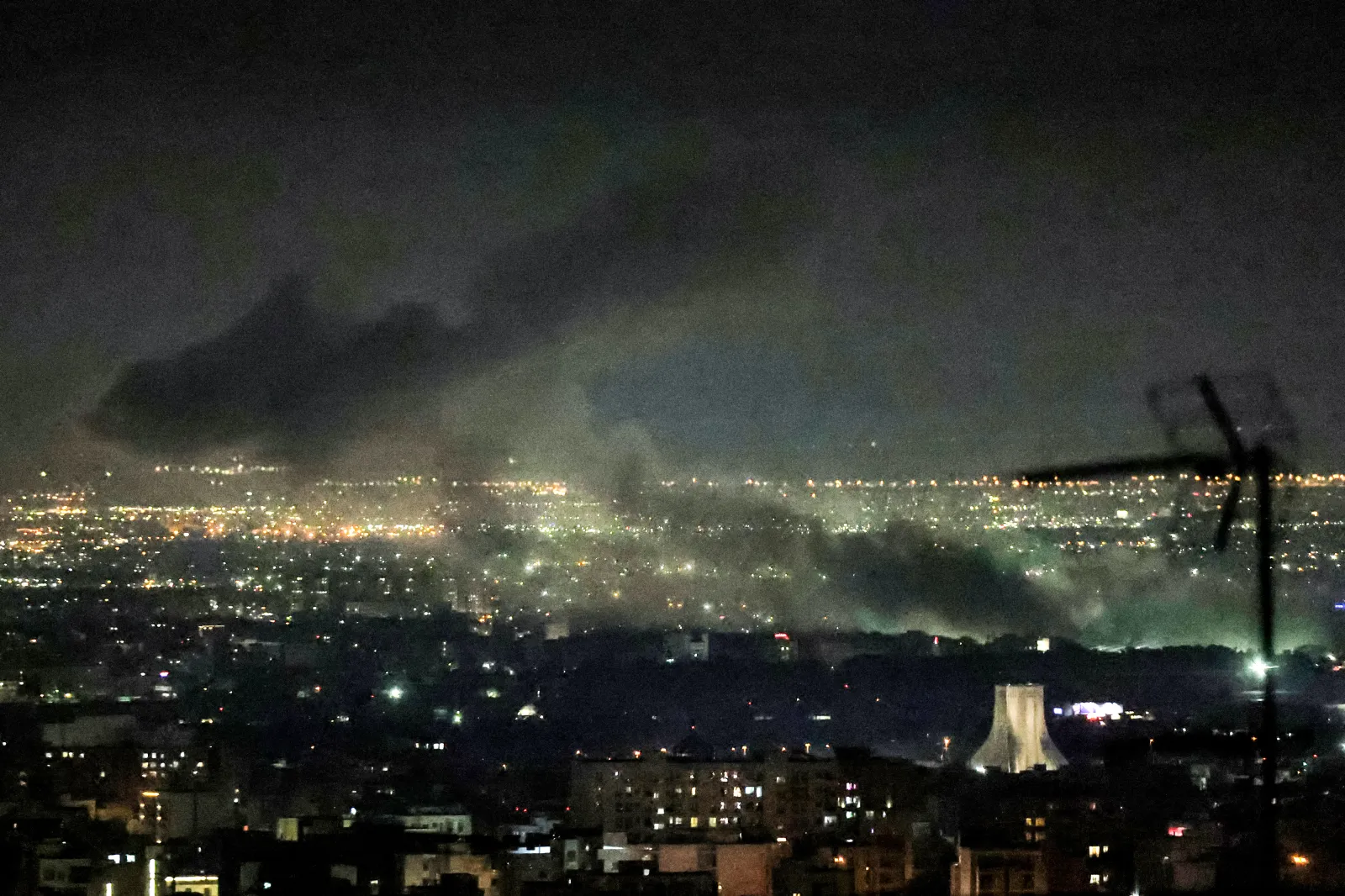
As U.S. President Donald Trump and Israeli Prime Minister Benjamin Netanyahu wage war on not just Iran's nuclear program and military capabilities but also the core of its Velayat-e Faqih system, now headed by the younger Khamenei, the Islamic Republic's top officials are already signaling a desire to seek retribution, rather than compromise, in the wake of the transition.
Khamenei, having lost not only his father but reportedly his mother, sister and son, among other family members, as well to the U.S.-Israeli attack in the opening phase of the conflict late last month, also has his personal reasons for revenge, a path that may prove key to establishing legitimacy in the face of a chaotic succession.
Read More on World
"I do not think Mojtaba would seek legitimacy through moderation or compromise. Quite the opposite," Saeid Golkar, an associate professor at the University of Tennessee-Chattanooga who has written extensively on the inner workings of the Islamic Republic, told Newsweek. "If he tries to establish legitimacy, he will likely do so by showing defiance, endurance, and revenge."
"His political identity has been shaped inside the most hard-line and security-centered networks of the Islamic Republic," Golkar said. "For that reason, he is more likely to present himself as the leader who preserved the system under existential attack, not the one who softened it."
...
Enemy Number One
The United States and Israel have reacted negatively to Khamenei's selection as supreme leader, with Trump telling Axios on Thursday that the White House should have a say in the selection of Iran's leadership, for which "lightweight" Khamenei's anticipated candidacy was "unacceptable."
Speaking to reporters on Monday, a day after Iran confirmed Khamenei's ascension to the top spot, Trump said he was "disappointed" in the development as he and his administration assessed "it's going to lead to just more of the same problem for the country," though he said it would be "inappropriate" to comment on the viability of targeting the new supreme leader.
Trump struck an even more ominous tone on Tuesday, telling Fox News he was "not happy" with the choice of Khamenei and warning, "I don’t believe he can live in peace."
The Israel Defense Forces (IDF) also issued threats to Iranian leadership in the lead-up to Mojtaba Khamenei's election after Israeli strikes targeted a gathering with the 88-member Assembly of Experts tasked with overseeing succession last week. In a Persian-language message published to X on Sunday, as the elite body met to appoint Khamenei, the IDF said that "the hand of the State of Israel will continue to pursue every successor and every person who seeks to appoint a successor."
Israeli Ambassador to the United Nations Danny Danon expressed a similar stance when asked by a journalist on Monday about Trump's position on the U.S. needing to be involved in the selection of Iran's supreme leader and whether the IDF would now go after the next ruler.
"There is no daylight between the U.S. and Israel. The new leader, unfortunately, is more of the same, same ideology, same radical ideas, and then anyone who promotes those radical ideas against us, we will target them, we will find them," Danon said. "I think for the people of Iran to choose their next leadership, we will have to create conditions for them, and that is what we are doing now. But eventually, they will have to stand up, rise up, and choose their own leadership."
Newsweek reached out to the IDF for comment. A U.S. defense official declined Newsweek's request for comment.
Consolidating Power
While the Assembly of Experts ruling has been confirmed and accepted across Iranian government channels, Khamenei faces some internal hurdles as he takes power from the Interim Leadership Council established after the supreme leader's death, which consists of President Masoud Pezeshkian, Chief Justice Gholam Hossein Mohseni Ejehi, and senior cleric Ayatollah Alireza Arafi.
In a similar position to his father upon taking the mantle after the death of the Islamic Republic's founder, Ayatollah Ruhollah Khomeini in 1989, Khamenei does not yet have the expected religious rank of marja' al-taqlid ("source of emulation"), though he may, too, be granted the title by the nation's Shiite Muslim clerics to cement his succession. Unprecedented, however, are the dynastic implications of Khamenei's selection, which some critics liken to those of the former West-aligned monarchy toppled by the Islamic Revolution in 1979.
Meanwhile, Khamenei, 56, inherits a system that has been undergoing years of competition amid an array of factions. While officially enjoying absolute rule, his father, 86 at the time of his death, had increasingly delegated authority to various political and military actors in recent years, most notably the Islamic Revolutionary Guard Corps (IRGC).
As Patrick Clawson, director of Washington Institute for Near East Policy's Viterbi Program on Iran and U.S. Policy, told Newsweek just prior to Khamenei's selection, "to truly master the IRGC, Mojtaba would need some years of promoting those loyal to him," much like his father, and may opt to continue operating behind the scenes and avoiding any major plays until such a time.
Viewing him as unlikely to emerge as a reformer, Clawson argued at the time that "even if he turns out to be more interested in change than I think, I strongly suspect his main interest would be in changing domestic arrangements, not foreign policy," with some immediate steps potentially constituting efforts to rein in massively subsidized gas prices, improving inefficient water and electricity infrastructure and potentially even allowing a degree of greater civil freedoms.
Discontent over economic conditions served as the catalyst for protests that began in late December and later swelled into a nationwide uprising that drew a harsh crackdown from security forces and clashes, leading to thousands of deaths and Trump's initial military build-up.
Golkar, for his part, argued that "Mojtaba Khamenei’s immediate priority would not be ideological innovation, but regime survival."
"His first task would be to keep the core coercive coalition together, especially the IRGC, intelligence bodies, and the remaining clerical and political hardliners around the system," Golkar said. "In the middle of war and under the threat of further decapitation strikes, the regime’s main concerns would be the continuity of command, internal discipline, and the prevention of panic or fragmentation at the top."
"In this context, Mojtaba’s personal survival matters a great deal," he added. "If he survives, even in a highly secluded and protected position, he could still serve as a focal point for coordination among the most loyal parts of the system. He has long worked behind the scenes, and that style may actually fit the present moment. He does not need to appear publicly in a charismatic way to matter."
...
War Goals
While Trump and Netanyahu have repeatedly called for Iranians themselves to overthrow the Islamic Republic, the U.S. side, amid fluid and often shifting messaging, has most consistently stated that the immediate goals of the conflict were the elimination of Iran's missile program and nuclear facilities. Iran has consistently denied seeking weapons of mass destruction in line with a fatwa issued by the late Ayatollah Khamenei, a ruling his son and successor may now be in a position to change amid intense internal debate, even preceding the current conflict.
Trump has recently dismissed the idea of backing a ground offensive headed by Iranian Kurdish dissident groups, many of them based in neighboring Iraq, and has also downplayed the possibility of a U.S.-led land invasion.
Thus far, the younger Khamenei's leadership has yet to impact on the ongoing Iranian military calculus of seeking to absorb the U.S.-Israeli campaign and raise the costs for the enemy, with Iran still launching missiles and drones at not only Israel and U.S. military facilities across the region, but also various targets across neighboring Arab nations, including energy infrastructure.
Iranian Parliament Speaker Mohammed Baqer Qalibaf, an influential principlist with IRGC connections, warned in an X post on Tuesday that Tehran is "certainly not seeking a ceasefire," rather, "we believe that we must strike the aggressor in the mouth so that they learn a lesson and never think of aggression against our dear Iran again."
Another key figure with IRGC connections, Supreme National Security Council Secretary Ali Larijiani, hit back directly at Trump's social media threat to strike Iran "twenty times harder" should the country attempt to close the Strait of Hormuz trade chokepoint on Tuesday, indicating the U.S. leader himself may find himself a target.
"The Ashura-loving nation of Iran does not fear your paper threats. Even those greater than you could not eliminate the Iranian nation," Larijiani wrote on X. "Watch out for yourself — lest you be eliminated."
View 0 Comments
Submit Correction
View Editorial & AI Guidelines