...

By Daniella Gray
Reporter
0
Share
Newsweek is a Trust Project member
See more of our trusted coverage when you search.Prefer Newsweek on Googleto see more of our trusted coverage when you search.
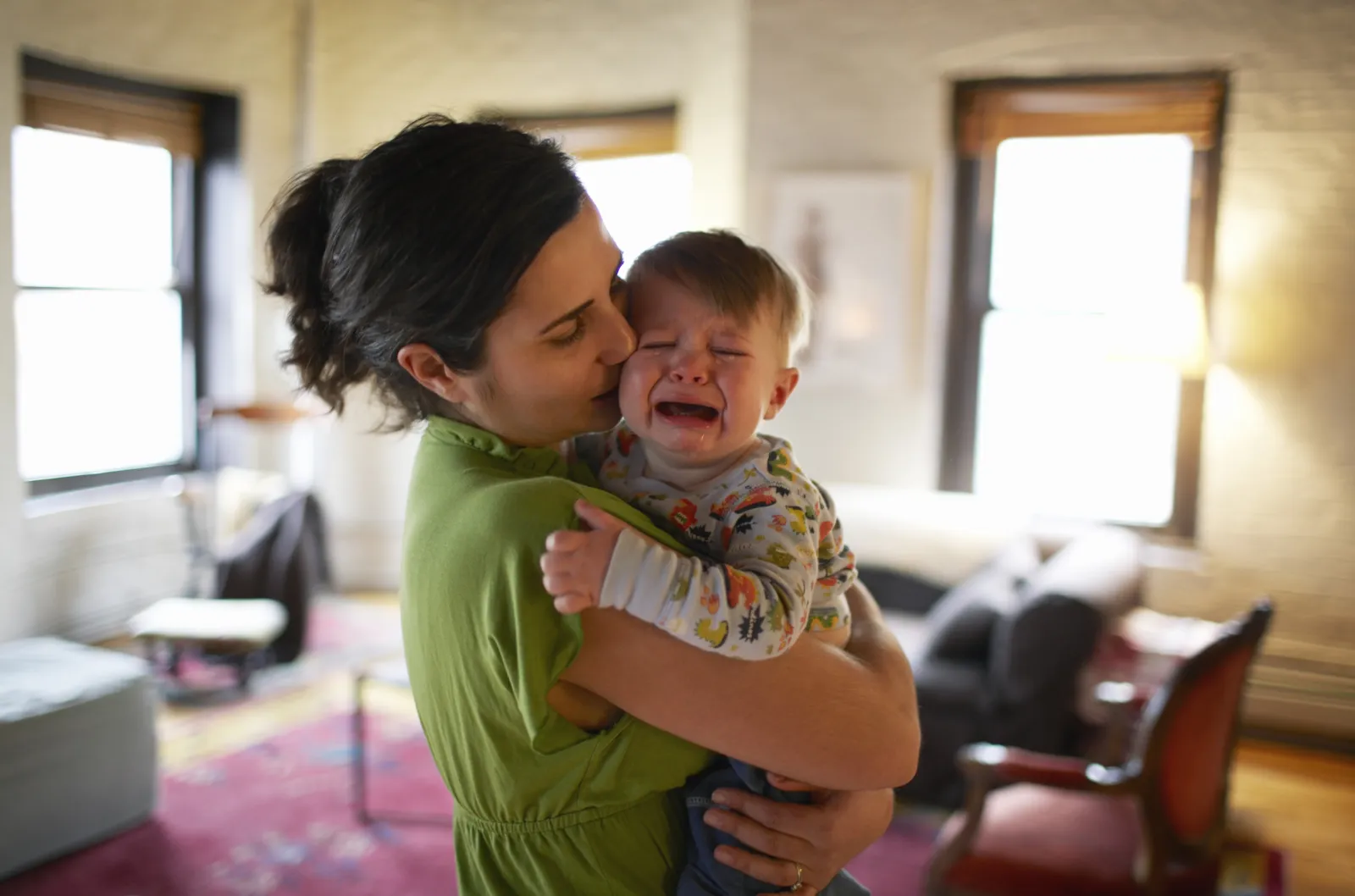
Struggling to soothe a crying baby can be debilitating, but new research suggests it might be more out of parents' control than they think.
A new Swedish twin study has found that how much an infant cries is largely determined by genetics—not parenting style, feeding choices or bedtime routines.
The findings, published in the journal JCPP Advances, offer a fresh perspective to exhausted parents wondering what they could be doing differently.
Read More on Family & Parenting
...
Researchers from Uppsala University and the Karolinska Institutet studied more than 1,000 twins across Sweden, collecting data from parents when the infants were two months old and again at five months.
By comparing identical twins (who share 100 percent of their genes) with fraternal twins (who share roughly 50 percent), the team was able to assess the relative impact of genetics and environment on infant behavior.
The researchers found that crying is largely genetically determined.
"At the age of two months, the children's genetics explain about 50 percent of how much they cry. At five months of age, genetics explain up to 70 percent," said lead author Charlotte Viktorsson, a postdoctoral fellow in psychology.
In other words, a baby's tendency to cry might have more to do with their DNA than anything a parent does—or doesn't—do.
"For parents, it may be a comfort to know that their child's crying is largely explained by genetics," Viktorsson added, and essentially, there are limits to how much parents can influence it.
The remaining percentage, researchers found, was attributed to the "unique environment"—factors specific to each child that weren't clearly captured in the questionnaires, such as subtle differences in care or external stimuli.
The study also looked at nighttime awakenings and how long babies took to fall asleep. In these areas, genetics were less influential—especially in the early months.
At two months, how quickly a baby settled to sleep was mainly influenced by environmental factors. By five months, genetics played a slightly larger role, reflecting infants' rapid development.
Interestingly, the number of times a baby woke during the night appeared to be driven almost entirely by environmental factors.
"This reflects the rapid development that occurs in infants, and may indicate that parents' efforts in getting their child to settle may have the greatest impact in the first months," Viktorsson said.
The researchers are continuing to follow the twins through age three to better understand how sleep and crying evolve in early childhood.
Do you have a tip on a health story that Newsweek should be covering? Do you have a question about parenting? Let us know via health@newsweek.com.
Reference
Viktorsson, C., Yahia, A., Taylor, M. J., Ronald, A., Tammimies, K., & Falck-Ytter, T. (n.d.). Genetic and environmental influences on sleep quality, ability to settle, and crying duration in 2- and 5-month-old infants: A longitudinal twin study. JCPP Advances. https://doi.org/10.1002/jcv2.70023
View 0 Comments
Submit Correction
View Editorial & AI Guidelines