...

By Barney Henderson
Content Director
0
Share
Newsweek is a Trust Project member
See more of our trusted coverage when you search.Prefer Newsweek on Googleto see more of our trusted coverage when you search.
The fatal shootings of Alex Pretti and Renee Nicole Good by immigration officers in Minneapolis have ignited a firestorm that threatens to engulf the entire country.
Pretti, 37, was a U.S. citizen and I.C.U. nurse. He was recording immigration officers and was carrying a licensed handgun. He was shot dead on Saturday morning.
Good, also 37, was also U.S. citizen and mother of three. She was fatally shot by an Immigration and Customs Enforcement (ICE) agent in Minneapolis on January 7 during a federal immigration enforcement operation.
Read More on Analysis
President Donald Trump gave a defiant response to both killings. On Saturday afternoon, he posted a photo of an agent whose hand was bleeding following a separate incident. On Sunday, he told the Wall Street Journal his administration was "reviewing everything," but refused to say if the officer who shot Pretti had acted appropriately. He said ICE was doing a "phenomenal job" in the city.
Trump did suggest he could eventually withdraw ICE officers from the city. However, with the stability of the nation under threat, here's why he needs to do that immediately:
Militarized occupation of a major American city
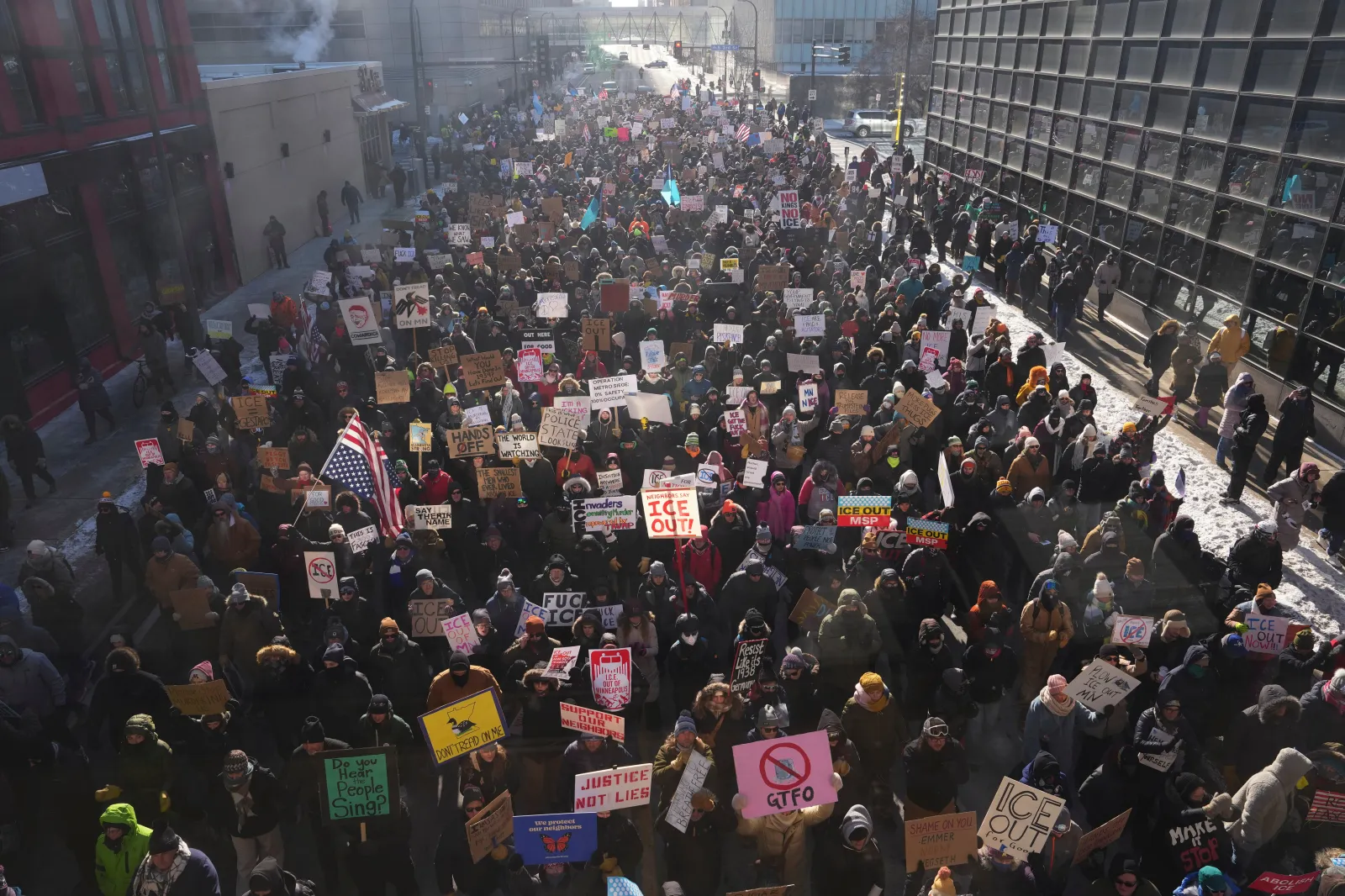
The deployment, dubbed "Operation Metro Surge," has transformed a targeted enforcement action into a militarized occupation of a major American city. Two thousand ICE agents have been sent to Minneapolis—the largest such force in state history—ostensibly to arrest alleged criminals and immigration violators. Yet the collateral consequence has been violent confrontations with civilians and local authorities, widespread civil disobedience, and deteriorating trust in law enforcement.
Trump threatens to invoke Insurrection Act
Trump has defended the use of force, criticized local officials, and even threatened to invoke the Insurrection Act, which would be a drastic measure that would allow the deployment of active-duty troops against domestic protesters. That escalation—rare in modern America outside of natural disasters—risks deepening political polarization and raising constitutional questions about executive overreach.
Public safety at risk
Public safety concerns are now at a dangerous level. While ICE is tasked with enforcing federal immigration laws, its presence has become a flashpoint for street clashes and threatens to catalyze broader unrest. Continued violence further taxes local law enforcement and puts civilians—including vulnerable communities—at risk. The safety of ICE officers themselves has also surged as they increasingly find themselves in hostile situations and targeted by protesters.
...
Political cost to Trump and GOP mounting
The political cost is mounting for both Trump personally and for the wider Republican Party. The deaths of Pretti and Good have mobilized labor groups, Democratic lawmakers, and moderates across the country to oppose ICE’s tactics and funding, with some Democrats threatening to block Department of Homeland Security appropriations. A stand-down could defuse a potential government shutdown fight and undercut the narrative that Republicans are indifferent to federal overreach and civil liberties.
Constitutional damage
There is also a constitutional and governance argument for why Trump should stand ICE down: federal enforcement should not trample local sovereignty or escalate into punitive occupation. Minneapolis officials, including Governor Tim Walz and Mayor Jacob Frey, have repeatedly called for the withdrawal of ICE, framing the deployment as a violation of Minnesota’s autonomy and community trust.
Undermining U.S. foreign policy
Finally, Trump's ICE crackdown is damaging America’s global credibility on human rights and democratic norms. The images of federal law enforcement clashing with largely peaceful protesters over immigration enforcement contradict U.S. rhetoric about supporting citizens’ rights abroad, especially when Trump has publicly framed Iranian anti-government demonstrations as deserving U.S. solidarity and possible intervention. He told the protesters earlier this month that "help is on its way."
This disconnect invites foreign governments and domestic observers alike to see U.S. policy as inconsistent or hypocritical: advocating for protester protections in Tehran while federal forces suppress dissent at home. In the context of the ongoing unrest in Iran, where activists have reported that as many as 30,000 protesters have been killed amid brutal crackdowns, Washington’s leverage depends heavily on its image as a defender of civil liberties.
What the Right is saying
Many Trump allies and right-wing commentators have strongly defended ICE’s presence in Minneapolis, framing the federal operation as necessary to enforce immigration laws and maintain public order. Trump has publicly blamed local "radical left" politics for creating the chaos around the operation, insisting that agents were acting lawfully and that violent incidents were the fault of protesters resisting enforcement. MAGA influencers on social media have echoed this line, with some declaring the use of force justified and criticizing local officials for undermining law enforcement credibility. Vice President JD Vance has similarly backed ICE, urging cooperation between local and federal authorities and warning against escalating tensions, though he has couched his support with calls to "tone down the temperature."
That said, conservative reactions are not monolithic. Several Republican lawmakers—including figures like Sen. Bill Cassidy and some GOP state legislators—have expressed concern about how the operation is being conducted, calling for transparent investigations into the shootings and emphasizing that enforcement must respect constitutional rights and public perception. Even within the GOP, there are criticisms of what some describe as an overly militarized federal approach that could alienate moderate voters and fuel broader backlash. In Minnesota, local Republican officials have largely stood with Trump and ICE, blaming Democratic opposition for the escalation, but the optics of federal agents clashing with civilians could carry political costs ahead of this year's Midterm elections.
What the Left is saying
Progressives and Democratic leaders have denounced the Minneapolis ICE surge as an illegal and dangerous federal overreach that has escalated violence rather than improved public safety. Minneapolis City Council member Aisha Chughtai has been a vocal critic, saying of the deployment, "The number one deadly killer of Minneapolitans right now is ICE" and urging: "The only thing that’s within our control as individuals right now is that we continue to show up, to resist, to be in the streets, to be in our neighborhoods, and continue calling for ICE to to leave our city, to leave our state."
At the national level, Democratic voices have likewise seized on the crisis to call for accountability and policy change. Former President Barack Obama described the situation following the second fatal shooting by federal agents as a "heartbreaking tragedy," and "a wake-up call to every American, regardless of party, that many of our core values as a nation are increasingly under assault." Prominent Democratic lawmakers like Rep. Ilhan Omar (D-Minn.) have been even more direct, declaring the actions of ICE and Customs and Border Protection in Minnesota amounted to "another murder" and demanding that "ICE and CBP (Customs and Border Protection) must leave Minnesota immediately."
What Trump should do next
Standing ICE down immediately isn’t weakness—it could be a calculated step toward de-escalation, restoring public confidence, and recalibrating immigration enforcement in a way that upholds both law and civic order.
View 0 Comments
Submit Correction
View Editorial & AI Guidelines