
...

By Brendan Cole
Senior Reporter
0
Share
Newsweek is a Trust Project member
See more of our trusted coverage when you search.Prefer Newsweek on Googleto see more of our trusted coverage when you search.
CIA Director John Ratcliffe's surprise trip to Moscow was aimed in part at delivering a warning to Russia, offering the first significant insight into the purpose of the rare visit, according to reports from several news outlets.
Ratcliffe urged Moscow not to attack NATO allies, including countries in the Baltic region, and pressed Russia to scale back its support for Iran, Politico reports, according to people familiar with the matter. The revelations come a day after Ratcliffe traveled to Moscow for meetings with Russian intelligence officials in his first publicly known visit to the Russian capital as CIA chief.
Kremlin spokesman Dmitry Peskov previously said Wednesday Ratcliffe had met intelligence officials during his visit, and not the Russian president, although Vladimir Putin was briefed on the talks.
Read More on News
President Donald Trump said he had sent Ratcliffe to Moscow with hopes he could help end the war in Ukraine. "Something may come out of it. We’re working very hard to get that war ended," Trump told conservative radio host Glenn Beck on Wednesday.
The new reporting provides a clearer picture of the purpose of Ratcliffe's trip, which had initially prompted speculation about several possible objectives, including Ukraine peace efforts, Russia's military posture and potential threats to NATO.
"POTUS doesn't send the director of the CIA to Moscow unless for something serious," John Foreman, former U.K. defense attaché to Russia, told Newsweek.
Newsweek has contacted the CIA and the White House for further details.
...
Warning Against Moscow’s Threat to NATO
In reporting Putin’s draft plans, The Wall Street Journal said that the Russian military has carried out mobilization readiness exercises in the Kaliningrad region, an exclave in the Baltic which would be at the center of any conflict between Moscow and the alliance.
The intelligence assessments, also reported by other outlets, have outlined scenarios for Russian escalation, ranging from a cyberattack to a small-scale incursion to challenge NATO’s unity and commitment to Article 5 mutual defense clause.
The visit may have addressed escalation concerns regarding Ukraine or Europe, said Foreman. "Setting out consequences of any Russia misadventures is always good," he added.
"The severe risks, including nuclear retaliation, of a Russia test of NATO still outweigh the uncertain strategic benefits, especially if the U.S. signals it remains solid on Article 5, as it has been recently including at the Ankara summit."
Iran's Support for Russia
Ratcliffe told a Senate Intelligence Committee hearing on March 18 that Iran was asking Russia to share intelligence on U.S. military assets in the Middle East, and Moscow’s ties with Tehran could have been a focus of his discussions.
Ratcliffe’s testimony followed reports, which Moscow has denied, that it had given Tehran information on the locations of U.S. military facilities, including ships and aircraft in the Middle East during the Iran war.
RUSI Associate Fellow Sari Arho Havrén said her "best guess" was that the visit primarily involved a warning over suspected Russian intelligence-sharing with Iran or possible hybrid activity in the Baltics, while also sounding out Moscow over Ukraine and detainees.
"CIA directors don’t go to Moscow unless it is to ask for something," she told Newsweek. She said that could involve asking Russia to stop providing targeting information to Tehran or warning that Washington was aware of possible Russian preparations in the Baltics.
Related Story

John Ratcliffe’s Mystery Moscow Trip Is a Choose-Your-Own-Adventure Story
Warning Putin Against Mobilization
The last publicly known visit by a CIA director to Moscow was in November 2021, when Bill Burns warned Putin not to launch a full-scale attack on Ukraine, which he ultimately did only months later, on February 24, 2022.
"We know the backdrop in both Ukraine and Europe and the last time a CIA Director went there was triggered by specific intel, not just for a chat or to hand over a letter," said Foreman.
Flight data indicated that a U.S. Air Force Boeing C-17A plane Globemaster III flew from Joint Base Andrews in Maryland to Moscow’s Vnukovo Airport via Riga, Latvia. It landed Tuesday morning and departed Moscow four hours later. U.S. officials subsequently confirmed Ratcliffe’s visit.
The Journal suggested earlier that one possible theory was that Ratcliffe wanted to warn Putin against a military mobilization of the population, following U.S. intelligence reports that a draft was being readied following next month’s parliamentary elections.
Ukrainian president Volodymyr Zelensky has also said that Russia was looking to draft up to 300,000 additional troops after parliamentary elections scheduled for September 20, in order to replenish major losses from the war.
Putin announced a partial mobilization in September 2022, a disorderly process that prompted hundreds of thousands of Russians to leave the country.
The Kremlin has repeatedly denied claims that another mobilization is planned, with Peskov telling state media on Tuesday: "The Ukrainian authorities are spreading all of this."
Related Story
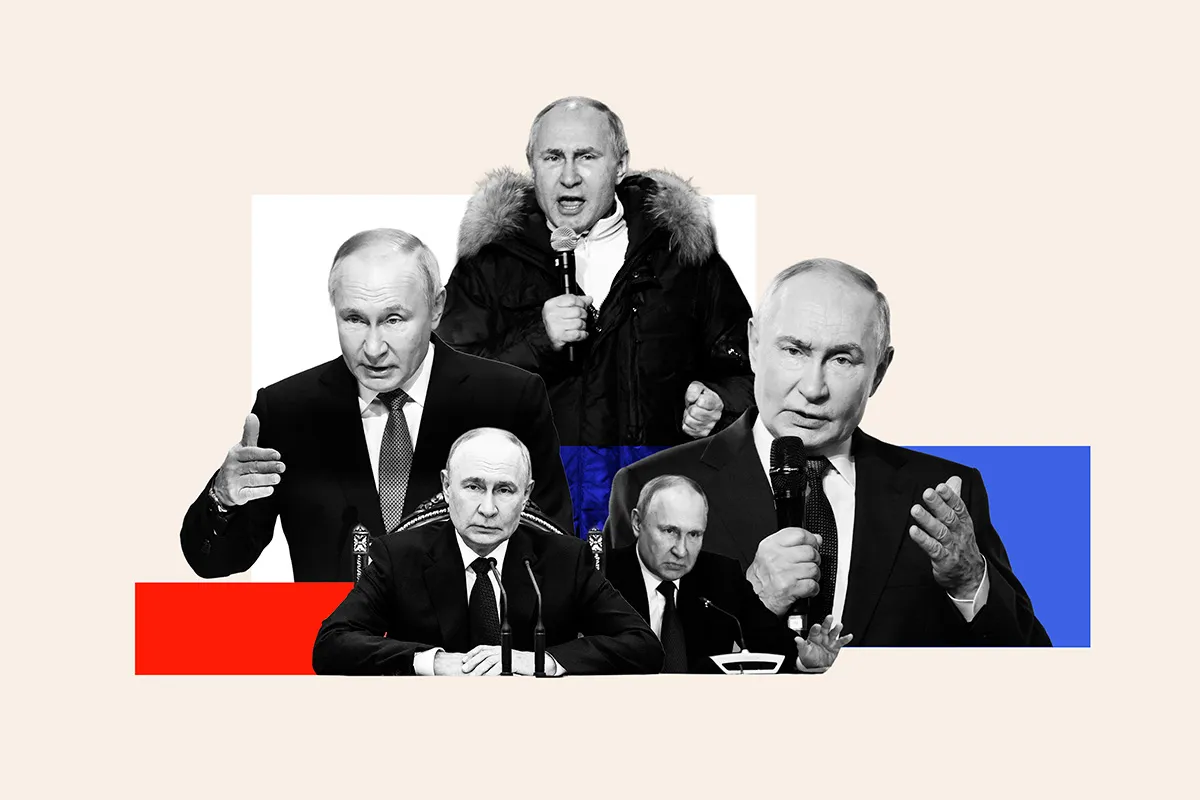
What Vladimir Putin’s Shifting Vocabulary Reveals About Russia’s Ukraine War
Warning Against Escalation and to Kickstart Ukraine Peace Efforts
Ratcliffe’s visit comes while U.S.-mediated efforts to end Russia's war against Ukraine remain stalled and could have been a means to assess whether Moscow is prepared to negotiate seriously.
Peskov said that Ratcliffe came to Russia for "contacts between intelligence agencies."
Meanwhile, pro-Russian bloggers speculated that he was seeking to warn Russia against escalating the Ukraine war.
One pro-Kremlin blogger, Yuri Baranchik wrote on Telegram that Ratcliffe was "a completely different type of negotiator, especially when it comes to Ukraine," than Trump's negotiators Steve Witkoff and Jared Kushner.
Baranchik said that Ratcliffe could be useful to Trump in warning Moscow that if it was not ready to soften its conditions for ending the war, the United States may expand support for Kyiv, primarily in the areas of intelligence and long-range strikes.
Also, if Moscow were ready to make certain concessions, limiting American intelligence support for Ukraine could be part of a deal, he added.
Baranchik described how Ratcliffe had been in contact with Foreign Intelligence Service (SVR) chief Sergey Naryshkin and back in March 2025, they had agreed to maintain a direct line of communication to manage crises and de-escalate tensions.

...
American Prisoner Exchanges
The CIA helped secure the release of jailed Americans in Russia such as the 2024 exchange that freed Journal reporter Evan Gershkovich and former U.S. Marine Paul Whelan, and there was earlier speculation that a prisoner swap could have been one purpose of Ratcliffe’s visit.
Ratcliffe had played a role in negotiations surrounding the release of Ksenia Karelina, a Russian-American citizen imprisoned in Russia for over a year after being convicted of treason over a donation to a charity supporting Ukraine.
Russia also released former U.S. Marine Robert Gilman earlier this month.
Contact Newsweek editors on this story: Matthew Robinson, Mike Hirst, Anna Commander
View 0 Comments
Submit Correction
View Editorial & AI Guidelines