10
Loading video...

By Khaleda Rahman
National Correspondent
0
Share
Newsweek is a Trust Project member
See more of our trusted coverage when you search.Prefer Newsweek on Googleto see more of our trusted coverage when you search.
Jackie Hill began exploring alternative schooling methods while she was pregnant with her first child but ultimately decided that homeschooling was the best course for her son, now 8 years old, when he began showing signs of being advanced from an early age.
“He taught himself to read by the time he was three,” Hill told Newsweek. “He figured out phonics without any explicit instruction.”
She and her husband were living in Canada at the time and when the COVID-19 pandemic hit, enrolling their son into preschool was not an option. Hill continued homeschooling her son, as well as her 6-year-old daughter, after the pandemic ended and her family moved to New Fairfield, Connecticut.
Read More on News
While the pandemic sparked a surge in the number of households homeschooling their children, research shows that many families are choosing to keep homeschooling years on, driven in part by the desire to tailor their children's education.
According to an analysis of U.S. Census data by the Johns Hopkins Institute for Education Policy, 5.92 percent of school-aged children were reported as homeschooled during the 2023-24 school year—up from 5.82 percent the previous school year and almost double the amount—2.8 percent—who were homeschooled in 2019 before the pandemic.
Of the 21 states that have reported homeschool participation for the 2023-24 school year, 19 saw reported increases, according to an analysis by the Homeschool Research Lab at Johns Hopkins Institute for Education Policy.
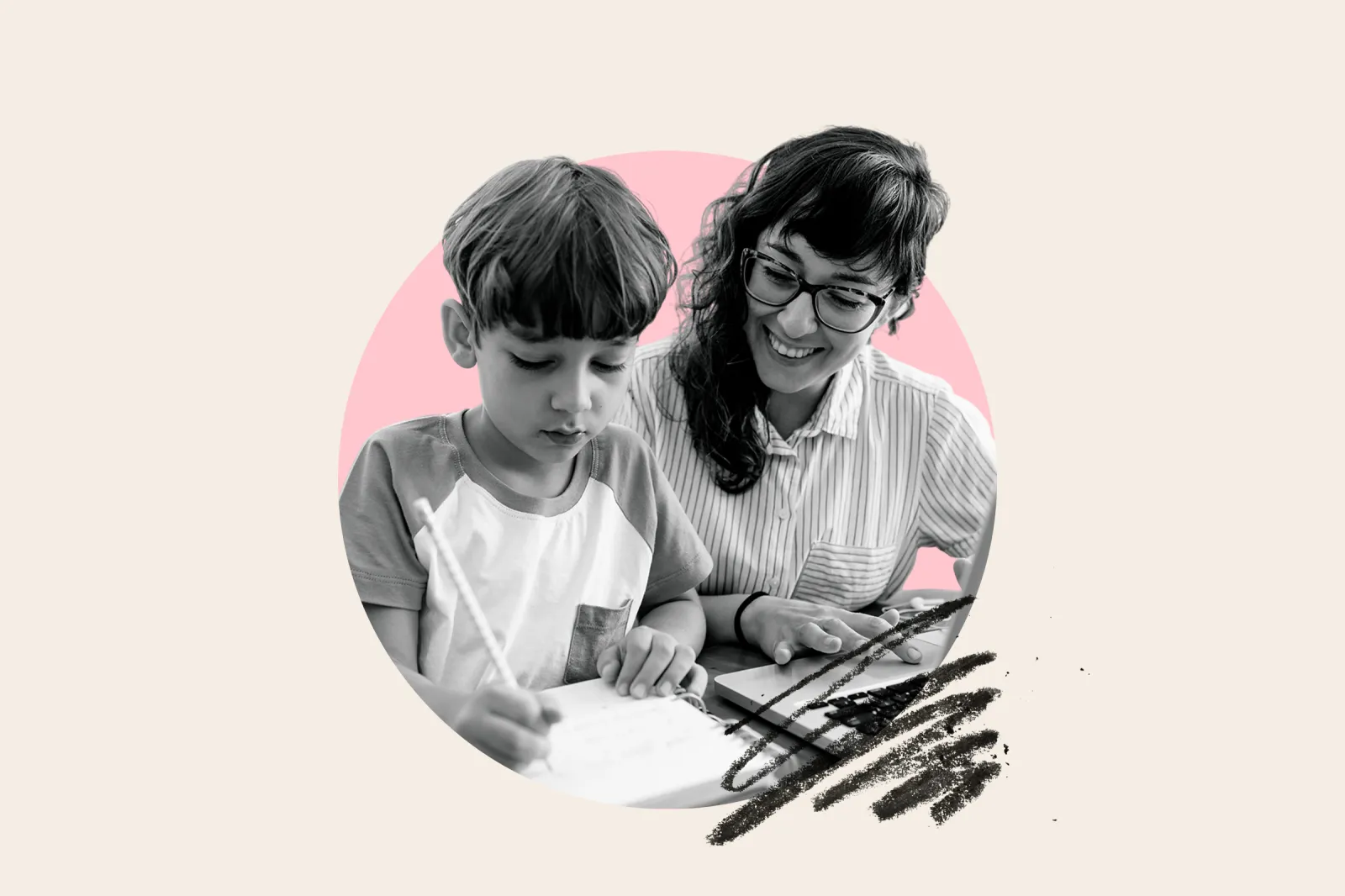
Photo-illustration by Newsweek/Getty
Homeschooling “hit kind of a fever pitch during COVID,” Tess Ulrey, the executive director of the Coalition for Responsible Home Education (CRHE), told Newsweek. “I think that what we've seen post-pandemic is a diversification of what a homeschooling parent looks like.”
Once a niche practice chosen most often for religious reasons, Ulrey said more families are now choosing to homeschool because “it’s the best educational choice for their child.”
Parents cite multiple factors for their decision to homeschool, according to an analysis by the Pew Research Center of data from the National Center for Education Statistics earlier this year.
The most common reason cited was concern about the school environment, including safety, drug exposure, or negative peer pressure, with 83 percent of parents saying it was a factor. Dissatisfaction with academic instruction at schools was also a top concern, cited by 72 percent. About half of parents said the desire to provide religious instruction and to provide a nontraditional approach to their children’s education were factors.
Education became a culture war battleground in the wake of the pandemic, with conservatives pushing to eliminate what they viewed as “wokeness” in the classroom, and several Republican-led states passing laws limiting what schools can teach about race and sexuality.
Kymberly Kent, who has been homeschooling her children for more than two decades, told Newsweek she started with her eldest daughter, Samantha, in 2003 after feeling dissatisfied with the education that was being offered at traditional schools.
“None of the programs we looked at would challenge her, as she was an early reader,” she said.
Kent went on to homeschool five other children and is still homeschooling her youngest child who is currently in high school.
Nine years ago, Kent founded eXtend Homeschool Tutorial, a homeschool program that she says aims to offer “affordable, quality core academic a la carte classes taught in a group setting.” This year, the program’s classes are being conducted online while there are in-person gatherings twice a month for science labs, literature presentations and more.
She said the program "reflects what is becoming a growing trend of families homeschooling in community with group instruction, especially since COVID."

...
Parents in the program, which currently serves about 85 students, have been driven to homeschool for various reasons, Kent said. Some have cited concerns about safety, including bullying, while others have issues with what is or isn’t being taught in schools.
“They are looking for programs utilizing culturally sensitive and affirming curriculum,” Kent said. “Still other families choose to homeschool based on family values and/or sincerely held personal beliefs that may not necessarily align with what they are experiencing in the public setting. Truly, the reasons for homeschooling are as varied as homeschoolers themselves.”
For Hill, her decision to homeschool had nothing to do with concerns about what schools were teaching but a desire to support her children's needs.
"I have no issues with whatever they might be teaching in schools," she said. "We're really just looking to support our kids' individual needs and how they learn."
Another factor was that Hill's son sustained hearing loss after undergoing treatment for cancer, she said. “I wasn’t sure that that traditional schooling could meet his needs or at least as easily as I could here at home, because I can give him whatever he needs.”
Steve Kennedy, a father-of-four based in Newtown, Connecticut, who began homeschooling his children—aged 6, 7, 9 and 11— before the pandemic, said he and his wife had never planned to homeschool, but were drawn to the flexibility it offered.
And because they both work remotely and have some flexibility, they are able to make it work.
“We have our own schedule. It’s not like doing school at home," he told Newsweek. "Usually, they'll do some kind of morning work, and then we'll get them out to go to something. It might be going to a museum or something like that where you can use that as an educational opportunity."
Kennedy said concerns about safety had also played a role in his family’s decision to homeschool. Newtown is home to Sandy Hook Elementary School where 20 first-graders and six teachers were killed in a school shooting in 2012.
“I do think that it was a factor,” he said. “There are definitely people that that we are in community with, and that kind of thing was even bigger for them, it was more of a motivating factor.”
But one concern Kennedy said he and his wife had about homeschooling was that their children’s social life may be limited.
He says what sold them on the idea was their local homeschool co-op where other homeschooling parents collaborate to teach classes and homeschooled children can interact on a regular basis. He said his children also take part in a wilderness program that uses outdoor settings for learning.
Hill, who is part of the same co-op, agrees that her children are not missing out on developing friendships by not being enrolled in traditional public schools.
“My kids are seeing the same group of kids at least three days a week. Some of them they have classes with. They also have the wilderness program,” she said. "In my opinion, they definitely do not miss out on socialization.”
Kent also disputed that homeschooling does not mean children are less likely to get into college. In 2021, Harvard researchers that looked at more than 12,000 children between 1999 and 2010 found those who were homeschooled were 23 percent less likely to attend college than those in public school.
But Kent argued that homeschooling sets children up well for higher education, pointing to her own children's success as examples of "homeschool excellence."
Kent's eldest daughter Samantha, 27, credited homeschooling with helping her get accepted to the Pennsylvania Academy of Fine Arts on a full scholarship. She told Newsweek that while homeschooling is "not for the weak," it was the "best way to go" for her and many others. "I was reading and writing grades higher than my peers, while still getting plenty of socialization," she said.
Another of Kent's daughters, Hannah Hoffman, 23, said homeschooling had given her the tools to excel in college, leading her to graduate summa cum laude with a degree in psychology.
Hoffman, an early childhood educator who is expecting her first baby, also said she's planning to homeschool her child when the time comes. "With the way the world is changing today, homeschooling gives me the peace of mind that I can be an active participant in my daughter's education and as a teacher, that is very important to me," she told Newsweek. "I am incredibly grateful that my mom made the bold decision to homeschool us."
Ulrey notes—and Kennedy and Hill agree—that being able to educate children at home is a privileged position that isn't possible for every family, especially single-parent households. But Kent, who is a widow, said many single and working parents can and do make it work.
"You have aunties, you have neighbors, you have friends that come alongside to make it possible as a single parent to homeschool," she said.
Still, it remains difficult to accurately assess the scale at which families are homeschooling their children across the county.
“We definitely feel like it is rising,” Ulrey said. “One of the challenges, though, is that many states actually don't require homeschooling families to report to a school district or to notify a school district so there's really no way to accurately capture how many families are doing it.”
But Kennedy feels homeschooling has become more normalized in the aftermath of the pandemic, and something that more and more families will embrace going forward.
“I think that it was already expanding, and then the pandemic really just like supercharged that,” he said. “In the same way as now working from home is a completely normal thing after the pandemic, I think for some people, it was like school from home is a normal thing.”
View 0 Comments
Submit Correction
View Editorial & AI Guidelines