10
Loading video...

By Billal Rahman
Immigration Reporter
0
Share
Newsweek is a Trust Project member
See more of our trusted coverage when you search.Prefer Newsweek on Googleto see more of our trusted coverage when you search.
The path to a United States green card has always been complex, but under the Trump administration, it has become increasingly uncertain, experts tell Newsweek.
A series of policy changes enacted by the federal government have tightened vetting, slowed processing in certain categories, and introduced new layers of administrative scrutiny for applicants. While lawful permanent residents themselves are not directly affected by most of the changes, those seeking permanent residency are navigating a system that many say has become more rigid, slower, and less predictable. Tougher visa policy measures have also contributed to a more restrictive environment for immigrant visa applicants abroad.
Since 2025, U.S. Citizenship and Immigration Services (USCIS) has issued a series of policy updates reshaping how green card applications are reviewed. The agency is responsible for administering the country’s immigration benefits system, processing applications for green cards, work permits, citizenship, asylum, and other legal immigration status determinations, and making decisions on eligibility through petitions, interviews, and background checks.
Read More on U.S.
Ricky Murray, a former senior USCIS official who left the agency in late 2025, said that while there have been no major statutory or regulatory changes to the adjustment-of-status process, enforcement practices have made filing for a green card “more tedious than ever.”
"USCIS, like almost all federal agencies, faced a mass exodus of employees last year," Murray told Newsweek. "This means they struggle with staffing to do the required vetting and interviews needed for adjustment of status. This has slowed adjudications to a crawl, meaning it is taking much longer to get a green card than it has in the past."
A spokesperson for the Department of Homeland Security told Newsweek, "The Biden administration failed American citizens by undermining basic vetting and screening processes for aliens. Unfortunately, this recklessness allowed dangerous people, including national security threats, into our country who may pose a serious risk to the nation.
"Verifying identities and personal histories of aliens from various countries requires a rigorous process—one that prioritizes the safety of the American people. USCIS has paused adjudications for aliens from President Trump’s designated high-risk countries while we work to ensure they are vetted and screened to the maximum degree possible."
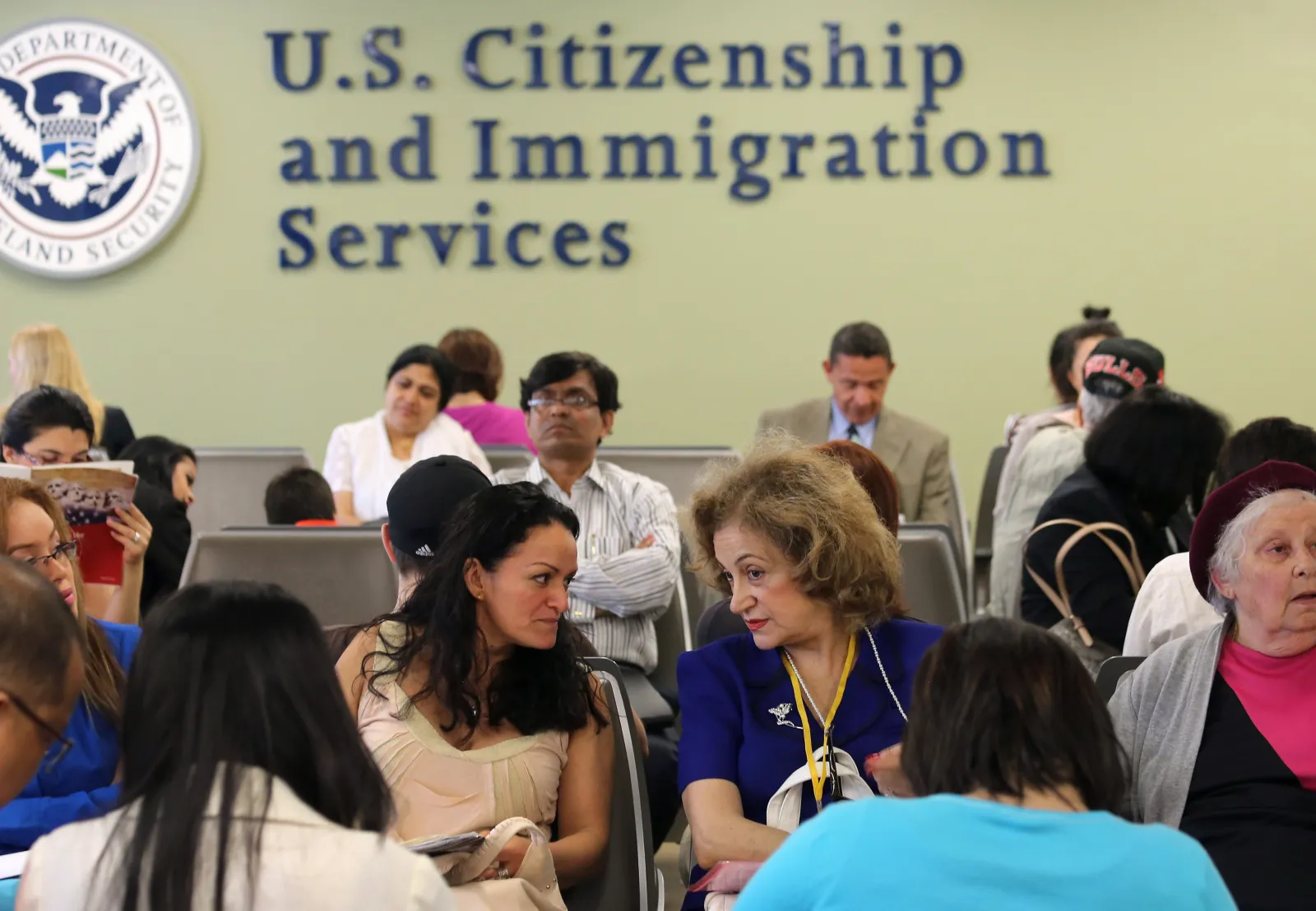
...
Murray said USCIS has increasingly been rejecting applications for "administrative reasons," such as incorrect fees, missing signatures, or outdated form versions, and that applicants are more often seeing outright rejections rather than receiving requests for evidence to correct errors.
That change can have significant financial consequences, as applicants are frequently required to refile and pay filing fees again after an initial rejection, Murray said. He also pointed to longer processing times, which he attributed to more extensive background vetting and fraud screening, as well as staffing constraints within USCIS that have slowed adjudications.
"Even if the applicants get through the filing gauntlet, because of the additional background vetting and screening, looking for national security and fraud issues, cases are taking much longer to adjudicate," Murray said.
USCIS data shows the agency is carrying a substantial backlog of immigration cases. At the end of fiscal year 2025, there were approximately 11.65 million pending applications and petitions overall. Of those, about 6.28 million cases were classified as backlogged, meaning they had exceeded USCIS’s own target processing times. A further 250,000 cases were still in the front log waiting to be entered into the processing system. The figures underscore sustained pressure on the immigration system, including the adjudication of green card applications.
Beyond the core green card process, Murray said applicants are experiencing delays in receiving employment authorization and advance parole, documents that allow individuals with pending adjustment-of-status applications to work and travel while their cases are processed. What previously took only a few months, he said, is now taking considerably longer in many cases.
"These rejections and denials are costing applicants time and money, in many cases thousands of dollars," Murray said.
He added that employment authorization documents have also seen shorter validity periods in some cases, requiring applicants to renew work permits before their green card applications are resolved, adding further administrative burden and uncertainty for those dependent on uninterrupted employment.
"All in all, this is a tedious dance applicants have to walk to get to the green card nowadays," Murray said.
On August 1, 2025, USCIS updated its family-based immigration guidance, tightening evidentiary standards in marriage and family-based petitions and expanding officer discretion in adjudications. The agency said the changes were intended to improve consistency and strengthen fraud detection.
On October 17, USCIS issued further guidance reinforcing how officers assess the authenticity of family relationships, including marriage-based green card cases, expanding documentation expectations, and increasing scrutiny in adjudications.
Around the same period, the Department of Homeland Security ended automatic extensions of Employment Authorization Documents for certain renewal applicants on October 29, 2025, increasing the risk of work interruptions for individuals with pending green card applications.
Procedural changes followed in November 2025, when immigrant visa applicants were required to attend interviews in their country of residence, according to the State Department.
Amid reports of migrants with pending green card applications being detained during routine immigration check-ins, the Trump administration has expanded enforcement actions and increased removals as part of a broader hard-line immigration strategy. In some cases, individuals who previously might have been allowed to continue their applications while at liberty are now being taken into custody during scheduled appointments or interviews.
At the same time, federal immigration authorities have moved toward heightened vetting of certain pending green card cases, particularly those involving applicants from designated countries, which has contributed to longer processing times and increased uncertainty. Following the shooting of two National Guard members in Washington, D.C., the administration also signaled plans to further tighten immigration controls and review green cards, although details of implementation have varied across agencies.
Additional measures in December 2025 introduced adjudication holds on certain immigration benefit requests filed by nationals of designated high-risk countries, requiring additional vetting and extended review times.
Taken together, these shifts in policy have contributed to longer waits and increased uncertainty across the system, particularly for those navigating pathways to permanent residency, experts said.
The State Department also paused immigrant visa issuance for nationals of 75 countries under updated security and vetting rules introduced in January 2026. While applicants can still submit applications and attend interviews, final visa issuance has been suspended pending additional review.
Adam Klein, a former senior Department of Homeland Security official, said there is an important distinction between strengthening vetting and expanding discretionary judgment in ways that may affect expression and behavior.
"There’s a real distinction here that’s getting lost," Klein told Newsweek. "Strengthened screening and vetting, in itself, is not the issue—every system needs integrity. But the direction this is moving raises deeper concerns. The expansion of social media review, financial scrutiny, and broader 'risk' assessments is increasingly blurring the line between evaluating eligibility and evaluating expression or belief."
"When applicants are effectively required to make their online presence public and are assessed for 'attitudes' or perceived alignment, it creates a powerful incentive to self-censor. That’s not just vetting—it’s a potential chilling effect on dissent."
Update, 19/4/26, 3:20 a.m. ET: This article has been updated with comment from the DHS.
View 0 Comments
Submit Correction
View Editorial & AI Guidelines