...

By Barney Henderson
Content Director
0
Share
Newsweek is a Trust Project member
See more of our trusted coverage when you search.Prefer Newsweek on Googleto see more of our trusted coverage when you search.
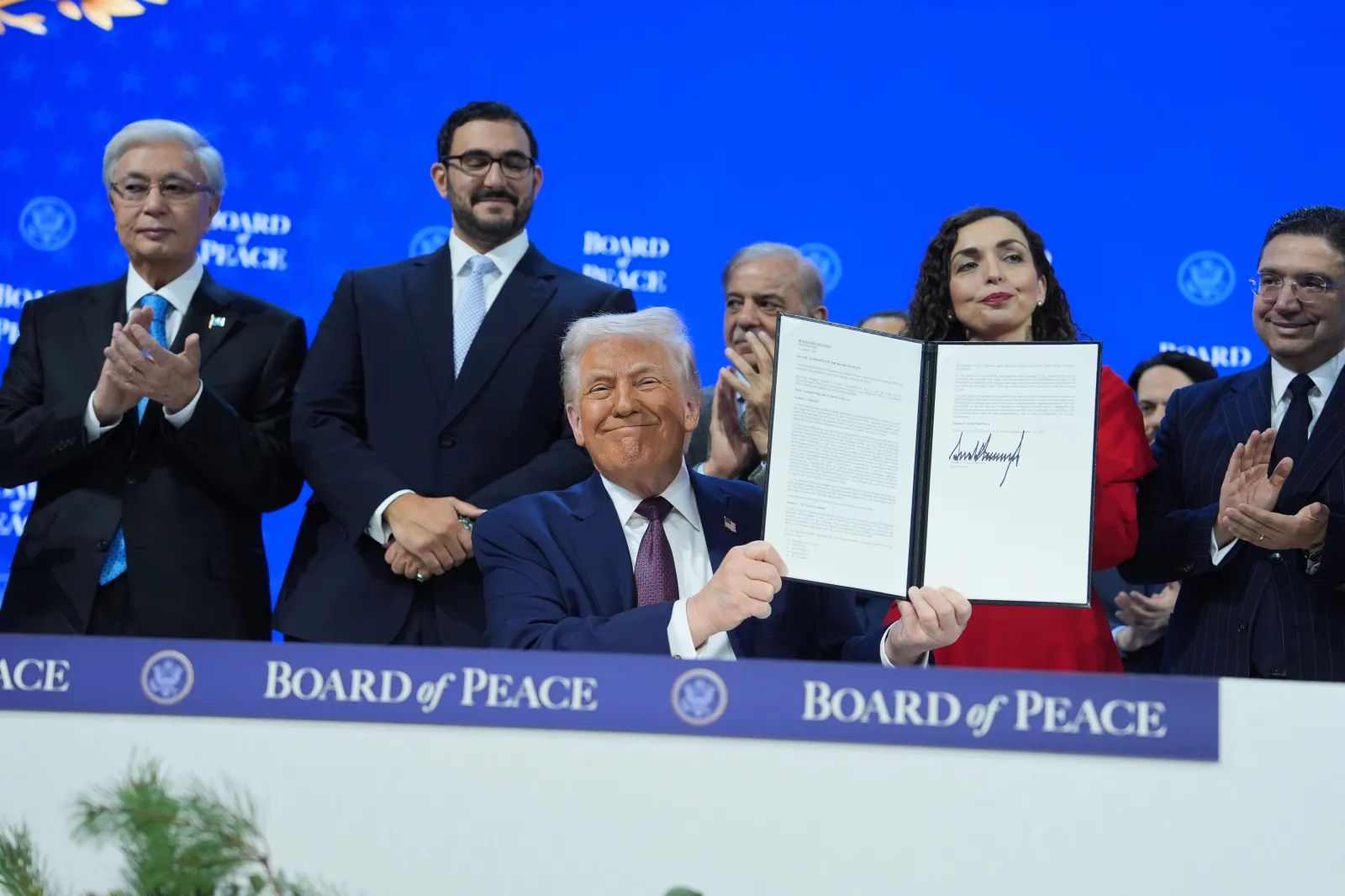
Donald Trump inaugurated his "Board of Peace" Thursday as a bold solution to lead efforts at maintaining a ceasefire in Israel's war with Hamas.
The U.S. President said "everyone wants to be a part" of the body that could eventually rival the United Nations, despite many of America's key allies such as Britain and France opting not to participate mainly because of the involvement of Vladimir Putin.
He has pitched the plan as a way to end wars faster, cut through bureaucracy, and replace what he calls the "war machine" with dealmaking. The existing system, he says, has failed—producing long wars, stalled peace processes, and strategic drift.
Read More on Opinion
At an unveiling event in Davos, Trump claimed: "It’s going to be the most prestigious board ever formed." He insisted it would work with the U.N., despite a leaked document suggesting it could replace its functions.
However, the Board of Peace is far more likely to fail than deliver lasting peace. Here's why:
1. Already too many institutions
The State Department, Pentagon, and intelligence community already manage diplomacy and conflict resolution. A new board operating alongside—or above—these institutions would either duplicate their work or undermine it. In practice, it would almost certainly do both.
...
2. No enforcement mechanism
The Board of Peace would also suffer from a fatal enforcement gap. Like the U.N., it could broker agreements but would then lack the means to compel compliance.
It would not command troops, control sanctions policy on its own, or bind future administrations. Without enforcement power, peace would depend entirely on goodwill—something that is not in abundance during a war. Violations would be met with statements rather than meaningful consequences.
3. Legitimacy gap
Peace agreements endure only when the parties involved believe the process is credible. A presidentially appointed board, lacking clear legal authority or congressional oversight, would struggle to command trust abroad.
Allies would wonder whether its promises would survive the next election. Adversaries would test its resolve. The result would be deals that look decisive on paper but unravel the moment political pressure shifts.
4. Trump's diplomacy
Trump’s own diplomatic record is a fourth flaw. His instinct is to bypass institutions in favor of leader-to-leader relationships, betting that personal rapport can cut deals.
Sometimes this produces dramatic summits with photo opportunities and headlines. But securing lasting peace requires more substance. Without buy-in from militaries, civil societies, and regional actors, agreements reached at the top rarely hold at the ground level.
What is the Right saying?
Many on the right are embracing the Board of Peace as an expression of "peace through strength"—the idea that bold U.S. leadership backed by American power can bring adversaries to the table and enforce stability.
This principle, long a Republican foreign-policy touchstone, holds that strong leadership deters conflict and creates diplomatic leverage. Supporters say the board could break international deadlock in places like Gaza by consolidating willing states around U.S. leadership, rather than relying on what they regard as an ineffective status quo at the United Nations.
What is the Left saying?
Many on the Left contend that the Board of Peace risks undermining established multilateral bodies like the United Nations, which Trump has long criticized. The Board’s charter—which critics say implicitly positions it as an alternative to the U. N.—fuels fears that Washington is trying to supplant global consensus mechanisms with a Trump-centric club, diminishing the role of democratic oversight and long-standing global frameworks.
Putin's invitation backfires
Trump’s invitation to figures such as Putin and other authoritarian leaders has been widely criticized. British Foreign Secretary Yvette Cooper, for example, explicitly cited Putin’s participation as a reason the UK did not sign on, warning that including leaders with ongoing military aggression—notably in Ukraine—undermines the very idea of peace.
What happens next?
In the near term, the Board will keep trying to look like an institution and behave like a campaign rally. Trump is pitching expansion beyond Gaza— "I think we can spread it out to other things as we succeed in Gaza"—even as key allies stay away and skepticism hardens.
The central tension is structural: the Gaza components have a U.N.-adjacent mandate (via Resolution 2803), but the Board charter appears designed to minimize U.N. control while maximizing Trump’s. Chatham House warns the arrangement risks being viewed as "neo-imperialist" without a credible legal/legitimacy anchor.
View 0 Comments
Submit Correction
View Editorial & AI Guidelines