
Getty Images

By Mandy Taheri
Reporter
0
Share
Newsweek is a Trust Project member
See more of our trusted coverage when you search.Prefer Newsweek on Googleto see more of our trusted coverage when you search.
More than 165 people, most of them children, were killed in the February 28 bombing of an all-girls elementary school in southern Iran, with the Associated Press reporting that evidence points to an American strike.
The blast, according to satellite imagery and analysis, is believed to have been tied to a precision strike on an adjacent naval base operated by the Islamic Revolutionary Guards Corps (IRGC), according to the AP and The New York Times.
Investigate outlet Bellingcat identified the munition as a Tomahawk cruise missile thought to be used in the war by only the U.S., while the AP cited American officials who said it was likely a U.S. strike.
Read More on News
The attack on the school has drawn international condemnation and accusations of possible war crimes, with satellite imagery, munition analysis and experts pointing to likely U.S. involvement, per the AP. Neither the U.S. nor Israel has claimed responsibility.
Iran has blamed Israel and the U.S. for the Minab strike, which occurred on the first day of the war under the mission named Operation Epic Fury. The same day, U.S. and Israeli attacks in Tehran killed Iran's supreme leader, Ayatollah Ali Khamenei.
When approached for comment, the Pentagon referred Newsweek to U.S. Central Command (CENTCOM), which was contacted by email on Friday evening.
Getty Images
Iranian Elementary School Bombing
The strike on Shajareh Tayyebeh Elementary School occurred during school hours, the AP reported. It was among the earliest and deadliest reported mass-casualty attacks of the war.
The girls were 7 to 12 in age, according to the United Nations Office of the High Commissioner.
Early that day one week ago, the U.S.-led military operation, with Israeli support, struck several targets across Iran. At least 1,230 people have been killed, according to the Iranian government. It is unknown how many were civilians.
A review of satellite images by the AP shows the school largely decimated. The school was near an IRGC compound, the Seyyed Al-Shohada Cultural Complex of the Guard, which is likely why it was struck, according to the AP.
Two anonymous officials told Reuters that U.S. military investigators believed American forces were likely responsible for the attack, but they did not rule out the possibility of new evidence emerging to shift their stance.

...
The U.S. has said its forces were targeting Iranian naval assets, and the school in Minab, in Hormozgan province, was near the barracks for the IRGC's naval brigade, according to the AP.
Corey Scher, a researcher who uses satellite imagery to analyze conflict zones, told the AP that the lack of craters or evidence of bombs signal that destruction was likely from a precision strike.
"All the strikes are clustered within the walled-off compound. That's one level of precision at the block level," he said, adding: "And then most of the strikes are basically leading to direct hits on buildings. That's another level of precision."
When asked whether the U.S. was responsible, President Donald Trump said without providing evidence, "Based on what I've seen, that was done by Iran."
According to Bellingcat, video it has examined—which was also shown by Iranian state media—appears to contradict Trump's claim. Footage shows a munition falling on a building, which has been geolocated by the group and the AP to a site near the school.
Bellingcat identified the munition as a Tomahawk cruise missile, which only the U.S. is known to possess in this war.
The lack of images of bomb fragments from the blast has made an assessment of the incident difficult, the AP reported, although an unnamed U.S. official told the agency that the strike was likely an American one.
The school was next to the Revolutionary Guard base and close to barracks for a naval unit, with naval targets a focus for the U.S. military. Israel has denied conducting the strike and focused on areas of Iran closer to Israel.
Global Reaction to the Strike
United Nations Human Rights Chief Volker Türk said in a March 3 statement: "The laws of war are crystal clear. Civilians, and civilian objects are protected. All States, and armed groups, must abide by these laws." The commissioner called for a "prompt, impartial and thorough investigation into the circumstances of the attack."
A group of U.N. experts said in a March 6 statement, "A strike on a school represents a grave assault on children, on education, and on the future of an entire community," adding, "There is no excuse for killing girls in a classroom."
U.S. Defense Secretary Pete Hegseth said in a Pentagon briefing on Wednesday: "All I can say is that we're investigating that. We, of course, never target civilian targets. But we're taking a look and investigating that." When asked on Friday about the strike, White House press secretary Karoline Leavitt said she had no updates on the matter.
...
CENTCOM Captain Timothy Hawkins told Reuters and AP, "It would be inappropriate to comment given the incident is under investigation."
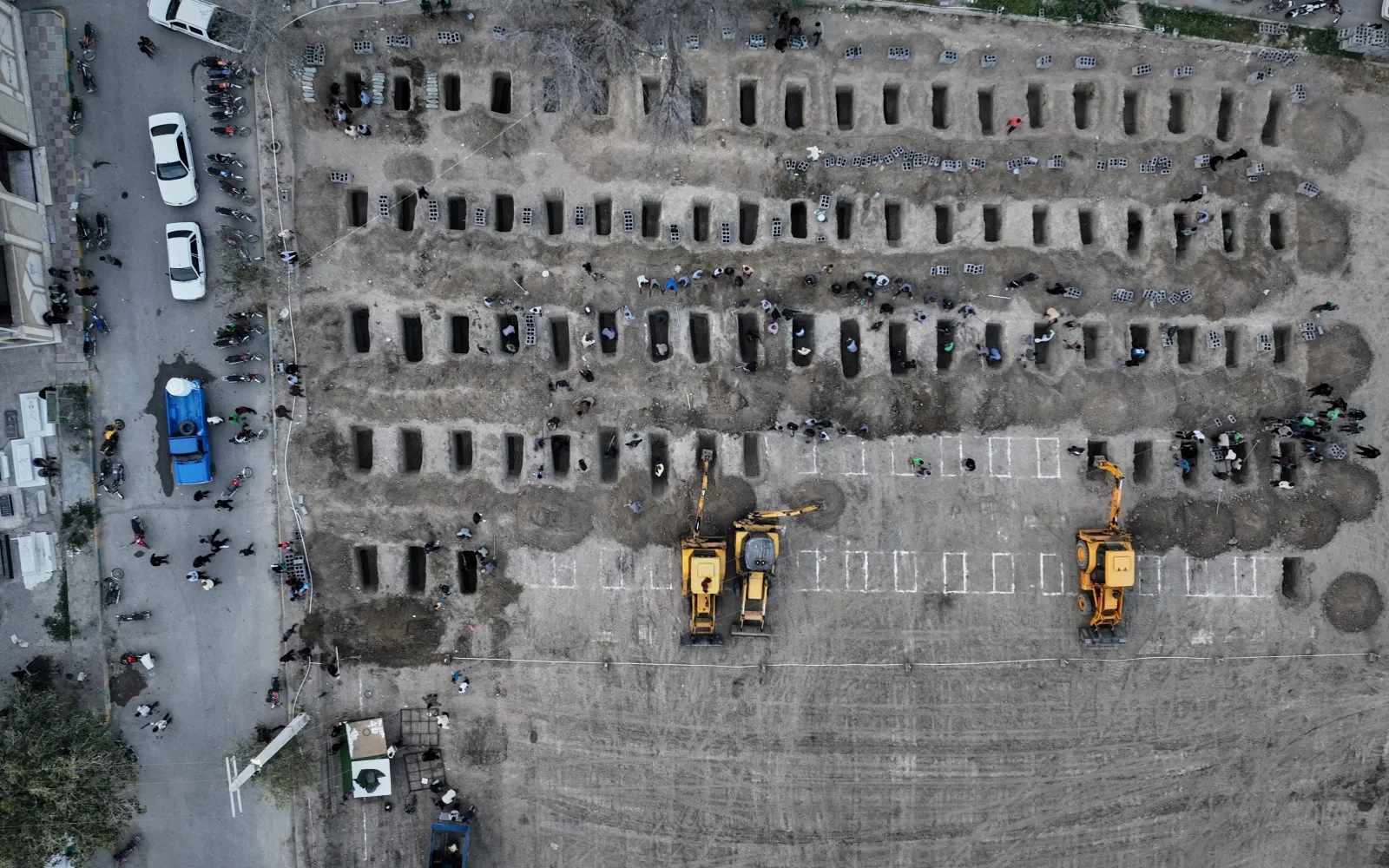
A mass funeral ceremony for the girls took place earlier this week, with photos showing thousands in attendance. Iran has accused Israel and the U.S. of the attack, with Iranian Foreign Minister Abbas Araghchi writing on X on Monday: "These are graves being dug for more than 160 innocent young girls who were killed in the U.S.-Israeli bombing of a primary school. Their bodies were torn to shreds."
Pakistani activist Malala Yousafzai, who has long campaigned for the rights of girls to receive an education, condemned the strike. She wrote on X on February 28: "They were girls who went to school to learn, with hopes and dreams for their future. Today, their lives were brutally cut short. I am heartbroken and appalled by the U.S. and Israeli strikes on Iran, including reports that a girls' school in southern Iran was hit, resulting in the injury and death of many girls. The killing of civilians, especially children, is unconscionable, and I condemn it unequivocally."
How Could a Strike Have Occurred?
The Rome Statute, which outlines war crimes under international law, prohibits intentionally directing attacks against schools and other protected civilian sites, including hospitals and historic monuments, "provided they are not military objectives."
Laurie Blank, an international law professor at Emory University in Atlanta, told Newsweek in an email statement on Friday night that the bombing raises several questions, including what safeguards are in place and the process of selecting targets.
"The law requires that only military objectives can be attacked—the IRGC base was a military objective but the school was not," she said, adding: "The law also requires that an attacking party take feasible precautions to verify that a planned target is, in fact, still a military objective. So was the school mistaken for part of the IRGC base and if so, why and how could that happen?"

...
Blank continued, "There was clearly a significant failure in one or more of these precautionary measures—either in the intelligence underlying the attack, the measures taken to verify the nature of the facilities to be attacked, or the provision of a no strike list, to name at least a few key steps."
If confirmed to have been carried out by U.S. forces, the Minab strike would rank among the deadliest publicly reported U.S. attacks in the region in recent years.
Experts have acknowledged that the school's location is likely the reason it was targeted, but that does not exempt the maneuver from international law. Elise Baker, a senior staff lawyer at the Atlantic Council—a nonprofit in Washington, D.C.—told the AP, "The school's proximity to (IRGC) facilities and the attendance of children of (IRGC) members at the school does not change that conclusion: It was a civilian object."
What Happens Next
The war has quickly widened across the region, with Israel striking Hezbollah targets in Lebanon and Iran launching missiles and drones that have reached U.S. bases and prompted alerts in several Gulf states.
The White House signaled the military operation's timeline could extend beyond four to five weeks.
The Pentagon has said it is investigating the school strike, but officials have not provided details on the scope of the probe or how long the inquiry could take.
Update 3/9/26, 8:54 a.m. ET: This article was updated with additional information.
In a polarized era, the center is dismissed as bland. At Newsweek, ours is different: The Courageous Center—it's not "both sides," it's sharp, challenging and alive with ideas. We follow facts, not factions. If that sounds like the kind of journalism you want to see thrive, we need you.
When you become a Newsweek Member, you support a mission to keep the center strong and vibrant. Members enjoy: Ad-free browsing, exclusive content and editor conversations. Help keep the center courageous. Join today.


View 0 Comments
Submit Correction
View Editorial & AI Guidelines