...

By Peter Navarro
0
Share
Newsweek is a Trust Project member
See more of our trusted coverage when you search.Prefer Newsweek on Googleto see more of our trusted coverage when you search.
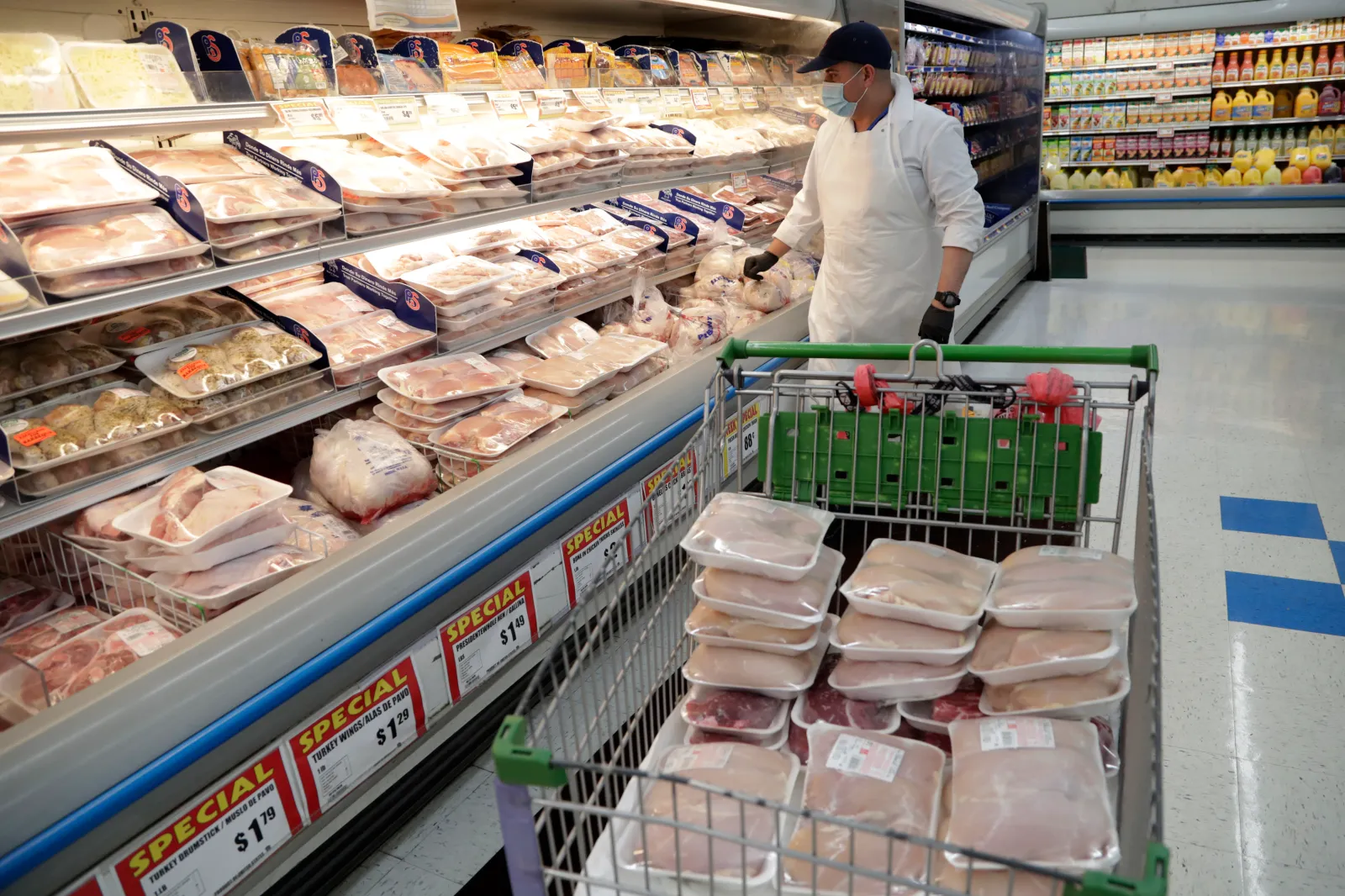
American families have been getting hammered at the meat counter—and the Department of Justice Antitrust Division (DOJ) says it has found one big reason why: Big Meat, comprising America’s biggest broiler chicken, pork, and turkey processors, used a sophisticated information-sharing machine to achieve cartel-like pricing.
This revelation sets the stage for one of the most consequential food-supply antitrust cases now on the docket. When the bench trial in United States v. Agri Stats begins on May 4 in Minnesota, the DOJ will make its case that the number-crunching data service Agri Stats has turned confidential competitor data into actionable market intelligence that helped dominant processors stabilize or raise prices and weaken the pressure to compete.
Agri Stats portrays itself as a neutral data aggregator. The government’s case paints a different picture: an alleged coordination hub that vacuumed up detailed information on prices, costs, output, customers, and production, then aggregated, analyzed, and repackaged those separate streams of competitor data into actionable market intelligence, and fed it right back to the same processors that supplied it. In effect, each company got a window into its rivals’ operations—not to compete harder, but to compete less.
Read More on Opinion
For years, the stereotype of antitrust conspiracies has been the smoke-filled room—packed with gold-cuff-linked executives openly agreeing to jack up prices. And sometimes it does look like that: think Rockefeller’s Standard Oil, J.P. Morgan’s Northern Securities railroad trust, the GE “phases of the moon” electrical-equipment conspiracy, or modern scandals like the vitamins cartel and LIBOR interest rate rigging.
But sometimes it hides behind computer models, and moves through dashboards, benchmarking reports, and sanitized “information sharing.” With Agri Stats, the DOJ’s case is that the methods were more sophisticated, but the effect was the same: less competition, higher prices, and ordinary Americans left holding the bag.
...
Here is how the DOJ says the scheme worked: large meat processors sent Agri Stats detailed data on prices, costs, output, and production. Agri Stats then organized that information into weekly and monthly reports, including narrow product comparisons, rankings, and “top quartile” targets, and sent that intelligence back to the same processors that supplied the raw data. One pork executive allegedly distilled the advice into four blunt words: “Just raise your price.”
After private antitrust litigation put pressure on the company, Agri Stats paused its pork and turkey programs. But the DOJ has alleged that its broiler chicken information-sharing program continues. That matters because the government’s theory is not just that Agri Stats collected information. It is that Agri Stats turned confidential competitive data into a coordination tool—one that could help processors stabilize prices, anticipate market moves, and reduce the pressure to compete aggressively for customers.
That is what makes this case so important. Not every conspiracy against free competition comes wrapped in a collusive agreement to fix prices. Sometimes the scheme runs through information exchanges that let rival firms see the market the same way, anticipate one another’s moves, and compete less aggressively. The Supreme Court has long recognized that this kind of detailed information sharing among rivals can violate antitrust laws too.
For too long, Big Meat has had its way with the American economy—squeezing farmers on one end, hitting families at the grocery store on the other, and, according to the DOJ, hiding the whole ugly game behind consultants, dashboards, and euphemisms like “benchmarking.”
That is why the Trump administration is cracking down on Agri Stats and the broader meat industry’s culture of collusion. It is cracking down for the farmers and ranchers who play by the rules while powerful processors game the system. It is cracking down for the families who cannot afford to be fleeced in the meat aisle. And it is cracking down for a country that cannot allow cartel-like logic to become the operating principle of its food supply.
That is why, on May 4, the country should pay attention. When the DOJ walks into that Minnesota courtroom, it will be taking on more than Agri Stats. It will be taking on a corrupt business model in which the biggest players use “information sharing” to blunt competition and stick American families with the bill.
Agri Stats must not be allowed to operate a private market-intelligence service for the biggest processors while the rest of America is forced to pay the price. At a minimum, its reports should be made publicly available to other market participants, including grocery retailers, independent distributors, farmers, ranchers, and consumer watchdogs. The American people deserve transparency in the products that land on supermarket shelves, not a secretive information-sharing system that lubricates coordination, blunts competition, and leaves families saddled with higher meat prices.
President Trump’s message is unmistakable: if you rig markets, if you replace competition with coordination, if you hide collusion behind dashboards and consultants, this Administration is coming for you.
Peter Navarro is the White House Senior Counselor for Trade and Manufacturing.
The views expressed in this article are the writer's own.
View 0 Comments
Submit Correction
View Editorial & AI Guidelines