10
Loading video...


By Gabe Whisnant and Leonardo Feldman
0
Share
Newsweek is a Trust Project member
See more of our trusted coverage when you search.Prefer Newsweek on Googleto see more of our trusted coverage when you search.
President Donald Trump’s plan to build a White House ballroom won final approval Thursday from a key federal planning agency, even as a judge’s order threatens to halt the project unless Congress authorizes the work.
The National Capital Planning Commission, which reviews construction on federal property in the Washington region, voted 8-1 to approve the project days after a federal judge ruled that construction must be paused. Commission officials said the ruling affects physical construction but does not bar the planning process, allowing the vote to proceed.
White House Ballroom Plans Approved: What to Know
The approval gives Trump momentum on a high‑profile project he has described as a legacy priority, though the legal dispute could still delay progress. The Republican president has pushed to complete the ballroom before the end of his term in early 2029 as part of a broader effort to remake parts of the nation’s capital during his time in office.
Read More on Politics
White House spokesman Davis Ingle praised the commission's “decision to approve President Trump’s historic vision to build a much-needed ballroom at the White House.”
“We look forward to seeing the completion of this project on time and under budget," Ingle told the Associated Press.
...
The commission had originally planned to vote in March, but postponed the decision after an unusually large number of people signed up to speak at its meeting. Many public comments were critical, with opponents arguing that the ballroom would overwhelm the historic White House complex and permanently alter its character.
Despite the opposition, the 12‑member commission moved forward. Three commissioners were appointed by Trump, including chair Will Scharf, a senior White House aide who has publicly defended the project.
“I believe that, in time, this ballroom will be considered every bit of a national treasure as the other key components of the White House,” Scharf said.
The only vote against the ballroom proposal came from Phil Mendelson, the Democratic chair of the Council of the District of Columbia. Linda Argo and Arrington Dixon, both appointed by Washington, D.C., Democratic Mayor Muriel Bowser, voted present.
Mendelson said he objected to both the design of the ballroom addition and the pace at which it was approved.
“It’s just too large,” he said.
White House Ballroom Renderings
Before Thursday’s vote, commissioners reviewed revised design plans for the ballroom, which would add about 90,000 square feet to the White House grounds. Trump announced several changes on Sunday while returning to Washington aboard Air Force One.
The updated design removes a large staircase on the south side of the structure and adds an uncovered porch on the west. Architects and preservation advocates had criticized the staircase as oversized and impractical, noting it did not lead to an entrance at the top.
Trump did not publicly explain the revisions, but a White House official said the president had considered feedback from the planning commission, the U.S. Commission of Fine Arts and members of the public. The official spoke on condition of anonymity because they were not authorized to discuss the design publicly.
The official said additional refinements were made to the exterior and that the lead architect, Shalom Baranes, would present the updates at the meeting.

...
Project Scope And Cost Continue To Grow
Trump has said the ballroom is needed to replace temporary tents used for large state dinners and official events. Since he first announced the project last summer, its size and price tag have increased, with costs now estimated at about $400 million.
In October, the White House demolished the East Wing with little advance notice, drawing protests from preservation groups who said required review procedures had not been completed. Work since then has focused on site preparation and underground construction, including security‑related upgrades.
White House officials said above‑ground construction is not expected to start until at least April and could be delayed further depending on the outcome of the legal challenge.
Trump has said the ballroom will be funded with private donations from wealthy individuals and corporations, including himself, though public funds are paying for underground infrastructure and security improvements.
Judge Questions Trump’s Authority To Build
The most serious threat to the project came this week, when U.S. District Judge Richard Leon ordered a temporary halt to non‑security construction unless Congress approves.
Leon agreed with arguments from the National Trust for Historic Preservation, which sued after the East Wing was torn down. The group said Trump lacked the authority to make such a sweeping alteration to the White House without congressional consent.
“The President of the United States is the steward of the White House for future generations of First Families,” Leon wrote. “He is not, however, the owner!”
Leon said the trust was likely to succeed on the merits of its claims, concluding that no statute gives the president the authority he asserted. His order allows security‑related work to continue and is set to take effect in two weeks.
John Golinger, the democracy advocate with Public Citizen, a public interest organization, told Newsweek at the hearing, "A federal judge has ruled the whole process illegal and said Congress has to authorize this. So the fight is nowhere near over, but we want to make sure that real people are heard because this isn't just a technical issue, it's a real passionate thing for most Americans."
Trump Disputes Need For Congressional Approval
Trump dismissed the judge’s reasoning, telling reporters that past changes to the White House were made without Congress weighing in.
“We built many things at the White House over the years. They don’t get congressional approval,” Trump said in the Oval Office after the ruling.
Representatives for congressional committees with jurisdiction over the project did not return messages seeking comment. Congress is currently on spring recess.

...
Oversight Panels Reshaped By Trump
Trump initially began work on the ballroom before submitting the project for formal review by the National Capital Planning Commission and the U.S. Commission of Fine Arts. Both bodies were later reshaped with Trump allies and supporters.
The Commission of Fine Arts approved the ballroom earlier this year. The National Trust has argued that Trump violated required procedures by advancing the project and demolishing the East Wing before completing those reviews or consulting Congress.
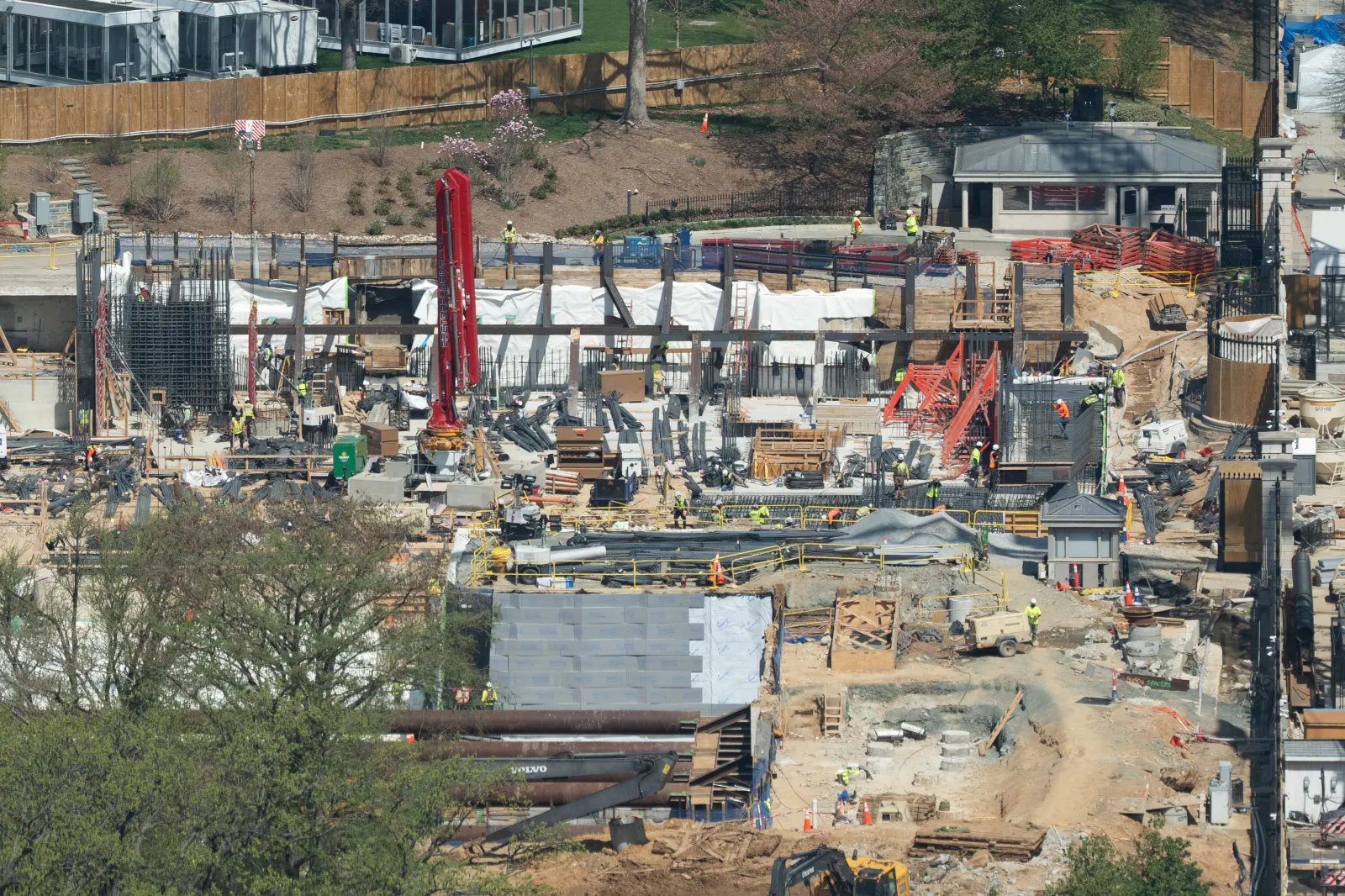
Despite the judge’s ruling, activity continued this week at the former East Wing site. Photographs taken by The Associated Press showed cranes and heavy equipment operating on the grounds as crews carried out work allowed under the order.
Legal Fight Clouds Trump’s Legacy Push
The lawsuit raises broader questions about how much authority presidents have to reshape the White House, which functions both as a working residence and a national symbol.
While Thursday’s vote clears a major regulatory hurdle, the courtroom battle could determine whether Trump’s ballroom becomes a permanent addition or a stalled project. For now, the approval gives Trump progress, but not certainty, as he presses ahead with one of the most controversial White House changes in modern history.
Updates: 4/2/26, 5:09 p.m. ET: This article was updated with new information and remarks.
Updates: 4/2/26, 7:36 p.m. ET: This article was updated with new information and remarks.
This article includes reporting by the Associated Press.
View 0 Comments
Submit Correction
View Editorial & AI Guidelines