...

By Jasmine Laws
Reporter
0
Share
Newsweek is a Trust Project member
See more of our trusted coverage when you search.Prefer Newsweek on Googleto see more of our trusted coverage when you search.
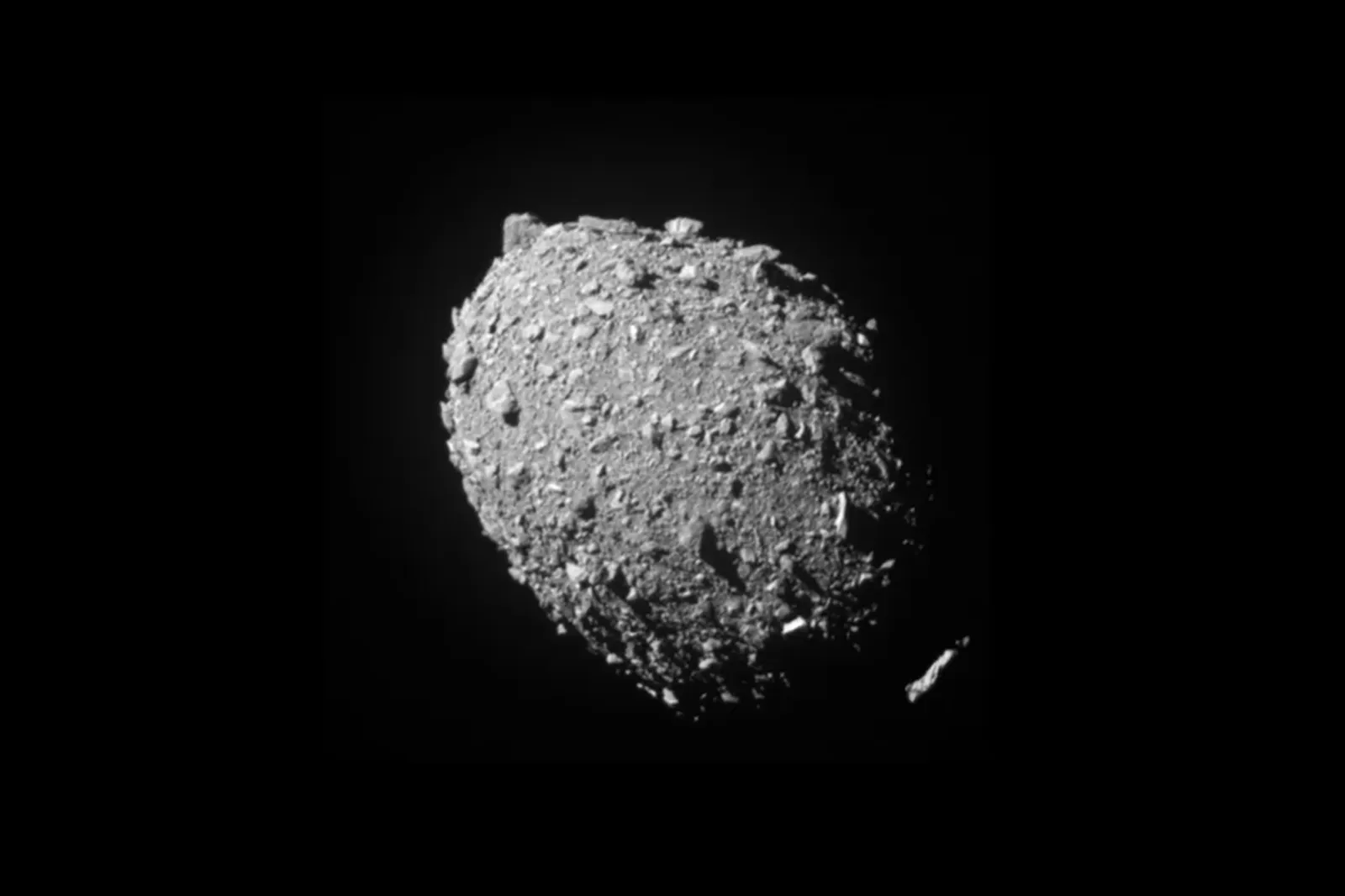
A huge asteroid, currently ranked as the most dangerous space object near Earth by NASA, could hit the planet at the end of 2032.
Why It Matters
The asteroid's size means it would have the same power as a nuclear bomb if it were to hit the Earth, resulting in major destruction to the area it could impact, per the BBC.
Read More on News
Jonathan O'Callaghan, a journalist who won British Science Journalist of the Year at the 2024 ABSW Awards, wrote on X (formerly Twitter) that the impact of the asteroid could be "1,000 times more powerful than the bombs dropped on Hiroshima and Nagasaki," meaning it could wipe out a city and the surrounding area.
...
What To Know
The asteroid, known as 2024 YR4, was first detected on December 27, 2024, and is between 130 to 300 feet wide, NASA's risk list of near-Earth objects shows.
If the asteroid does hit the planet, although there is currently only a 1.2 percent chance of that happening, it is predicted that the impact will happen on December 22, 2032, at around 2 p.m. UTC.
According to the NBC-owned television channel Syfy's website, the asteroid could land somewhere across the Pacific, northern South America, the Atlantic, Africa, and South Asia.
Per the outlet, the size of the object means it would have devasting impacts that stretch 30 miles from the point of impact.
However, according to the BBC, it is highly likely the asteroid will land in the ocean rather than in a highly populated area.
The potential threat level of an asteroid is calculated using the Torino Impact Hazard Scale, which categorizes asteroids on a scale between 0 to 10 and captures the likelihood and consequences of a potential impact.
The asteroid 2024 YR4 is currently ranked as a 3, meaning it sits in the "Meriting Attention by Astronomers" category. An asteroid with a "certain" chance of collision is typically ranked between 8 to 10.
According to Syfy, astronomers expect the asteroid to drop to category 0 following further investigation and observations.
Traditionally, any object that appears to be greater than around 160 feet wide and has more than a 1 percent chance of hitting the Earth will trigger a set of precautionary measures, the BBC reported.
Asteroids are rocky, airless bodies left over from the formation of the solar system some 4.6 billion years ago, which are primarily found orbiting the sun, between the paths of Mars and Jupiter, in the main asteroid belt.
However, gravitational interactions, typically with Jupiter, can sometimes send asteroids flying out of the belt, potentially bringing them into the inner solar system and even near Earth.
What People Are Saying
Shyam Balaji, a postdoctoral research fellow in the Department of Physics, King's College London, told Newsweek: "If 2024 YR4 were to impact Earth, it could release energy roughly equivalent to several megatons of TNT. For comparison, the Tunguska event of 1908 released energy estimated between 3 to 15 megatons. An impact by 2024 YR4 would likely result in an airburst explosion rather than a crater-forming impact, similar to Tunguska."
The Tunguska event was an enormous explosion, believed to have been an asteroid, which occurred on June 30, 1908, and flattened 500,000 acres of forest in Russia.
He added, "If 2024 YR4 were to strike a densely populated area, it could cause significant destruction within a localized region. The blast would be comparable to a large nuclear explosion, potentially resulting in widespread damage and casualties if it hit a major city. However, the most likely outcome would be a high-altitude airburst."
"At present, the public should not be overly concerned, though the asteroid warrants continued monitoring. Historically, most asteroids with initial impact probabilities have seen their risk drop to zero as more data is collected. However, uncertainties remain, and ongoing observations are essential to refine its trajectory," he said.
Robert Massey, Deputy Executive Director of the Royal Astronomical Society, told Newsweek: "I'm not really concerned at all, it's the kind of thing that should concern policymakers and astronomers particularly whose job it is to track these things and refine orbits.
"The odds are very, very low and as observations get better it's very likely that the probability will drop to zero, so I don't think the public should be unduly concerned."
Commenting on the asteroid's size, which he compared to the size of a soccer pitch, he said that if there was a collision, the asteroid would have the energy of an 8-megaton nuclear bomb. However, he said that there is "at least 98 percent chance that the asteroid won't hit the Earth."
He added: "The other thing to bear in mind is that we can deflect these things. If it's done early enough and if we have enough warning, we can divert asteroids."
What's Next
The asteroid will continue to be monitored in the coming months, and experts currently expect that the risk of the asteroid will decrease in that time, according to Syfy.
View 0 Comments
Submit Correction
View Editorial & AI Guidelines