
...

By Matt Cannon
News Editor
0
Share
Newsweek is a Trust Project member
See more of our trusted coverage when you search.Prefer Newsweek on Googleto see more of our trusted coverage when you search.
A “ring of fire” annular solar eclipse took place on Tuesday, coinciding with two major cultural events.
The moon briefly blocked the center of the sun, creating shadow across parts of Antarctica, hours after Chinese New Year began, while the Islamic fasting month of Ramadan may begin in some countries—pending moon sighting—shortly after.
Is There a Solar Eclipse Today?
Yes, an annular solar eclipse occurred on February 17, 2026.
Read More on News
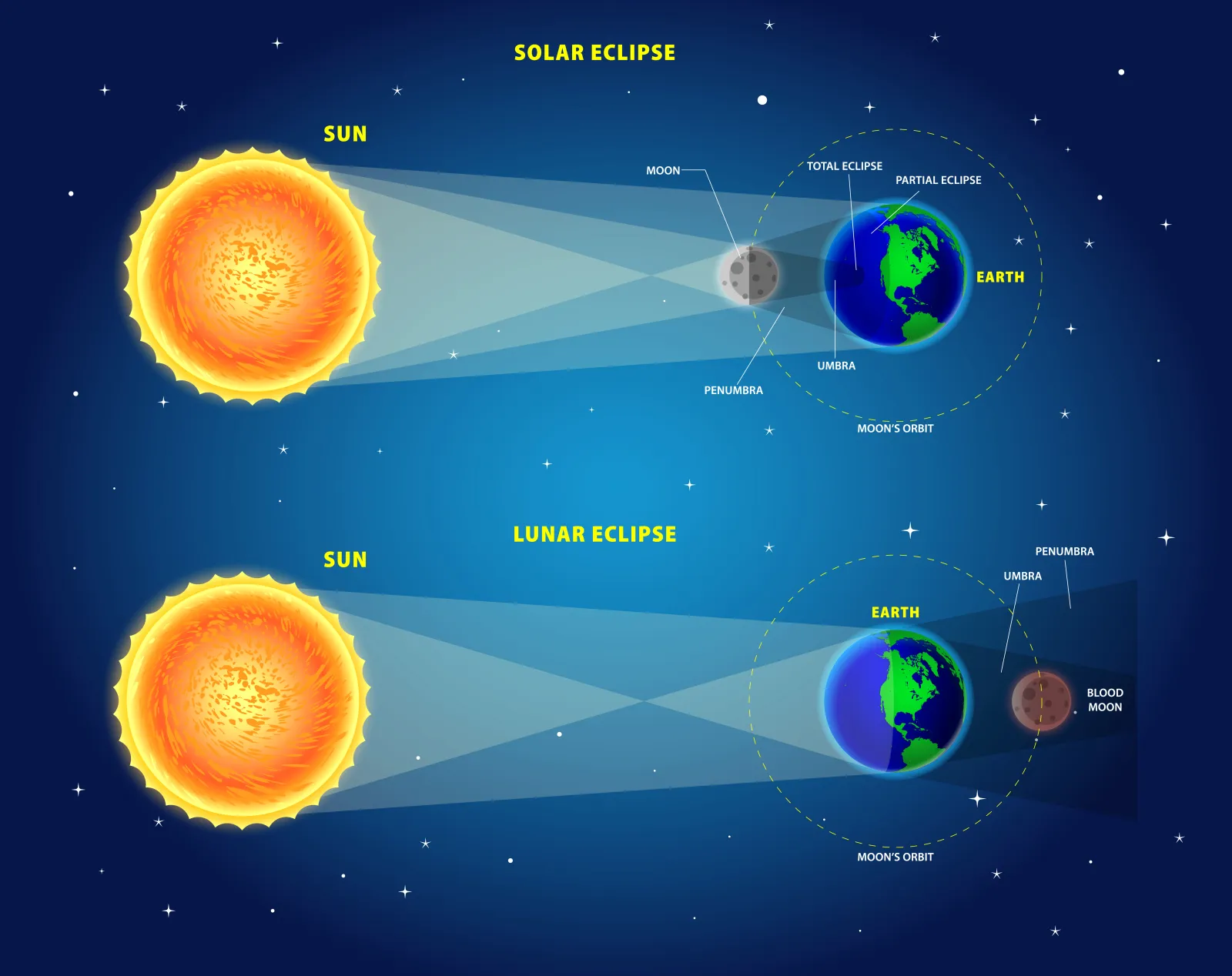
During it, the moon passed between Earth and the sun, but appears slightly smaller, leaving a bright ring of sunlight—often called a “ring of fire”—around its edge.
The full phenomenon was only visible from Antarctica, while a partial solar eclipse was visible across parts of southern Africa, South America and surrounding oceans. It began about 5:48 a.m. ET in Antarctica, according to NASA.
"Annular eclipses occur when the moon blocks the sun, but doesn’t appear large enough to cover the whole thing, leaving a “ring of fire” visible around the moon," the U.S. space agency's Solar System X account explained.
"Places outside the path of annularity including parts of Antarctica (like McMurdo Station), southern Africa, and South America—will see a partial solar eclipse, when the moon blocks a portion of the sun. Those of us in the Northern Hemisphere will be none the wiser—the sun will appear normal like any other day."
...
When a Solar Eclipse Is Next Visible in the US
The next visible solar eclipse in North America is expected on August 12, 2026**.**
But for those in the United States, it's expected to be a limited event. Only a partial solar eclipse may be visible, and then only from far‑northern locations, such as Alaska and possibly the extreme northern fringe of the Lower 48, with the sun very low on the horizon near sunset.
The total solar eclipse itself will not be visible from the U.S., but will in parts of Greenland, Iceland and northern Spain. There, the eclipse has the potential to showcase the northern lights during totality and the Perseid meteors in darkened skies. For most Americans, the event will need to be followed via livestreams rather than direct observation.
...
A partial solar eclipse is likely to be visible for eastern states on January 14, 2029. Those in Los Angeles could see the effects at about 7:07 a.m. PT and those in New York City about 11:25 a.m. ET.
Americans who watched the April 8, 2024, total solar eclipse will have to wait until August 23, 2044, for the next totality to touch the United States, when the path narrowly crosses Montana, North Dakota and South Dakota.
A coast-to-coast total solar eclipse is expected on August 12, 2045, that spans more than a dozen states, according to NASA.
When a Lunar Eclipse Is Next Visible in the US
A total lunar eclipse occurs when the moon moves completely into Earth’s darkest shadow, known as the umbra. Unlike a solar eclipse, which is visible only along a narrow path, a lunar eclipse can be seen from anywhere on Earth where the moon is above the horizon at night
A total lunar eclipse is expected to take place on March 3, 2026.
The table below shows other lunar eclipses expected to be visible in the United States:
How To See a Solar Eclipse Safely
It is never safe to look directly at a partial or annular solar eclipses without proper eye protection, NASA warns.
"When watching a partial or annular solar eclipse directly with your eyes, you must look through safe solar viewing glasses (“eclipse glasses”) or a safe handheld solar viewer at all times. Eclipse glasses are NOT regular sunglasses; regular sunglasses, no matter how dark, are not safe for viewing the sun. Safe solar viewers are thousands of times darker and ought to comply with the ISO 12312-2 international standard."
Check for tears, scratches or other damage before use and always supervise children, the space agency advises.
"Do NOT look at the sun through a camera lens, telescope, binoculars," it adds.
View 0 Comments
Submit Correction
View Editorial & AI Guidelines