
...

By Suzanne Blake
Reporter
0
Share
Newsweek is a Trust Project member
See more of our trusted coverage when you search.Prefer Newsweek on Googleto see more of our trusted coverage when you search.
November SNAP payments will go out after initially being cancelled for the month of November due to the government shutdown.
However, they will be only half the amount that recipients usually get, according to the Trump administration.
Why It Matters
Congress has been in deadlock over the impending spending bill, causing the larger government shutdown.
Read More on News
Due to this, November SNAP payments have been in peril, without the adequate funds to reload EBT cards this month.
...
What To Know
The Trump administration announced it would be using money from an Agriculture Department contingency fund.
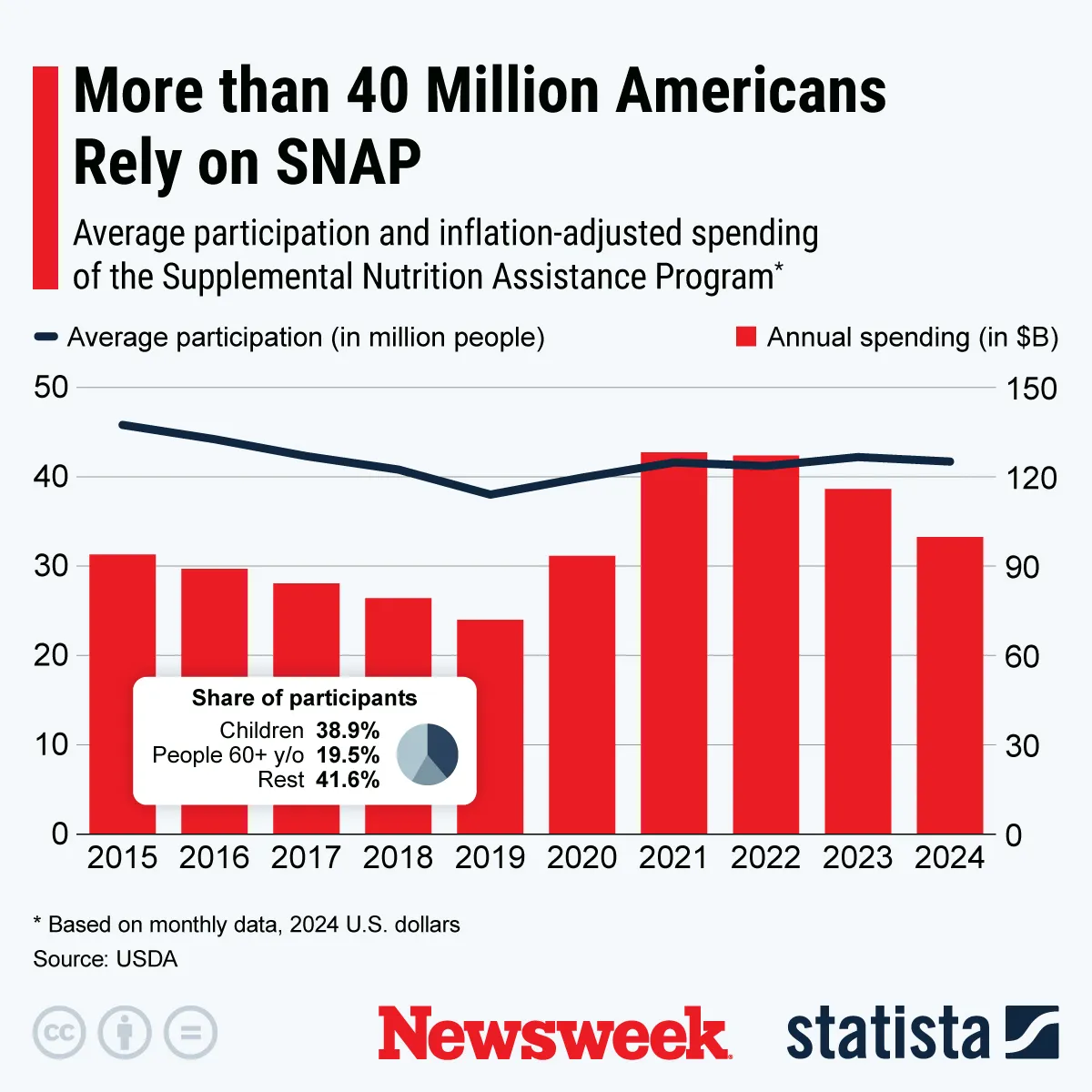
While this only presents $5 billion to recipients for the month of November, this means that payments will be short of the full $8 billion that SNAP benefits usually cost each month.
Officials said using the fund will mean "no funds will remain for new SNAP applicants certified in November, disaster assistance, or as a cushion against the potential catastrophic consequences of shutting down SNAP entirely."
The administration said the payments would be halfway reinstated after two federal judges ruled that ending the payments in November was unlawful.
SNAP serves 42 million Americans monthly, allowing them to access healthy foods at their local grocery stores.
Even with the benefits now going out for the month of November, there will likely be long delays before the benefits actually make it into the hands of beneficiaries.
Treasury Secretary Scott Bessent told CNN Sunday that SNAP funding "could be" reinstated by Wednesday, but that "there's a process that has to be followed. We've got to figure out what the process is."
State system changes could take anywhere from a few weeks to several months because states must reload their eligibility systems, according to the government's latest updates.
...
What People Are Saying
Democracy Forward President and CEO Skye Perryman said in a statement: "It shouldn't take a court order to force our President to provide essential nutrition that Congress has made clear needs to be provided. But since that is what it takes, we will continue to use the courts to protect the rights of people."
Kevin Thompson, the CEO of 9i Capital Group and the host of the 9innings podcast, told Newsweek: "Nobody knows when SNAP payments will be paid, although the current administration has stated they could begin as early as Wednesday. The issue remains how the system handles partial payments especially during a government shutdown, which will naturally delay the process further."
Alex Beene, a financial literacy instructor for the University of Tennessee at Martin, told Newsweek: "While it’s certainly welcome news to hear SNAP payments will resume in the coming weeks, just how long it will be before beneficiaries see those benefits could come down to a range of factors, including the state in which they reside. The Trump Administration will be using emergency funds from the Department of Agriculture to make SNAP payments, but this fund can only cover a portion of the typical amount. This equates to billions of dollars having to be recoded at an administrative level before being distributed to states. The amount and timeliness of payments will depend on how quickly this process can occur at the federal and state level."
What Happens Next
SNAP recipients typically receive an average of $187 per month, but the payments will be lower due to the continuing government shutdown.
"Some states are using their own funds to fill any gaps and pay out benefits at this time. States that are doing this have been warned they will not receive any reimbursement of those benefits," Thompson said.
"The longer the government remains shutdown, the lower the likelihood of future benefits as the government would exhaust the emergency aid of $5B relatively quickly."
View 0 Comments
Submit Correction
View Editorial & AI Guidelines