...

By Jason D. Greenblatt
Former White House Middle East Envoy
0
Share
Newsweek is a Trust Project member
See more of our trusted coverage when you search.Prefer Newsweek on Googleto see more of our trusted coverage when you search.
India is not a bystander in the Middle East. It is a stakeholder whose economic architecture, energy supply chains and regional partnerships are directly shaped by what happens there. That is why Iran's actions, from obstructing commercial shipping through the Strait of Hormuz to launching missiles and drones at the Gulf states where nearly 10 million Indian citizens live and work, do not represent a distant geopolitical event for India. They affect one of the key underpinnings of Indian economic life.
When Iran targets the Gulf, it is targeting stability that matters deeply to India's own regional interests. India is not on the front line of this conflict, but it is far from unaffected. For India, the strategic question is not whether this moment is uncomfortable. It clearly is. The real question is what the Middle East looks like in five years, ten years, a generation from now, depending on how this confrontation ends. An Iranian government whose nuclear ambitions remain unresolved and whose ability to project pressure through proxy forces, missile capabilities, drones and maritime leverage is reinforced does not become a more predictable neighbor to India's Gulf partners. It becomes more emboldened, returning to the same chokepoint leverage from a position of greater confidence each time.
Indian citizens contribute across every sector of Gulf life, from medicine and finance to construction and technology, and their connection to home strengthens the human fabric of this relationship. The Gulf Cooperation Council (GCC) is India's single largest trading partner bloc, with bilateral trade exceeding $178 billion in FY 2024-25, accounting for more than 15 percent of India's total global trade. Indian engineering firms have built energy, water and transport infrastructure across the Gulf and continue to win new contracts across the region. Indian technology firms, banks, professional services and logistics companies are embedded across Gulf economies. Indian pharmaceuticals are a significant source of affordable medicines across Gulf healthcare systems. Indian food exports, textiles, gems and engineering goods help fill Gulf supply chains.
Read More on Opinion
The GCC region has invested over $31 billion in India as of 2025, deepening the relationship from trade into long-term investment partnership. India has already secured comprehensive economic partnership agreements with the UAE and Oman. India and the GCC have also taken long-awaited steps toward a broader Free Trade Agreement, a process whose full potential, if realized, would further deepen an already consequential partnership. Should the proposed India-Middle East-Europe Economic Corridor move from concept toward implementation, it would rely heavily on these same Gulf relationships and transit routes. Taken together, this is one of India's most consequential regional economic partnerships.
Iran did not disrupt shipping through Hormuz with India specifically in mind. It did so because control of that waterway gives Tehran leverage over the entire global economy. India, as one of the world's largest energy importers, is caught directly in that calculation. For India, this is not an abstract geopolitical concern but a direct question of household energy security and economic stability.
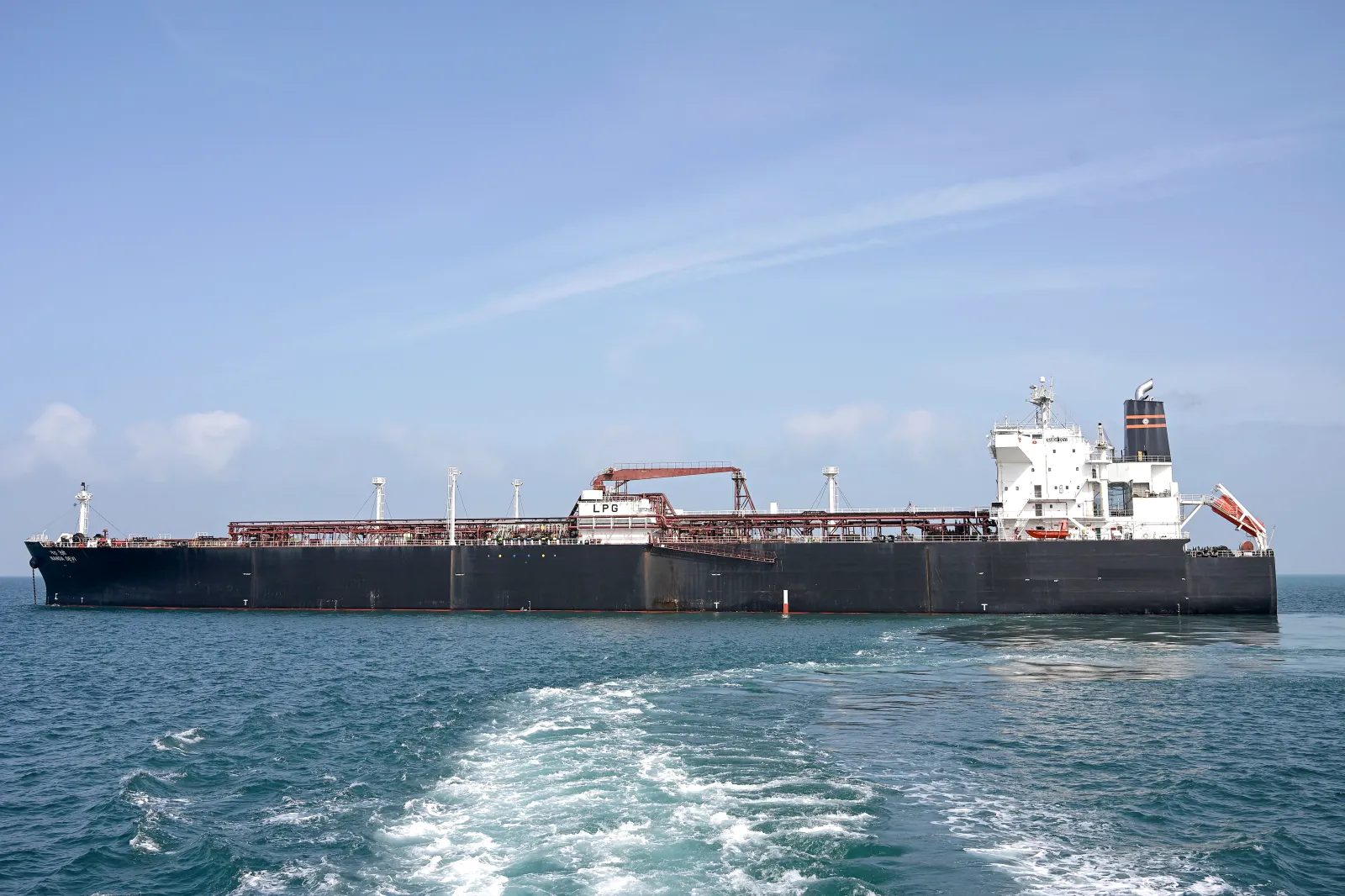
India has significantly diversified its crude oil sources in recent years, with the Indian government noting as of early 2026 that roughly 70 percent of crude imports now arrive from outside the Hormuz corridor, a diversification that reflects strategic foresight. Yet that still leaves approximately 30 percent of crude transiting a waterway now subject to active disruption. More acutely, India imports about 60 percent of its LPG consumption, and roughly 90 percent of those imports move through that narrow waterway, making it the cooking fuel lifeline for hundreds of millions of Indian households. India also depends on the Gulf for important fertilizer and fertilizer-input supplies, including significant flows of urea, DAP and sulfur-based inputs, meaning a prolonged disruption ripples from fuel prices to food costs to the farmer's harvest. Indian pharmaceutical shipments and manufactured goods face the same chokepoint.
The current Hormuz disruption followed the late February 2026 U.S.-Israeli strikes on Iranian nuclear and military facilities, themselves the culmination of years of failed diplomacy, Iranian nuclear advancement, and relentless Iranian proxy warfare across the region. Iran's decision to obstruct commercial shipping through Hormuz was Iran's choice, made in response to military action it had spent years provoking. Diplomacy had repeatedly failed to produce a durable agreement, and Iran continued advancing its nuclear program and expanding proxy operations throughout that period. Regardless of how one judges the military action itself, Iran's decision to weaponize a global energy chokepoint in response is a choice with real consequences for countries, like India, that had no part in that confrontation.
This threat is not new, and it extends well beyond the Gulf and Israel. The Iranian government has spent decades arming, funding and directing proxy forces that have struck Gulf infrastructure, threatened Gulf shipping and destabilized the governments that are among India's most important regional partners. Saudi Arabia, the UAE, Qatar and their neighbors have lived under this shadow for years.
None of this requires India to take sides militarily or to abandon any of its partners. What it does require is something well within India's foreign policy tradition: a clear public recognition that Iranian chokepoint coercion is incompatible with Indian interests, and that India's strategic partnerships, with the Gulf states, with Israel, with the United States, reflect an honest assessment of where regional stability actually comes from. India's stake in a Gulf free from Iranian attack is substantial and real. This is not a moment for half measures.
An Iran that can no longer threaten the shipping lanes and energy flows India depends on, or use proxy forces, missile capabilities and an advancing nuclear program to threaten the Gulf states and Israel, would change the entire equation. That outcome could come through sustained pressure, through a durable diplomatic agreement, or through some combination of both. Both India and the Gulf states benefit directly from a more stable regional environment that supports trade, investment and the millions of Indian professionals and workers who contribute across Gulf economies.
The instability the Iranian government has helped fuel across the region does not stop at India's western neighborhood. Pakistan shares a long border with Iran and its own exposure to Gulf instability, and the consequences of Iranian chokepoint leverage extend across the broader South Asian region that depends on Gulf trade and remittances.
India has long navigated a complex world through a foreign policy built on strategic autonomy. Far from a constraint, it has in many ways been consistently effective. External Affairs Minister Jaishankar has repeatedly emphasized that strategic autonomy means India acts decisively in its own interest, not that it maintains reflexive equidistance regardless of the facts on the ground. The strategic landscape India faces today looks nothing like the one that the doctrine of strategic autonomy was originally written for. The chokepoints, the proxy networks, the nuclear ambitions and the economic coercion of today's Middle East call for exactly the kind of clear, interest-driven assessment that Jaishankar's own interpretation of the doctrine of strategic autonomy was designed to make.
India's approach to the region has always balanced relationships across multiple partners, including the Gulf states, Israel, Iran and the United States, each of which plays a distinct role in India's regional strategy, energy security and connectivity ambitions. India's investment in Chabahar represents exactly the kind of long-term connectivity vision that Iranian instability, proxy networks and chokepoint coercion put at risk. Chabahar's long-term promise has always depended on a more predictable Iran, which is precisely what current Iranian government behavior makes harder to achieve.
Part of that assessment naturally includes India's partnership with the United States. The relationship has navigated real disagreements under the Trump administration, on tariffs, energy purchases and other fronts, yet in February 2026 both sides reached an interim trade framework that meaningfully reduced those tensions, a result due in no small part to the personal rapport Prime Minister Modi and President Trump have built. A full bilateral trade agreement remains under active negotiation. If concluded, it would meaningfully benefit both economies and reflect the reality that a strong India-U.S. partnership serves both countries' long-term interests.
India and the Gulf states share far more than trade. They share a stake in a Middle East that is stable, open and free from Iranian coercion. That shared stake extends to others in the region who face the same destabilizing force. India's deepening engagement with those partners is reflected in part by the Special Strategic Partnership with Israel that Prime Minister Modi and Prime Minister Netanyahu elevated in February 2026, demonstrating where the region's long-term interests converge.
A Middle East less shaped by destabilizing Iranian government behavior is one where India's economy grows stronger, its partnerships with the Gulf run deeper and millions of people in both India and the Gulf benefit directly from greater stability and opportunity.
India has invested too much in this region, in trade, in people, in infrastructure and in partnerships, to remain disengaged from how this moment resolves. It should be a vocal advocate for restoring regional stability and keeping the world's critical waterways open to all. The outcome will shape the Middle East that India must operate within for a generation to come.
Jason D. Greenblatt was the White House Middle East envoy in the first Trump administration. He is the author of In the Path of Abraham: How Donald Trump Made Peace in the Middle East—and How to Stop Joe Biden From Unmaking It and the founder of Abraham Venture LLC. Follow him on X: @GreenblattJD
View 0 Comments
Submit Correction
View Editorial & AI Guidelines