...

By Brendan Cole
Senior Reporter
0
Share
Newsweek is a Trust Project member
See more of our trusted coverage when you search.Prefer Newsweek on Googleto see more of our trusted coverage when you search.
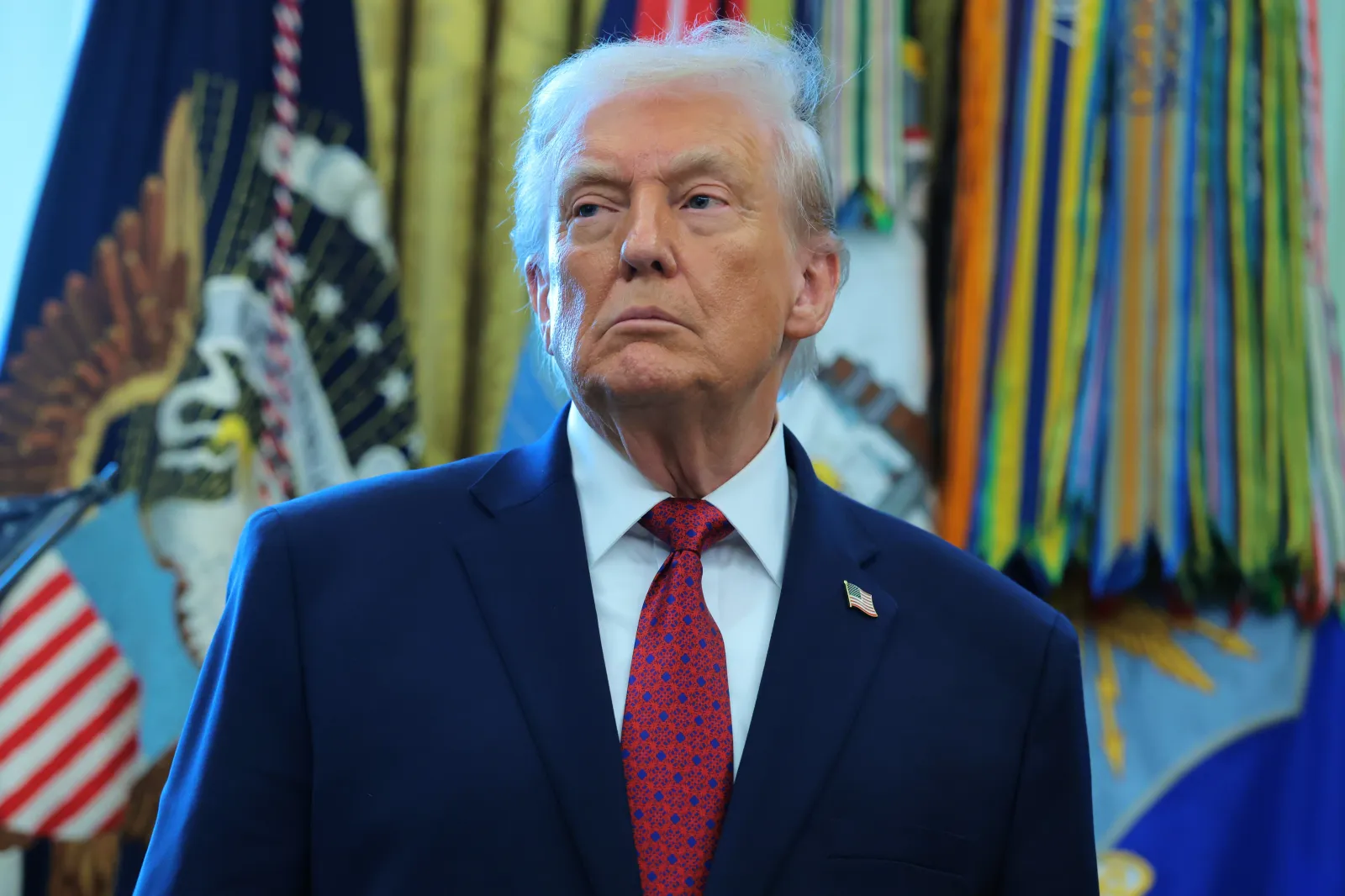
President Donald Trump has raised speculation over whether he might intervene in Iran after he said on Truth Social that the U.S. was “locked and loaded and ready to go” if the government in Tehran cracked down violently on protesters.
Trump did not specify what action the U.S. might take but his comments follow days of protests against the Iranian government’s handling of the economy. However, Tehran warned that U.S. intervention would be met with a firm response.
Gregg Roman, executive director of the Middle East Forum, a U.S. think tank, told Newsweek that Trump’s pledge could include diplomatic pressure, economic sanctions, cyber operations and targeted military strikes to disrupt the regime’s capabilities.
Read More on News
Iran expert, Hamidreza Azizi, told Newsweek that any U.S. strike on Iranian government bases might backfire and play into the hands of hardline elements within the Iranian government.
Newsweek has contacted the White House and the Iranian Foreign Ministry for comment.
...
Why It Matters
Funerals were held on Friday for protesters killed during anti-government demonstrations, which have intensified this week prompted by a collapse in the currency, the rial and high inflation.
After the first fatalities from clashes between demonstrators and police, Trump’s warning that a violent crackdown by Tehran on protests would spark a U.S. intervention comes half a year after American strikes on Iranian nuclear sites, and has raised jitters over what it might mean for the wider region.
What To Know
Trump posted on Truth Social that if Iran shoots and kills “peaceful protesters, which is their custom, the United States of America will come to their rescue." Trump’s comments follow days of anti-government protests due to growing anger at the Islamic Republic’s rampant inflation and a collapsing currency.
"We are locked and loaded and ready to go," Trump said, prompting Iranian officials to respond that U.S. intervention would spark regional chaos and be met with a firm response. Ali Larijani, secretary of Iran's Supreme National Security Council, said that any U.S. interference would destabilize the region.
Larijani added: “Trump should know that intervention by the U.S. in domestic problems corresponds to chaos in the entire region and the destruction of the U.S. interests."
Ali Shamkhani, adviser to Supreme Leader Ayatollah Ali Khamenei weighed in to say "any interventionist hand that gets too close to the security of Iran will be cut."
In June 2025, Trump ordered strikes against Iran's nuclear, which he said had set back Tehran's nuclear program, though Iran disputed this. In response, Iran launched a missile attack on a major U.S. military base in Qatar.
It is unclear whether the U.S. president is considering strikes on Iranian government sites, should he make good on his pledge. Roman, from the Middle East Forum, said on Friday that U.S. measures could include amplifying dissident voices through information campaigns and providing non-lethal support to protesters to foster internal pressure for change.
Roman said that it was essential that any military action should aim for a controlled implosion of the regime, ensuring a structured transition that empowers the Iranian people rather than creating a power vacuum.
“All potential avenues must be considered, from covert assistance to overt humanitarian aid, to protect civilians and advance democratic aspirations,” Roman said. “The focus should remain squarely on the Iranian populace, who have demonstrated remarkable resilience in their protests against economic hardship and authoritarian rule.”
Should U.S. personnel face casualties in the process, “a decisive response targeting the regime's leadership would be warranted to neutralize threats swiftly,” Roman added.
...
Azizi, research fellow at German think tank SWP Berlin, told Newsweek Friday that Trump's statement could do more good than harm to the protesters.
While it could encourage more people to protest who had feared a violent crackdown, it could also help Tehran’s narrative the protests are part of hybrid warfare planned by the U.S. and Israel as a continuation of the 12-day war waged in 2025.
“Trump directly threatening the Iranian government can actually give enough reason for the government to resort to more violence as we have seen in past protests,” Azizi said.
There is still no organized opposition movements that would take matters their own hands after a limited military strike against some government bases or institutions, he said. With no sign of any crack within the security establishment, initiating airstrikes “may actually backfire" as the regime which is still not as weakened as it is perceived in D.C., and it “may start retaliating all around the region,” Azizi added.
Andrew Ghalili, senior policy analyst National Union for Democracy in Iran (NUFDI), told Newsweek that what would matter most is decisive political action from the U.S. that empowers the Iranian people and accelerates the regime’s collapse.
He said that Iranians are increasingly clear about who they see as the legitimate, unifying opposition leader, and world leaders should respect and back that choice, with evidence showing support for the exiled opposition leader Reza Pahlavi.
What People Are Saying
President Donald Trump, on Truth Social, posted if Iran "kills peaceful protesters, which is their custom, the United States of America will come to their rescue. We are locked and loaded and ready to go.”
Ali Larijani, head of Iran's National Security Council, said: "American people should know that Trump started the adventurism. They ought to watch over their soldiers.”
Gregg Roman, executive director of the Middle East Forum said Trump's statement "underscores a firm commitment to supporting the Iranian people's quest for freedom from the oppressive regime", adding: "Such intervention could encompass a broad spectrum of options, including diplomatic pressure, economic sanctions, cyber operations, and targeted military strikes to disrupt regime capabilities without descending into widespread chaos."
Andrew Ghalili, senior policy analyst National Union for Democracy in Iran (NUFDI), said: "What would matter most is decisive political action that empowers the Iranian people and accelerates the regime’s internal collapse."
Hamidreza Azizi, research fellow at German think tank SWP Berlin, said: “Donald Trump's statement can have a dual role. I'm still not sure whether it's going to do more good than harm to the protesters and the protest movement at this stage.”
What Happens Next
Iran's President Masoud Pezeshkian has called for dialogue with protest leaders over the cost-of-living crisis and speaking before Trump’s threat, said failings by the authorities were behind the economic crisis and “it is us who have to find a solution.”
Meanwhile, Azizi has said that the protests are not as widespread as ones in 2022 or in 2019 and that with whatever means possible, the government is trying to manage the unrest "because they know the costs of escalation.”
View 0 Comments
Submit Correction
View Editorial & AI Guidelines