...

By Hugh Cameron
Reporter
0
Share
Newsweek is a Trust Project member
See more of our trusted coverage when you search.Prefer Newsweek on Googleto see more of our trusted coverage when you search.
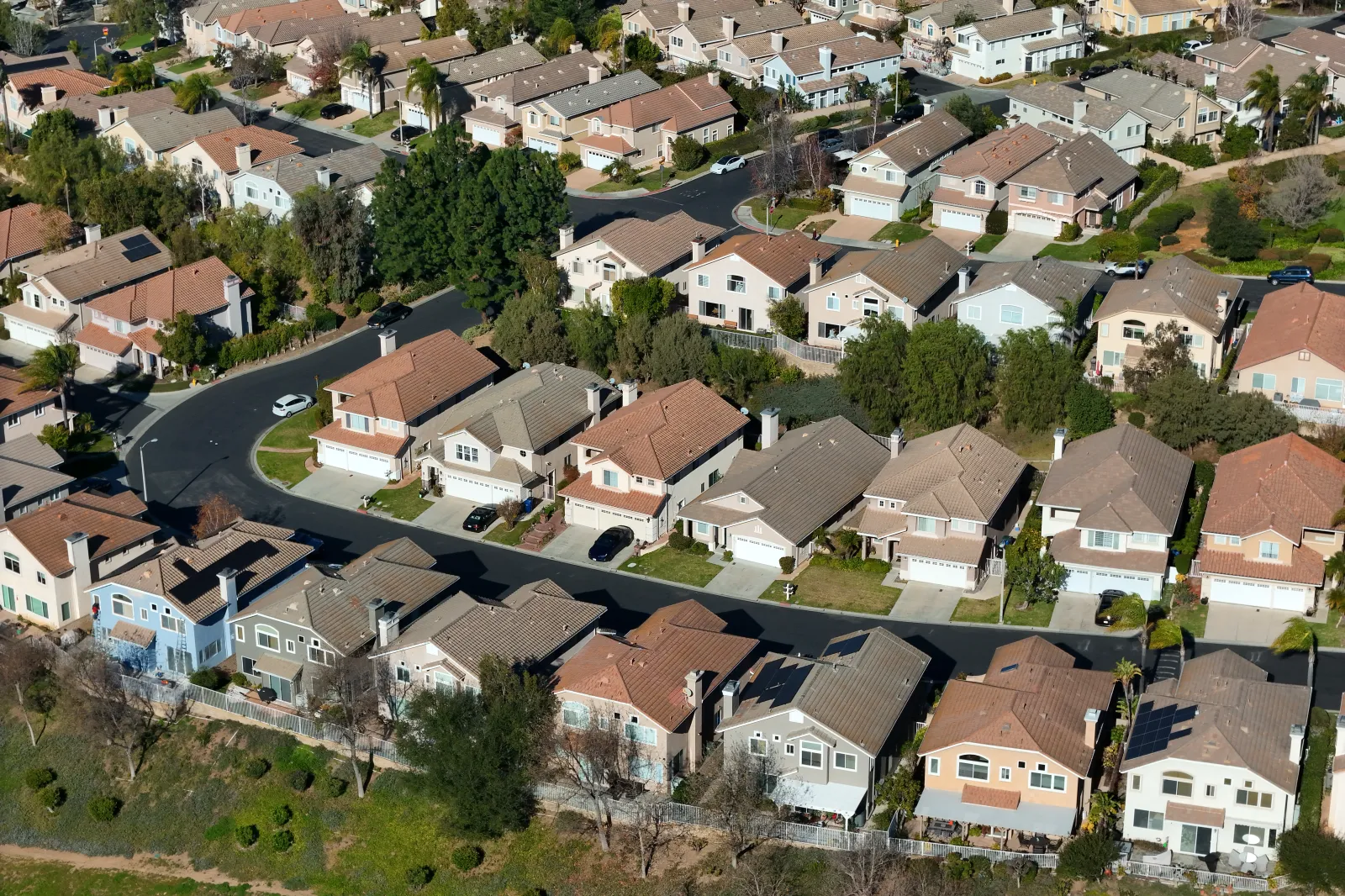
President Donald Trump’s recent executive order aims to prevent corporations from buying up single-family homes and keeping renters off the market, a move the administration says will make housing more affordable for everyday Americans.
Building on earlier proclamations, Trump on Tuesday directed the relevant executive agencies to explore ways of preventing the federal government from supporting loans or offering other incentives to “large institutional investors” to purchase single-family homes that that “could otherwise be purchased by families.”
“To preserve the supply of single-family homes for American families and increase the paths to homeownership, it is the policy of my Administration that large institutional investors should not buy single-family homes that could otherwise be purchased by families,” the order reads.
Read More on News
Why It Matters
Trump’s move has received praise in some corners, given the ongoing affordability issues that continue to plague prospective homeowners, such as elevated prices, mortgage rates and other ancillary costs that keep many off the housing ladder.
However, experts note that institutional investors own only a relatively small percentage of the properties on the market, and believe some the order’s carve-outs mean the impacts on mortgages and prices will likely be limited, while failing to resolve the supply-linked issues at the heart of housing affordability.
What To Know
Trump’s executive order outlines a multi-step process limiting the number of homes large investors would be able to purchase. This includes encouraging agencies to “promote sales to individual owner-occupants through first-look policies,” reviewing the relevant guidance on institutional ownership of single-family homes, and increasing oversight of these purchases on potential anti-competition grounds.
While stopping short of an outright ban, Trump said on Wednesday he would be “calling on Congress” to pass legislation permanently banning large institutional investors from purchasing homes.
Shannon McGahn, executive vice president at the National Association of Realtors, told Newsweek she was encouraged by efforts to address “the nation’s housing affordability and supply crises,” and said she hoped the administration remains focused on “practical solutions that boost supply, improve affordability, and put more families on a sustainable path to homeownership.”
...
However, John Berlau, financial policy director at the Competitive Enterprise Institute, called Trump’s proposal “misguided” and told Newsweek that this could “undermine many constructive housing initiatives the administration is pursuing.”
“Today, institutional investors own only two percent of single-family homes,” he said. “By rehabbing those homes for the rental market, they provide a service to many families with children unable to finance homeownership but seeking a living space larger than an apartment.”
And Daryl Fairweather, chief economist at Redfin, told Newsweek that because large institutional investors currently own only a small share of single-family homes in the U.S., any impact on supply, prices and, by extension, mortgages would likely be limited.
“The order is limited in scope,” she added, pointing to the order’s exemptions for “build-to-rent” properties.
“Institutional investors buy the vast majority of their homes in the form of new construction built specifically for their own purposes–and that type of housing isn’t included in the ban, because the White House doesn’t want to limit new construction.”
What People Are Saying
Daryl Fairweather, chief economist at Redfin, told Newsweek: “Large investors own less than five percent of the country’s single-family homes. Banning corporate landlords could hurt the development of new housing units, and policymakers should focus on upping housing supply instead.”
Realtor.com senior economist Jake Krimmel told Newsweek: "Even under perfect enforcement, the policy would add little inventory overall. Because it only curbs future institutional demand, any effect would show up as homes sitting on the market slightly longer, rather than a surge of new supply. At best, this would amount to an inventory trickle; and likely only in select Sun Belt metros where inventory has already risen sharply due to market forces. In the supply-constrained Northeast, corporate investor activity is minimal, so the policy would have little to no impact on inventory.
"It’s also important to highlight a key positive: the carve-out for build-to-rent activity helps ensure the policy does not discourage new single-family construction," he added. "That’s critical, because new housing supply, whether it's built for rent or to be owned, is what meaningfully improves affordability over time."
Laurie Goodman, founder of the Housing Finance Policy Center at the Urban Institute, told Newsweek: "It is great to see that the Trump administration is focusing on housing affordability. In particular, encouraging large investors to focus on build-to-rent is a great way to encourage the creation of new supply, which the market so badly needs, especially in the starter home and moderate price ranges. Also promising is the idea of strengthening the first look policy for owner-occupants and non-profits who make those properties available to first-time homebuyers. While [Federal Housing Administration] and the GSEs have these types of policies in place, they have more potential."
President Trump, during his speech at the World Economic Forum on Wednesday, said: “In recent years, Wall Street giants and institutional investment firms, many of you are here, many of you are good friends of mine, many of you are supporters. Sorry to do this to you. I'm so sorry. But you've driven up housing prices by purchasing hundreds of thousands of single-family homes.”
“[Investors] buy 500 houses, they buy hundreds of thousands, they buy 500 houses, they can take a depreciation,” he added. “A person sweats and works and buys one house, they can't. But homes are built for people, not for corporations. And America will not become a nation of renters.”
What Happens Next
As outlined on Tuesday, the Treasury Department has 30 days to come up with a definition of “large institutional investor” and “single-family home” to facilitate Trump’s directive. Additionally, the secretaries of several agencies have been given two months to issue new guidance that will curtail institutional purchases.
Earlier this month, Republican Senator Bernie Moreno said he planned on introducing legislation to “codify President Donald Trump’s ban on institutional investors from purchasing single family homes into law.” According to the Wall Street Journal, however, Moreno said doing so would take several weeks.
View 0 Comments
Submit Correction
View Editorial & AI Guidelines