...

By Hugh Cameron
Reporter
0
Share
Newsweek is a Trust Project member
See more of our trusted coverage when you search.Prefer Newsweek on Googleto see more of our trusted coverage when you search.
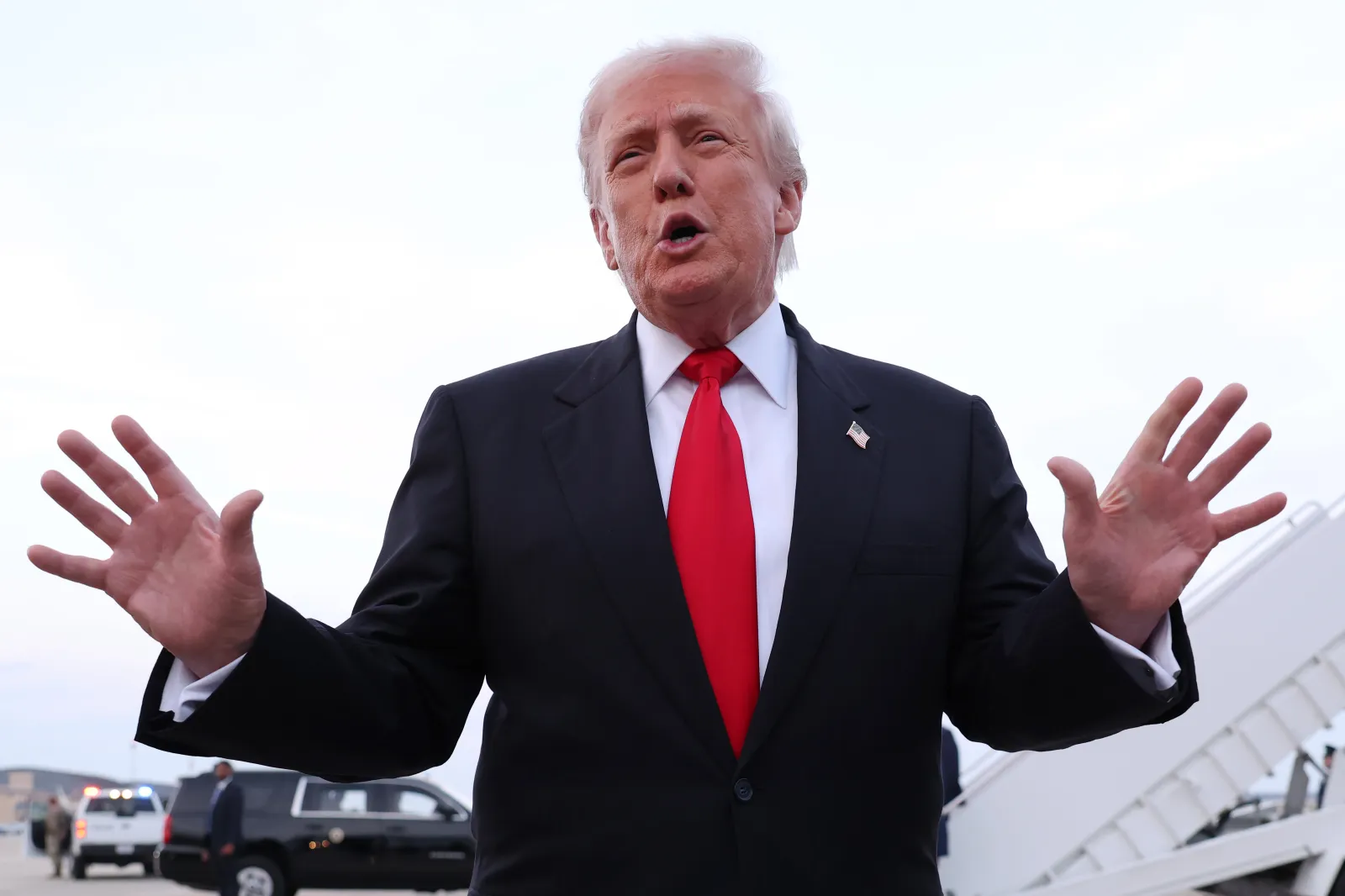
President Donald Trump’s proposal to send every lower- and middle-income American a tariff-funded check for $2,000 has sparked debate among some economists.
Those who spoke with Newsweek warned that the revenues from Trump’s duties may prove insufficient to finance this spending package, and that such a significant outlay could prove inflationary while undermining efforts to pare down the U.S.’s debts.
What Would Trump’s Stimulus Checks Do to the Economy?
Over the weekend, the president unveiled his plan to distribute tariff revenues directly to American households, writing on Truth Social that a “dividend of at least $2000 a person (not including high income people!) will be paid to everyone.”
Read More on Politics
Trump’s announcement has not yet transformed into a formal policy proposal—with questions still surrounding implementation and eligibility criteria—and experts remain skeptical that stimulus of this sort would be prudent given the current state of the U.S. economy.
These concerns are principally due to the risk of such direct payments accelerating already elevated inflation—a reason stimulus checks are typically reserved for addressing weak demand during significant crises.
“Sending out checks to Americans is a recipe for higher inflation at a time when inflation is still stubbornly too high,” Erica York, the vice president of federal tax policy at the Tax Foundation, told Newsweek.
“The president is pushing the Federal Reserve to cut interest rates, while he is also now pushing for higher spending—those two policies in combination would seriously threaten a return of higher inflation,” she added.
...
Kenneth Rogoff, a professor of economics at Harvard University and former chief economist at the International Monetary Fund, said the $2,000 checks would “of course” push up inflation, comparing the effects to those of COVID-era stimulus packages.
Fiscal stimulus during the pandemic contributed to an increase in annual inflation of about 2.6 percent, according to 2023 research from the Federal Reserve Bank of St. Louis, even though it concluded that the stimulus helped the U.S. avert other economic calamities.
“The experience of the American Rescue Plan in 2021 shows that such rebates would be inflationary,” Maurice Obstfeld, a senior fellow at the Peterson Institute for International Economics, similarly told Newsweek. “Already under pressure from higher prices of necessities, most households would spend rather than save the money, driving prices even higher.”
However, IG chief market analyst Chris Beauchamp said markets could respond well to such an injection of cash. In comments quoted in The Telegraph, Beauchamp said the spending would signal “a willingness to boost the economy” and be taken as “a positive given the worries about jobs and consumer spending,” while also propping up crypto prices—which have “taken a battering” in recent weeks.
But economists have also questioned whether the $2,000 checks could be funded from tariff revenues alone—as Trump has promised—without worsening some of the U.S.’s longer-running fiscal difficulties.
According to the Treasury Department’s latest monthly statement, the U.S. has raised about $195 billion in customs duties in fiscal year 2025. The Budget Lab at Yale estimates that tariffs could raise about $2 trillion net over the next 10 years, while the Congressional Budget Office projects that these—if kept at their current high levels—could reduce total deficits by $4 trillion for the 2025-2035 period.
“Even if the $2,000 checks are awarded per household (not per person), and only to households earning less than $100,000 per year, the budgetary cost would be more than $200 billion,” Obstfeld calculated.
“This sum is close to the revenue Trump’s tariffs will probably yield this year, and more than half of the cost of extending the Obamacare subsidies for 10 years,” he told Newsweek. “The checks would contribute materially to a U.S. federal deficit that is already unsustainably large.”
York noted that calculating the exact effects on the country’s deficit is difficult without greater clarity on Trump’s proposal, but said this could contribute “another $100 billion a year or more.”
“The tariffs will generate about $200 billion in revenues a year,” she said, “while the tariff dividends described by the president would cost on the order of $300 billion or more.”
Will There Be a Tariff Dividend?
Some have cast doubt on the idea that the administration will be able to distribute tariff rebates in the manner Trump has proposed, instead viewing this in the context of the Supreme Court’s ongoing review of the duties.
Rogoff told Newsweek that the president “wants people to start looking forward to getting their yearly $2,000 checks” so that if the justices invalidate his tariffs, he can claim they are “robbing the American people.”
As virtually all forms of federal spending are subject to the “power of the purse,” Obstfeld noted, Trump’s proposed stimulus “would require legislation by Congress, as in past rounds of emergency checks.”
“That is highly unlikely, to say the least,” he continued.
“We do not see stimulus checks in the near future, but could see greater Congressional interest as we approach the midterm elections, especially if we see weakness among consumers,” wrote Ed Mills, the Washington policy analyst at Raymond James, in a note cited by CNBC.
One White House official told the outlet that the administration “is committed to putting this money to good use for the American people,” without confirming whether the tariff revenues would be spent directly on the $2,000 checks.
On Sunday, Treasury Secretary Scott Bessent walked back the idea of a direct rebate, telling ABC News that Americans may see the money in the form of tax cuts included in the One Big Beautiful Bill.
In August, after Republican Senator Josh Hawley proposed a similar $600 tariff rebate, Bessent clarified that the administration was “laser-focused” on paying down the country’s debts before distributing any revenues. Trump on Monday said the inverse could be true, and that funds “left over” once the checks go out could be used to substantially pay down the $38 trillion national debt.
However, how much tariff revenue remains available for either dividend checks or debt payments will depend on the fate of the policy itself.
The Supreme Court is currently weighing whether Trump has the authority to impose his tariffs using emergency powers, after lower courts deemed it a case of executive overreach. The court began hearing arguments on November 5, and the administration is expecting a judgment before the end of the year.
An unfavorable outcome for the administration could see it forced to refund the import taxes that have already been paid by American businesses, ruling out the possibility of any dividend payout—though Trump is already charting alternative means of carrying out his economic agenda in this scenario.
View 0 Comments
Submit Correction
View Editorial & AI Guidelines