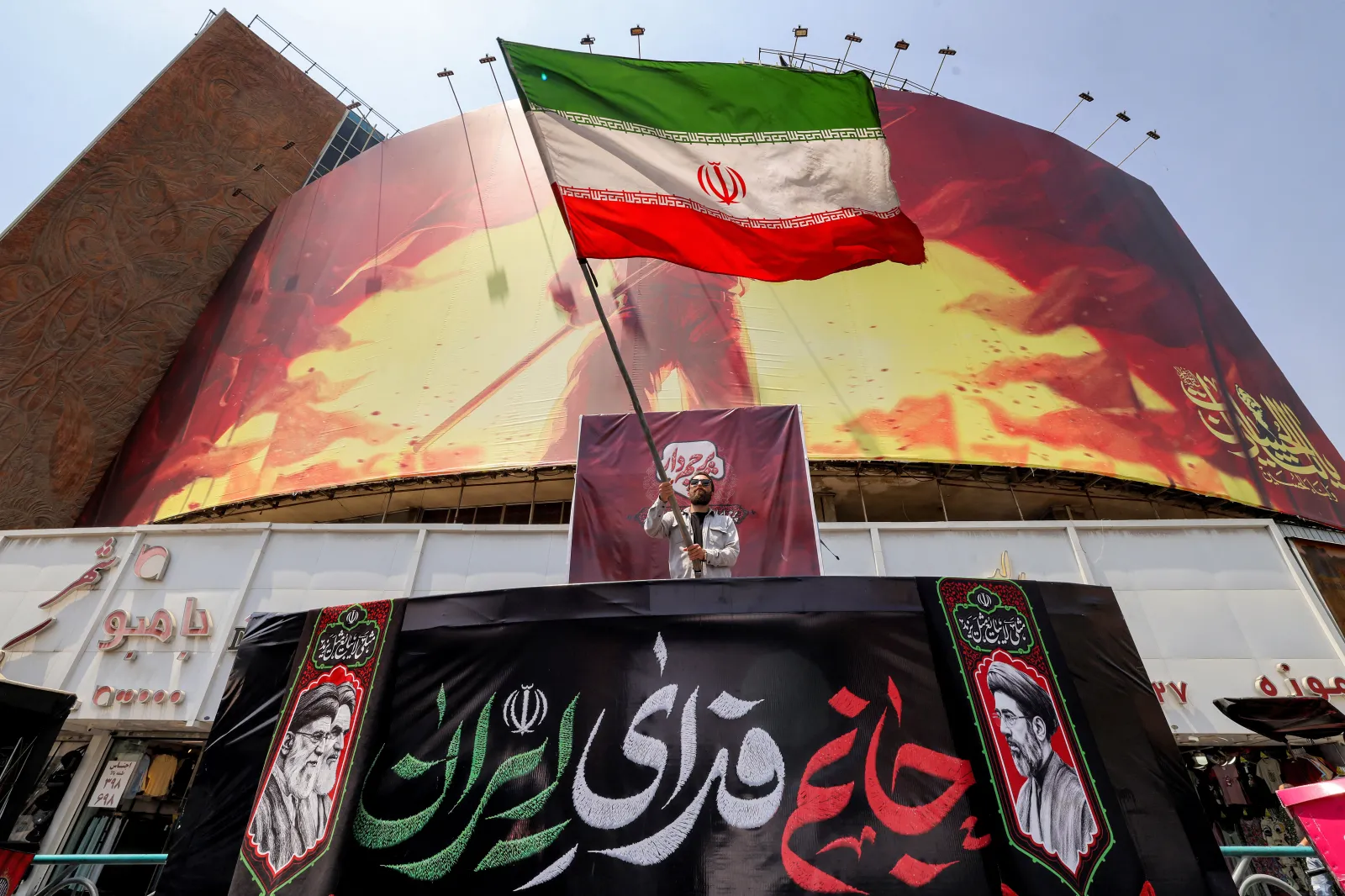
...

By Tom O'Connor
Deputy Editor, National Security and Foreign Policy
0
Share
Newsweek is a Trust Project member
See more of our trusted coverage when you search.Prefer Newsweek on Googleto see more of our trusted coverage when you search.
As President Donald Trump attempts to impose new demands for a deal that would put an end to the United States-Israeli war against Iran, the Islamic Republic continues to maintain a defiant stance, seeking concessions that would have profound ramifications for the region.
Iranian observers say this confidence is rooted in their government's steadfast belief that it has gained the upper hand in the war amid reports of mounting frustration in the White House.
"Trump imposed this illegal war on Iran, but the Iranians stood firm and resilient, and have defeated America so far," Tehran-based security analyst Alireza Taghavinia told Newsweek.
Read More
Israel Is Making Plans for a Post-America Middle East9 min read

This Map Shows Iran, Israel and Saudi Arabia’s Allies in a New Middle East11 min read

How Iran Is Using War With US to Forever Reshape the Middle East8 min read

The resulting equation means the Islamic Republic no longer views itself as fighting a war for survival but rather a battle to turn the tables on a superpower by enforcing its own key objectives, of which Taghavinia identified five leading goals for Iran to usher in "a powerful end to the war in its own favor."
...
US Military Withdrawal
The top priority identified by Taghavinia was preventing future attacks against Iran.
"Today, the first issue for every Iranian is that we must ensure that Iran is no longer invaded and that war is forever removed from Iranian soil," he said.
The intervention, launched by the U.S. and Israel in February, has even prompted many Iranians "to want to acquire nuclear weapons to create an effective deterrent for Iran so that no one else can attack the country militarily."
Some experts have suggested that Supreme Leader Ayatollah Mojtaba Khamenei may indeed seek to rescind his slain father's official ban on weapons of mass destruction as a result of the conflict. But in the absence of any doctrinal shift, Iran's primary focus to shore up security has been on securing an exit of U.S. forces in the region, especially positions close to Iranian territory.
"First, the security balance in the region must change in favor of Iran and the basis of the threat, which is the U.S. military presence around Iran, must be eliminated," Taghavinia said. "Iran intends to ensure that the shadow of war is forever removed from its soil. And it believes that as long as America remains in the Persian Gulf region, the shadow of war and threat will remain."
U.S. bases in the Persian Gulf have already suffered extensive damage due to Iranian missile and drone attacks. The vulnerability of these facilities has reportedly prompted the administration to consider relocating operations further west rather than commit to the multi-billion-dollar effort to fully regroup so close to enemy territory, an idea also backed by some former officials, such as former U.S. Central Command chief General Kenneth F. McKenzie, Jr.
The memorandum of understanding signed by Trump and Iranian President Masoud Pezeshkian in June also addressed the issue, including a clause stating that the U.S. "further undertakes to remove its forces from the proximity of the Islamic Republic of Iran within 30 days after the final Deal."
That deal never came as hostilities resumed last month, and both sides hardened their respective negotiating positions.
US Pays for Damage
Meanwhile, Iran has suffered even more extensive damage to both military and civilian infrastructure since the onset of the conflict. Officials want reparations, be it from the U.S. or its partners in the region.
"Iran is seeking compensation and considers itself the victor in the war because it was able to defeat America, thwart Trump's goals, and gain control of the Strait of Hormuz," Taghavinia said.
"This means that the damages that Iran suffered as a result of this war must be compensated," he added. "Of course, if America does not pay the damages, the Arab sheikhdoms, which have a lot of wealth and were supporters of America, must pay the money."
This demand appears to have particularly incensed Trump. The U.S. president issued a response via Truth Social on Monday in which he said he was "likewise demanding compensation from Iran, for all of the people that they have killed and gravely wounded with their roadside bombs and many conflicts, for which they are famous, as led initially by General Soleimani, including the families of those killed on the USS Cole, and thousands of others killed in combat."
The Trump administration has repeatedly accused the late Islamic Revolutionary Guard Corps (IRGC) Quds Force commander Major General Qassem Soleimani—who was killed in a January 2020 strike ordered by Trump—of masterminding improvised explosive device (IED) methods faced by U.S. forces in post-2003 invasion Iraq, where Iran-aligned Shiite Muslim militias emerged alongside rival Sunni Muslim factions, including Al-Qaeda.
Related Story
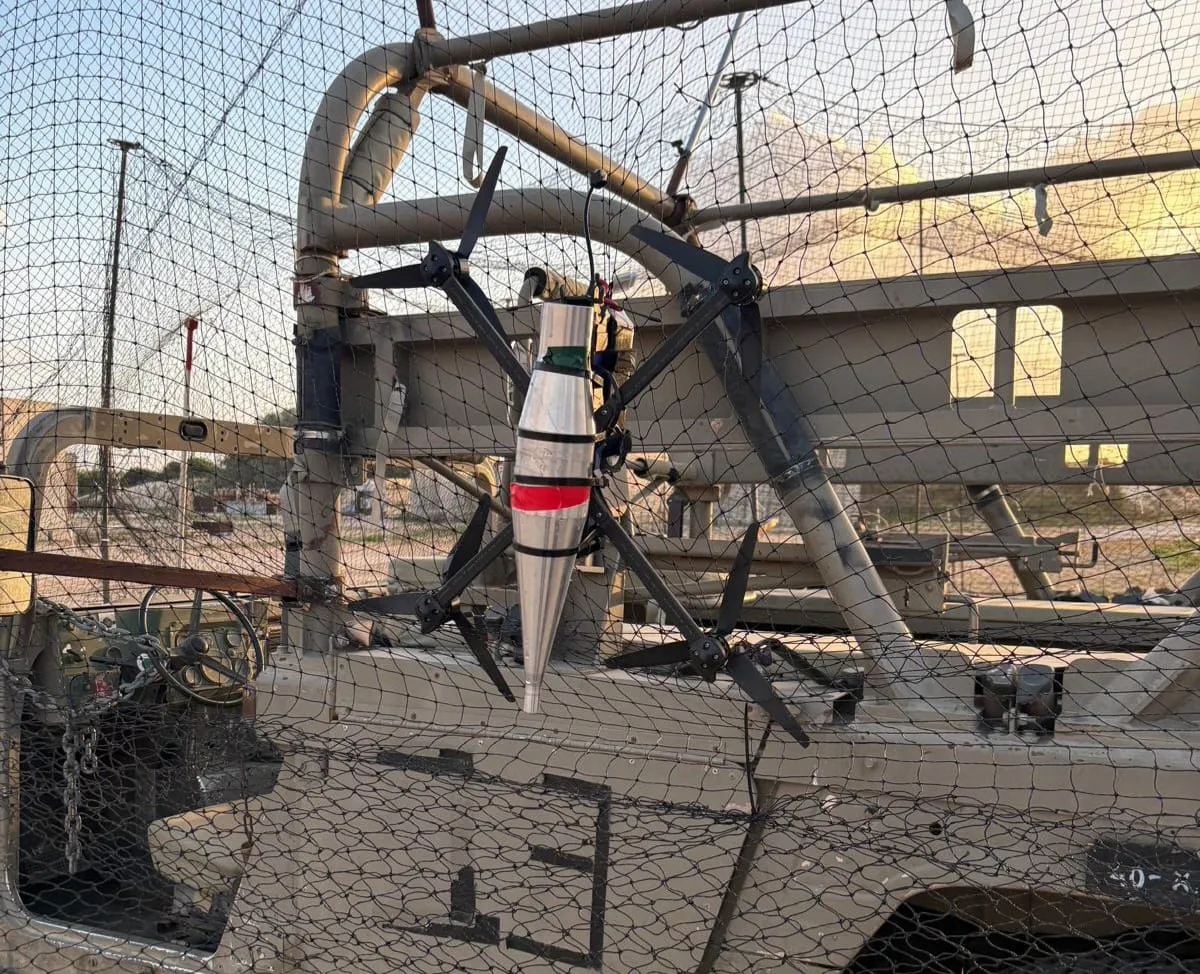
Hezbollah’s New Battlefield Strategy Is Bad News for Netanyahu and Trump
Al-Qaeda claimed responsibility for the earlier October 2000 bombing of the U.S. Navy guided-missile destroyer USS Cole while at port in Yemen. However, Trump has also alleged complicity from Tehran.
Trump's claims of Iranian links to U.S. troop deaths due to IEDs and the USS Cole bombing factored into his justification for launching the war against Iran, as did his blaming of Iranian officials for the killing of protesters during a historic wave of unrest that rocked the nation in January.
As such, Trump's recent message also declared that "compensation should be paid to the families of the hundreds of thousands of innocent protesters that Iran has killed over the last 50 years, not to mention the 52,000 that have been killed in the last five months."
He then followed up in a separate post by saying, "Iran should be responsible for the damages and death caused to the people of Lebanon, Syria, Yemen, and Gaza" as well.

...
Iran Dominates Strait of Hormuz
Of Iran's top goals, leverage over the Strait of Hormuz, a crucial waterway through which roughly 20 percent of the world's oil passed before the war, may be most consequential. It's also arguably the aim on which Tehran has demonstrated most progress.
"Iran's achievement in the war, namely dominating the Strait of Hormuz and generating revenue from this waterway, must be recognized, and there is a national consensus in Iran on this matter," Taghavinia said.
One former U.S. Navy officer recently described to Newsweek Iran's ability to throttle the chokepoint as, "in some ways, a more powerful weapon than a nuclear bomb."
This pressure point, reinforced not only by drones and missiles but also geography, has inflicted pain across the global economy, some of it potentially permanent. And while the U.S. may not be the most heavily impacted nation by the Strait of Hormuz disruption, it's far from immune, with consumers feeling the brunt of Brent crude oil prices having surpassed $110 per barrel in May and now once again on track to match or even surpass that wartime peak as markets' hopes for a fall fade.
The cost would likely be far higher if not for the Trump administration authorizing mass releases from the U.S. strategic petroleum reserve, which is now at its lowest level since 1983, when the Iran-Iraq War previously wrought havoc on the Persian Gulf.
But rather than fuel support for Trump's stated efforts to secure an Iranian capitulation, the crisis has prompted a further plummeting of popular opinion toward the war, according to multiple surveys. Some experts have argued that declining domestic support may prove an even more dire challenge for the administration and its party than waning munitions stockpiles ahead of midterm elections in November.
The fate of the Strait of Hormuz is now at the center of the conflict and the latest effort to resolve it. Iran and Oman, whose territory lies directly across the maritime corridor from southern Iran, have reportedly engaged in talks centered on a "voluntary" fee to be paid by countries whose vessels transit the Strait of Hormuz, not unlike arrangements established in the Strait of Malacca and Singapore Strait.
Trump has sought to push back on Iranian rhetoric over its Strait of Hormuz leverage, telling reporters Wednesday, “They don’t have control. We have total control. We own it."
Hossein Taeb, the newly appointed head of the IRGC's Basij paramilitary forces, had an answer for this: “Today you see that the Strait of Hormuz is under the management and control of the Islamic Republic, and our country continues on its path in complete security,” the semi-official Fars News Agency cited him as saying on Thursday.

...
Iran Enriches, US Lifts Sanctions
Iran's final two objectives are intertwined and predate the conflict altogether.
"Iran's nuclear rights must be recognized by the world, and Iran must be recognized in the world as a normal and powerful actor," Taghavinia said. "U.S. sanctions must also be lifted, and if the U.S. and its allies intend to pass through the Strait of Hormuz, they must surrender to Iran and lift the sanctions."
Iran has been subject to U.S. sanctions in some form since the 1979 revolution that established the Islamic Republic, but the campaign became global two decades ago upon the issuance of U.N. Security Council Resolution 1737, adopted in 2006 in response to international condemnation over the discovery of the Islamic Republic's undeclared nuclear activities.
A brief thaw came with the 2015 signing of the Joint Comprehensive Plan of Action (JCPOA) between Iran, the U.S. and other major powers. But skepticism among conservatives in both Tehran and Washington persisted, and Trump ultimately abandoned the nuclear deal in 2018.
The move effectively renewed Iran's isolation, prompting Tehran to accelerate uranium enrichment beyond JCPOA caps. Failures to reach a new deal served as the pretext for Israel's 12-Day War against Iran last June, when the U.S. first took the unprecedented step of directly striking Iranian nuclear facilities.
With Iran's nuclear program once again on the agenda as Washington and Tehran explore options to end the current conflict, Iranian officials have insisted that they retain the right to enrich uranium at lower levels.
The White House's messaging has shifted throughout the course of the war, most often focused on generally declaring that Iran could never obtain a nuclear weapon, although Trump and other administration officials have also at times stated explicitly that Iran could not domestically enrich at all.

...
What Iran Has Already Achieved
In addition to successfully raising the costs of the war through regionwide strikes and leverage over the Strait of Hormuz, Iran's biggest win yet may be the way it has shattered long-held assumptions of the balance of power in the Middle East.
Regional countries, including Saudi Arabia, the United Arab Emirates and others, are recalibrating their assessments of U.S. security commitments and have pursued coalition-building in the region and its periphery to deter Iranian attacks with both the threat of force and promise of diplomacy, while Washington continues to transition assets further away to Israel and Jordan.
"This is a victory for Iran," said Amir Hossein Vazirian, another analyst based in Tehran. He recalled how, since the pre-Revolutionary era under the rule of the Pahlavi dynasty, "Iran believed that security order in the Persian Gulf is the issue of the Persian Gulf countries, without any foreign intervention."
But Vazirian noted that a divide persists in the opposing perceptions of the U.S. and Iran regarding their roles in the conflict, with both sides viewing themselves as the victor.
"There is a gap between the two countries on the winner of the war," Vazirian told Newsweek. "The United States believes that they succeeded in obliterating Iranian nuclear facilities and naval equipment, and so on and so forth. And the Iranian narrative is different. This is a part of the challenge to reach an agreement between them."
What's changed more recently from Iran's point of view, however, is that it appears to have advanced beyond a mostly reactive posture, as evidenced by Iran's pre-emptive strikes against U.S. positions in Jordan last month ahead of Trump's threats of a massive bombardment that was ultimately postponed in favor of diplomacy.
A new wave of hard-line thinking has also prompted threats of even further escalation, with Vazirian noting the June letter to Khamenei in which 85 officials reportedly appealed for a shift from an "eye for an eye" approach to a "head for an eye."
"The principle is changed. Unlike an eye for an eye, the new Iranian strategy is based on a head for an eye," Vazirian said. "And regardless of its credibility or its possibility, it is a reference to Iran's imagination about its powerful position in this war."
Contact Newsweek editors on this story: Sam Wilson.
View 0 Comments
Submit Correction
View Editorial & AI Guidelines