10
Loading video...

By Garance Choko
Founder and CEO of Coda Societies
0
Share
Newsweek is a Trust Project member
See more of our trusted coverage when you search.Prefer Newsweek on Googleto see more of our trusted coverage when you search.
My work helping institutions act together across education, public safety, and economic mobility has taken me repeatedly to Memphis, where kindergarten readiness among local pre-K students rose from 34 percent to 62 percent in less than a decade.
Those gains cannot be attributed to one intervention or institution. When a federal Preschool Development Grant was due to expire in 2018, 1,000 pre-K seats were at risk. Seeding Success, a Memphis-based backbone organization and client of my firm, Coda Societies, worked with city and county governments, providers, and funders to preserve the seats and expand access. Together, they helped secure approximately $90 million in public funding over six years.
But institutionalization is not permanence. Public funding must survive elections, leadership changes, and competing government priorities. Progress is rarely linear: agreements fall through, decisions stall, and settled questions reopen. Relationships must become policies and budgets, then be defended and renewed.
Read More on Opinion
The work in Memphis shows what progress looks like before it becomes a story: institutions learning, slowly and laboriously, to act together.
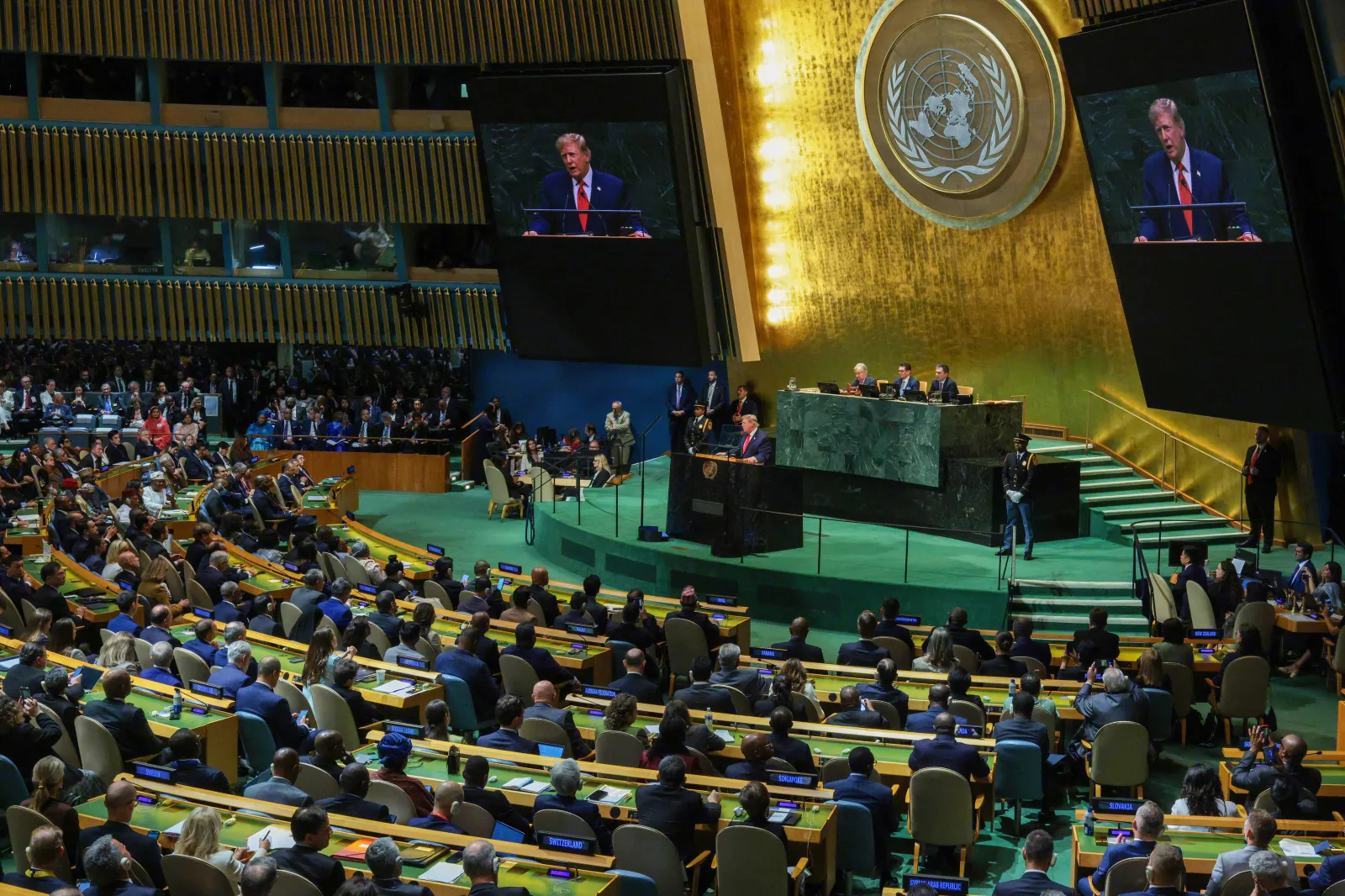
This week, world leaders are gathering in New York for the United Nations General Assembly. The scale is different, but the institutional question is the same: What happens after multiple actors agree on an outcome none can deliver alone?
...
The distance between commitment and implementation is substantial. Only 36 percent of the Sustainable Development Goal targets with sufficient data are on track or making moderate progress. Coordination is hardly the only obstacle. Still, the U.N. describes a crisis in the “means of implementation.”
Complex public problems rarely belong to one institution. Education, health, housing, public safety, and employment operate under different mandates. None holds all the authority, information, or resources needed to change outcomes alone. Agreeing on the desired result is easy. Acting together is not.
One contemporary response is collective impact. The framework calls for a common agenda, shared measurement, coordinated activities, continuous communication, and a “backbone” organization to hold the collaboration together. A backbone turns agreement into an operating structure by clarifying responsibilities, maintaining data, aligning funding, and preserving institutional memory.
That requires an excruciating amount of diplomacy. A superintendent, grassroots organizer, probation official, and business leader may disagree about the problem or what government owes the public. They need not resolve those differences to accept responsibility for a result together.
Backbone organizations are not immune to blind spots. Shared measures can obscure residents’ priorities, averages can conceal inequality, and participation can become ceremonial. But StriveTogether, a national network of more than 60 place-based partnerships, reports that 71 percent of communities with sufficient data improved at least four outcomes against a 2022 baseline, from kindergarten readiness through employment.
Perhaps most remarkably, a practice named in 2011 has endured for 15 years and across four presidential administrations. Progressives may value equity and community power; conservatives, local control and measurable results; businesses, workforce development and regional competitiveness. The framework enables institutions to act together without requiring a shared political worldview. That matters because political vocabularies change faster than communities’ needs.
So what can the institutions gathering at UNGA learn from Seeding Success and its partners? The United Nations already has a backbone. Since 2019, its Resident Coordinator system has brought agencies together at the country level, working with governments, businesses, and civil society to translate global goals into national action. In 2026, the U.N. called these offices “an increasingly important backbone” while acknowledging their need for adequate and predictable financing.
The U.N. should match its declarations about what must be done with funding for how it gets done. Goals do not coordinate themselves, data do not become decisions, and agreements do not survive leadership changes on their own. This connective work is the structure of implementation.
This week, New York is filling with delegations, great suits, crowded receptions, and declarations the world has mostly heard before, in a slightly updated font.
By October, the stages will be down, the lanyards back in drawers, and many declarations beginning their quiet afterlives as PDFs. Resident coordinators and country teams will still be grinding through budgets and data, repairing partnerships, and bringing people back to the table after the cameras leave.
The work in Memphis offers no fantasy that progress is inevitable, especially amid war, displacement, and a crisis of faith in whether institutions work at all. It offers something more useful: proof that a “we” can hold. Not because everyone agrees on why it matters. Because they agree that it does, for reasons of their own, and enough of them keep returning long after the appeal of the room has worn off. It is, as far as I can tell, the only kind of “we” that actually works.
Garance Choko is the founder and CEO of Coda Societies, an M/WBE-certified strategic advisory firm working with nonprofits, governments, foundations, and cultural institutions. She specializes in organizational strategy, governance design, and cross-sector collaboration.
The views expressed in this article are the writer's own.
View 0 Comments
Submit Correction
View Editorial & AI Guidelines