...

By Catherine Clark
Director, Content Syndication
0
Share
Newsweek is a Trust Project member
See more of our trusted coverage when you search.Prefer Newsweek on Googleto see more of our trusted coverage when you search.
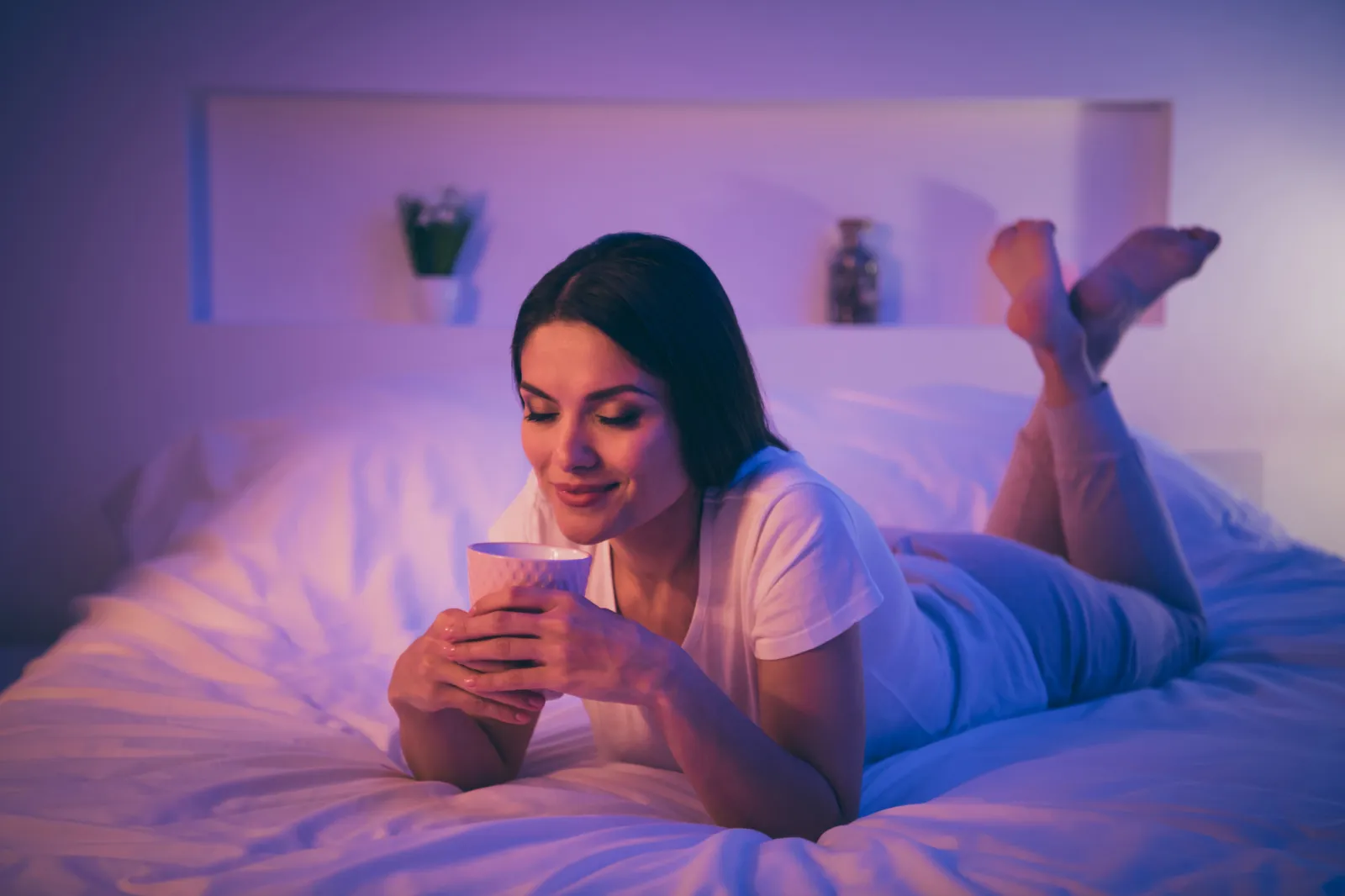
For some in Gen Z, "bedtime stacking," or the art of all‑in‑one setups for productivity and self-care, is evolving from a productivity‑minded ritual into something softer, slower and more about self-care.
A new variation of the trend—dubbed “hotel room service” by TikTok user amanda.theresa—reframes the practice as an act of self‑care rather than productivity optimization.
Amanda's video has attracted more than 89,000 views in two days for her cozy take on the ritual, which she describes as setting up a fully stocked bedside spread before her evening shower so that everything is “waiting for me on my bed.”
Read More on On the Internet
In the clip, the New Jersey and New York City-based creator appears in pajamas with her hair wrapped in a towel, walking viewers through her setup.
The goal, she explains, is to recreate the feeling of returning to a hotel room after housekeeping—except she is both the guest and the staff.
What is the ‘Hotel Room Service’ Bedtime Stack?
While the viral bedtime stack emphasizes multitasking—journaling, reading, planning, scrolling—Amanda’s version leans into comfort and anticipation.
Her additions to the stack include a mini Poppi drink, a snack of celery with peanut butter, a fan with a remote (because, as she reiterates, "we are not getting up to turn the fan on”), a Kindle, an Owala water bottle, a Laneige lip mask, a Nodpod weighted sleep mask, plush socks, a planner and an iPad.
The difference is not the items themselves, but the intention behind them. Rather than trying to fit multiple activities into one stretch of time, the hotel room service stack is about reducing friction at the end of the day—removing even small inconveniences like getting up to turn on a fan or grab water.
TikTok viewers describe adopting the practice themselves, or at least wishing they would, among more than 160 comments.
"I do this on my nightstand and I mentally call it my 'comfy concierge'," a fan offered.
"I call it my 'nest!' I have one beside the couch, too," a contributor shared.
A Reversal of 'Revenge Bedtime Procrastination'
This type of decompression could be a quiet reversal of a phenomenon known as “revenge bedtime procrastination,” a term sleep researchers use to describe the habit of delaying sleep to reclaim personal time lost during busy or stressful days.
Studies have shown that people are more likely to procrastinate at bedtime when they feel a lack of autonomy during waking hours, or when self‑regulation is depleted after a long day of resisting demands and distractions.
Revenge bedtime procrastination often reflects a desire for control and decompression—even at the expense of sleep, according to the Sleep Foundation and the American Association of Sleep Technologists.
In that sense, bedtime stacking’s cozier variations attempt to meet the same emotional need, but earlier and more intentionally.
Research suggests that rituals like Amanda’s may actually support better sleep rather than undermine it.
A 2025 review published in Sleep Medicine Reviews examined the role of “winding down” behaviors and found that structured, calming pre‑sleep routines help reduce cognitive and emotional arousal, making it easier to transition from wakefulness to sleep.
Burnout and Overstimulation
The aesthetic matters, too.
The imagery mirrors hotel luxury: neatly arranged items, plush textures, cold drinks and skincare laid out like amenities. It taps into the same appeal as “everything showers” and nighttime routines popular on social media, where preparation itself becomes a form of relaxation.
The appeal may be especially strong for young people navigating burnout and overstimulation. For Amanda, the appeal is not aesthetic perfection or efficiency. It is the small surprise of stepping out of the shower and being greeted by something kind.
“It’s waiting for me,” she says—a sentiment that, for many viewers, feels like the whole point.
Newsweek has reached out to amanda.theresa for comment via TikTok. We could not verify the details of the case.
View 0 Comments
Submit Correction
View Editorial & AI Guidelines