
...

By Hollie Silverman
News Editor
0
Share
Newsweek is a Trust Project member
See more of our trusted coverage when you search.Prefer Newsweek on Googleto see more of our trusted coverage when you search.
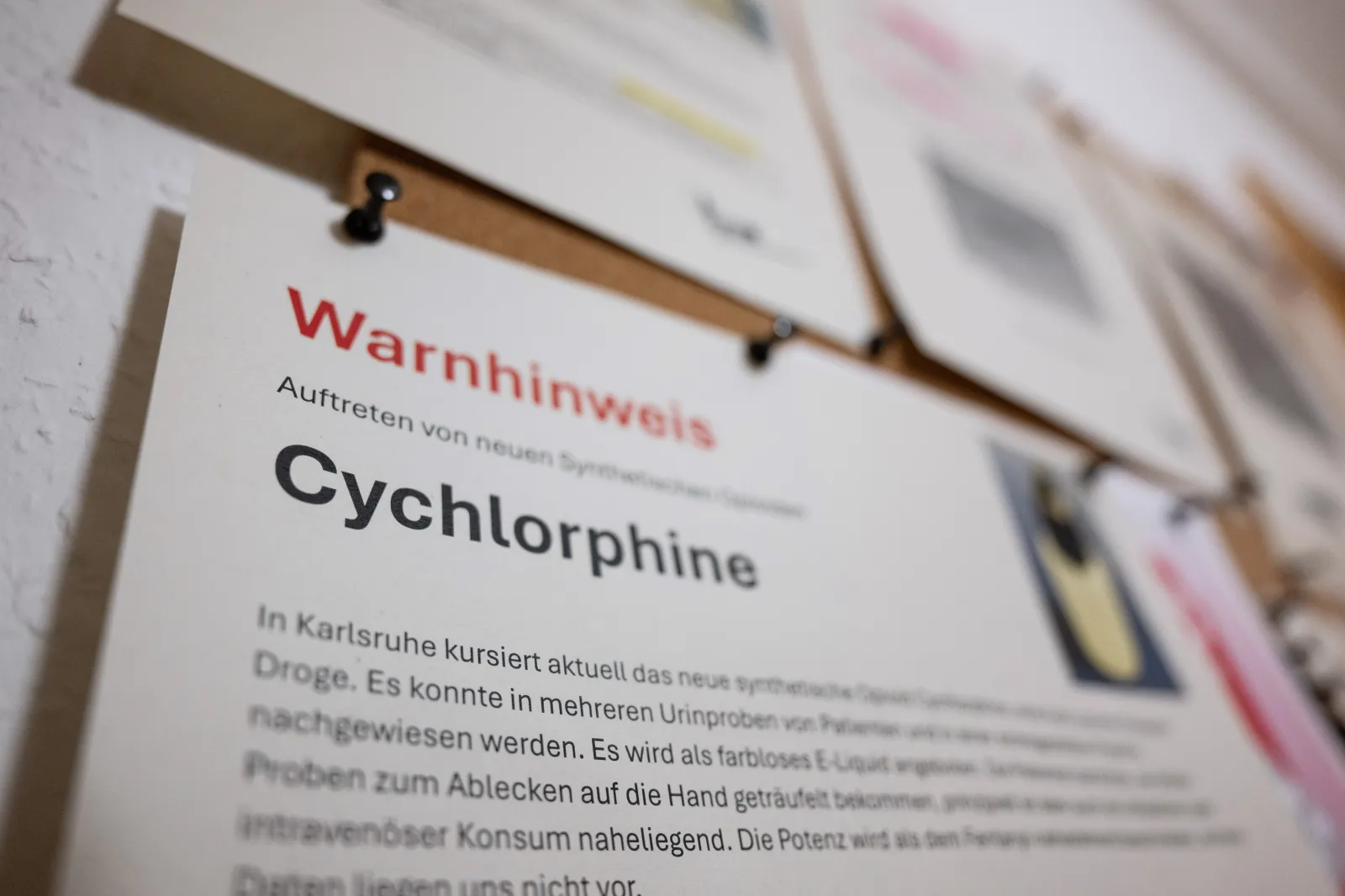
A newly emerging synthetic opioid known as N-Propionitrile Chlorphine—or cychlorphine—has appeared in toxicology findings in 41 recent deaths, authorities in East Tennessee said.
The Knox County Regional Forensic Center (KCRFC) said in a press release that the deaths occurred from July 2025 to February 2026 across 11 counties as five additional fatalities remain under early review for the drug.
The center also said cychlorphine likely surfaced in the U.S. in late 2024 and has now been detected in nine other states, while experts believe it has spread further, with alerts on the drug showing up in Europe.
Read More on News
Newsweek reached out the Centers for Disease Control and Prevention (CDC) for comment Tuesday.
Why It Matters
The rapid appearance of cychlorphine has underscored vulnerabilities in overdose surveillance and toxicology screening as a novel synthetic opioid snakes through the illegal drug supply.
Officials in Knox County said the compound may have been circulating longer than initially recognized and warned that standard test strips and many routine toxicology panels do not detect it without targeted methods, raising risks for users and complicating public health response efforts.
Synthetic opioids—primarily fentanyl—account for 60 percent of all overdose deaths in the U.S., according to data reported by the Government Accountability Office.
...
What To Know
Cychlorphine could be 10 times more potent than fentanyl, officials said. It is not approved for human use, and officials warned it is frequently mixed with other illicit drugs and not reliably detected by common drug test kits, according to the KCRFC.
The forensic center also said the synthetic drug appeared in toxicology reports for 41 deaths in Tennessee from July 2025 to February 2026 in Anderson, Blount, Campbell, Claiborne, Grainger, Jefferson, Knox, McMinn, Roane, Sevier and Union Counties, with five additional deaths in an “early notification process” pending further study, according to a statement from Knox County issued Monday.
The center said it was among the first in Tennessee to identify cychlorphine due to specialized partnerships and testing capacity, saying that many jurisdictions did not initially screen for the compound.
The Tennessee Bureau of Investigation crime laboratory recorded 11 seized drug submissions that tested positive for cychlorphine in 2025 and nine more in the first 30 days of 2026, all from East Tennessee agencies, indicating circulation but not cause of death, according to state data reported by the Tennessee Lookout.
Where Did It Come From?
Officials believe cychlorphine originated in China in 2024, moved to Europe, and reached the United States later that year, possibly first appearing in Florida, according to regional forensic officials and local reporting.
In January, the Center for Forensic Science Research & Education issued a public alert due to cychlorphine’s spread, and detections have now been reported in nine other states.
The CDC added N-Propionitrile Chlorphine to the State Unintentional Drug Overdose Reporting System in early 2025 after a state-level request following the drug's detection in at least one death, illustrating that mortality data often confirms rather than discovers new substances, the Tennessee Lookout reported.
What People Are Saying
Chris Thomas, chief administrative officer and director, Knox County Regional Forensic Center: “What’s especially troubling is that cychlorphine may have been circulating far longer than we know. And I’ve said this before – we don’t know if it’s contained to a limited supply or one bad batch, or if it’s representative of a longer-term shift in the drug supply. That’s what is really concerning.”
An alert from the Addiction Center issued this year: "The first is its extreme potency, which greatly increases the risk of fatal overdose. Synthetic opioids are already a leading cause of overdose deaths in the US, but these newer, stronger drugs can rapidly overwhelm the body’s respiratory system in record time. This means users may lose consciousness or stop breathing before help arrives. A second challenge is that rapid testing for cychlorphine is not yet widely available. Many standard toxicology screenings used by hospitals, emergency responders, and law enforcement were designed to detect more established drugs, such as heroin, morphine, and fentanyl. Since cychlorphine is a newer compound, specialized testing is often required to confirm its presence. This delay can make it harder for emergency responders to administer appropriate treatment and for officials to identify outbreaks quickly."
The Government Accountability Office, in September: "Last year, synthetic opioids—primarily fentanyl—accounted for 60% of all overdose deaths in the United States. That’s about 48,000 people."
What Happens Next
Officials said labs and surveillance systems are expanding testing to detect cychlorphine, and more jurisdictions are expected to add targeted toxicology panels in the months ahead, according to local reporting.
Public health and law enforcement agencies in Tennessee and other states are monitoring seized drug submissions and mortality data to determine the compound’s prevalence and potency across the illicit market, according to state and local sources.
View 0 Comments
Submit Correction
View Editorial & AI Guidelines