10
Loading video...


By Jesus Mesa and Alia Shoaib
0
Share
Newsweek is a Trust Project member
See more of our trusted coverage when you search.Prefer Newsweek on Googleto see more of our trusted coverage when you search.
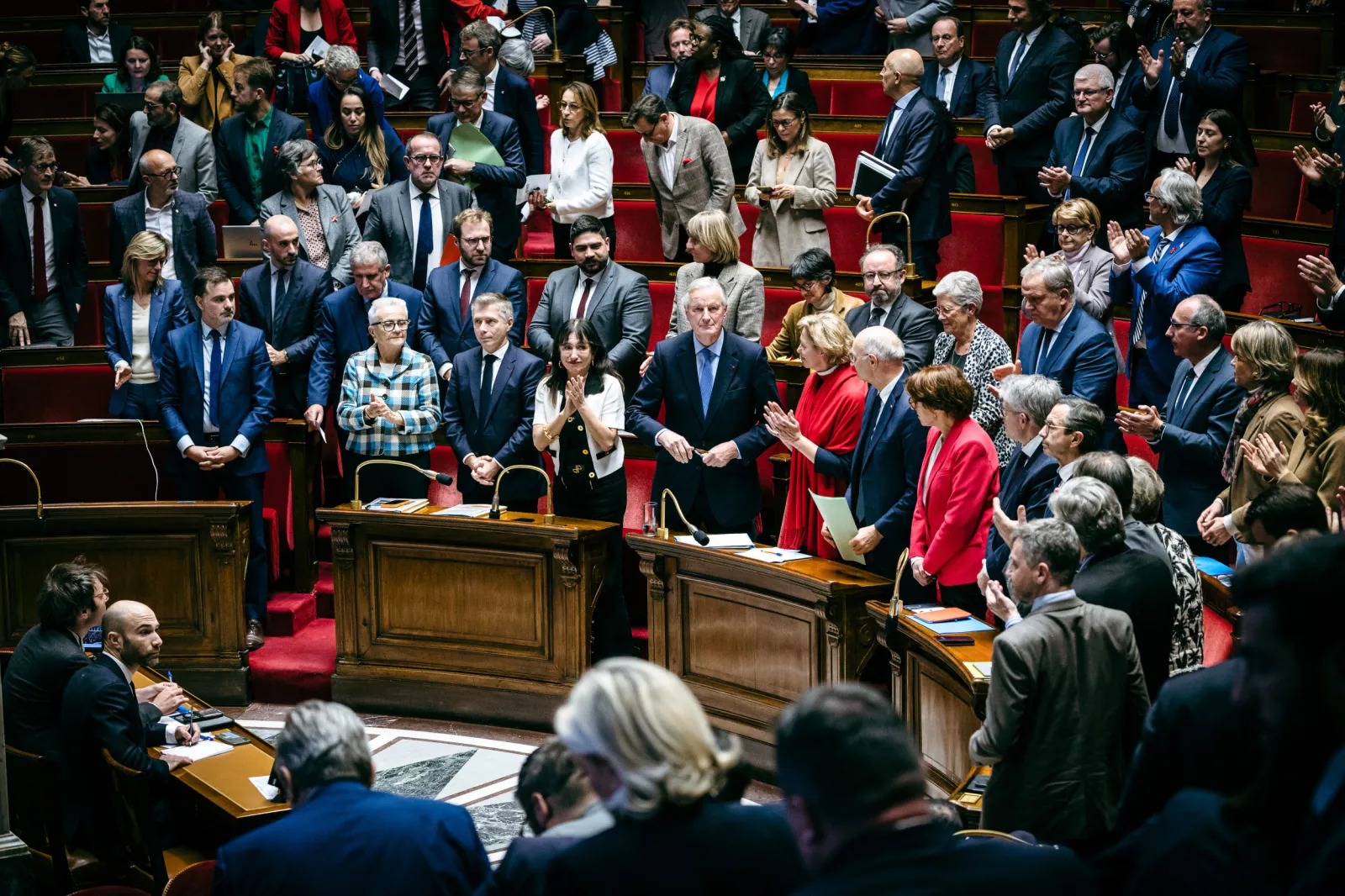
France's government, led by Prime Minister Michel Barnier, was ousted in a historic no-confidence vote on Wednesday, marking the first such collapse since 1962.
The political upheaval, fueled by opposition to austerity measures in the 2025 budget, leaves France without a stable government and introduces significant uncertainty at home and abroad.
President Emmanuel Macron, of the centrist Renaissance party, insisted he will serve the rest of his term until 2027. However, he will need to appoint a new prime minister for the second time after July's legislative elections led to a deeply divided parliament.
Read More on World
The implications extend beyond French borders, with potential economic and geopolitical ramifications, especially for its allies, including the United States.
...
What is a No-Confidence Motion?
A no-confidence vote is a procedure in which lawmakers vote to express whether they have confidence in the government or a political leader.
Barnier's minority government lost the vote on Wednesday, with a total of 331 out of 577 MPs from the left and right of the political spectrum uniting to support the motion. A majority of 288 votes was needed.
The motion brought together an unlikely alliance between the left-wing New Popular Front and the far-right National Rally party, led by Marine Le Pen, which is the largest single party in parliament.
Losing the vote means that Barnier must hand in the resignation of his government.
Who Could Be the Next Prime Minister of France?
Following Barnier's ouster, Macron faces the urgent task of appointing a new prime minister who can secure support in a fragmented National Assembly. Speculation centers around candidates such as Sébastien Lecornu, the minister of armed forces, and François Bayrou, leader of the centrist MoDem party.
The left-wing coalition has continued to advocate for Lucie Castets, an economist and civil servant. However, Castets' candidacy was dismissed by Macron earlier this year, and it remains unclear whether she could garner enough parliamentary support. Political experts suggest Macron may need to opt for a technocrat capable of navigating France through the impending budgetary crisis.
How Long Did Barnier Serve?
Barnier's tenure as prime minister was short-lived, lasting less than three months. The former EU chief negotiator assumed office after a snap election in June resulted in a deeply polarized parliament. His downfall was precipitated by his decision to invoke Article 49.3 of the French Constitution, bypassing a parliamentary vote to push through a controversial 2025 budget. The move alienated far-right and far-left factions, uniting them in opposition.
"This reality will not disappear by the magic of a motion of censure," Barnier told lawmakers ahead of the vote, warning that the fiscal deficit—projected at 6 percent of GDP—would remain a challenge for any future government.
How Could the Government Collapse Impact the US?
The instability in one of Europe's largest economies comes at a time of heightened geopolitical and economic tension. French financial markets have already experienced volatility, with bond yields rising and the euro under pressure.
Economically, the upheaval could complicate the European Union's response to new trade tariffs expected from the incoming administration of U.S. President-elect Donald Trump.
"There are two major powers in Europe, France and Germany, both of which right now are emasculated," Nick Rees, a senior FX market analyst at Monex Europe, told Reuters. He added that this dynamic could weaken Europe's negotiating position with the U.S.
Politically, France's instability could reduce its ability to collaborate on global challenges, including climate policy and NATO commitments. As Macron seeks to stabilize his government, analysts warn that a prolonged crisis could create a leadership vacuum in the EU, potentially straining U.S.-EU relations.
Why Does France Have a President and Prime Minister?
Barnier's ousting does not directly affect Macron's position as president, as the two have distinct roles under France's semi-presidential system.
The president is elected by popular vote every five years, and the most recent one was in April 2022.
The prime minister is appointed by the president, and their authority is primarily related to the government's day-to-day operations, while the president oversees broader national and foreign policy matters.
View 0 Comments
Submit Correction
View Editorial & AI Guidelines