10
Loading video...

By Ellie Cook
Senior Defense Reporter
0
Share
Newsweek is a Trust Project member
See more of our trusted coverage when you search.Prefer Newsweek on Googleto see more of our trusted coverage when you search.
Russia could launch a "limited" attack on NATO soil within the next few years, according to a new report, adding fresh weight to assessments trickling out across the alliance about Moscow's ability to target its 32 members before they build up their militaries and are fractured by the United States' attitude toward Europe.
The Kremlin may try to take a bite out of a NATO country by sending troops over its border or carrying out hybrid attacks such as cyber assaults, The Wall Street Journal reported on Thursday, citing U.S. intelligence analysis.
The estimates put the timeline for these operations any time between fall 2026 and 2029.
Read More on World
While officials from NATO have long warned that Russia could seize a chunk of one of the Baltic states once its long-running war in Ukraine wraps up, intelligence agencies don't always agree on exactly when Moscow would be ready to escalate from hybrid operations already taking place to military ones against alliance territory.
But a small-scale Russian land-grab, if it happened as early as the next few months, would come before many NATO militaries have pulled through on their pledges to surge defense spending and beef up their armed forces.
...
The U.S. previously believed Russian President Vladimir Putin wouldn't launch an attack on NATO while bogged down in Ukraine, contending with the human toll on the eastern front lines and the economic strain of the conflict.
This has now changed because of Ukraine's recent success in targeting Russia's oil and commercial sites, unnamed U.S. officials told the Journal.
Russia has repeatedly denied planning to attack NATO territory, and dismissed the claims as "nonsense."
A large-scale attack on NATO is extremely unlikely, with Russia expected to instead consider a smaller, probing military operation against one of the Baltic states or Poland.
For this type of incursion, Russia wouldn't need a high number of troops, analysts say; Moscow would just require a small force that takes a sliver of land, but ultimately doesn't inspire all of NATO—including the U.S. and the western European nations—to strike back overwhelmingly.
Their failure to do so, they say, would spell the end of NATO's credibility and delight the Kremlin.
NATO states are bound by Article 5 of the alliance's founding treaty, which commits all members to the defense of another NATO country if they're attacked.
But it's less clear how the 32 members would respond to hybrid or "gray zone" tactics, including sabotage of critical infrastructure, or to Russian soldiers seizing a small chunk of strategically unimportant territory over its borders.
Many in Europe worry NATO's unity has been frayed by President Donald Trump and his administration, which could embolden Putin to believe this White House—which will be in power throughout the period outlined in the Journal's report—wouldn't come to the aid of Eastern Europe if attacked.
The U.S. has berated Europe and Canada for low defense spending and an overreliance on American forces, lathering these countries with disdain while warming relations with the Kremlin.
Related Story
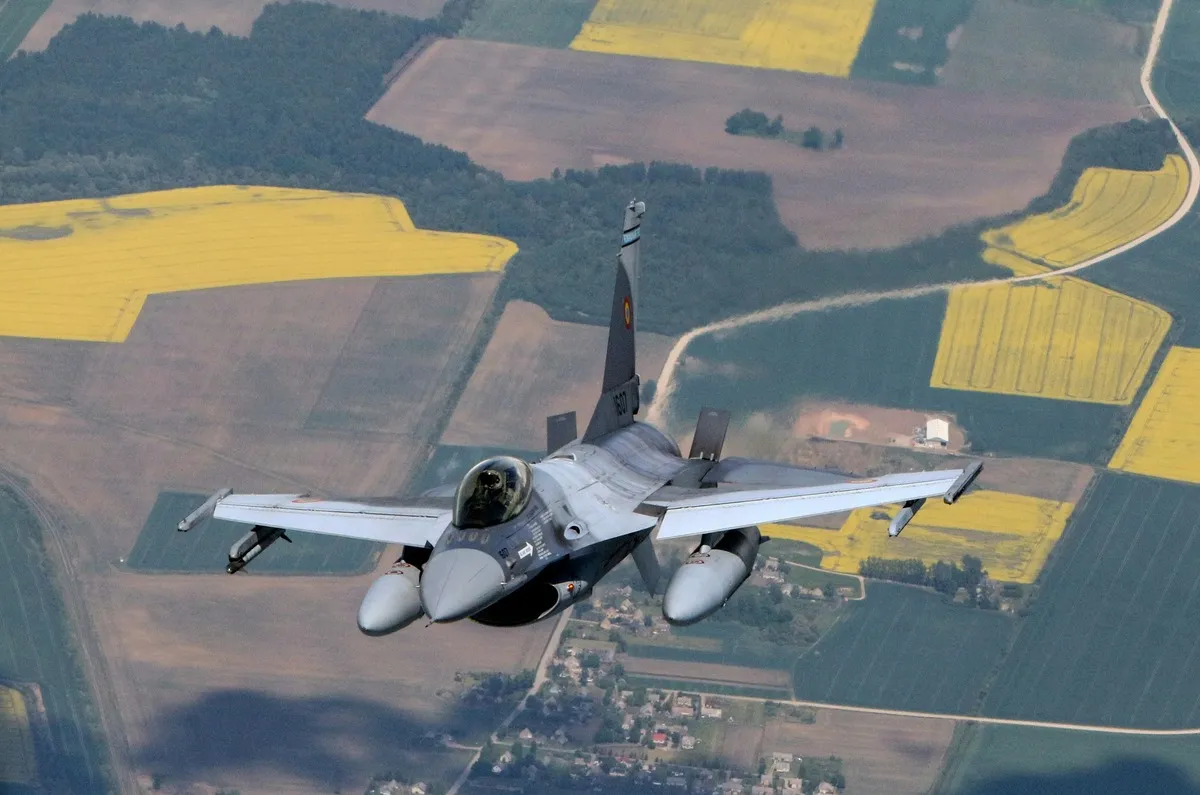
NATO Forced To Repeatedly Scramble Fighter Jets To Intercept Russian Planes
The Pentagon is currently reviewing how many troops it deploys in Europe, while NATO members on the continent work out how to plug the gaps American forces may leave in their defenses if they're ripped away—all while largely insisting the U.S. is still fully committed to the continent.
"We are always thinking through and preparing for any number of scenarios," said NATO spokesperson Colonel Martin O'Donnell. "NATO is watching and we are ready to deter and defend as necessary, which we continue to demonstrate."
But with NATO not yet rearmed, questions over the U.S.'s desire to commit to defending strips of Eastern Europe under Trump in doubt and burgeoning fears over U.S. munitions stocks after months of war with Iran, the factors that previously put Putin off "aren't deterring him as much any more," said Jim Townsend, a former Pentagon official.
So, what are the options for Russia, should it attempt a "limited" attack?
Small Land Grab
This is generally seen as the realistic worst-case scenario. But it becomes increasingly likely the more time passes, the U.S. officials said.
Some analysts say that if Russia did move to take part of NATO territory, it would probably amass soldiers close to Estonia, Latvia or Lithuania's eastern borders. Some would likely be deployed to confuse NATO forces monitoring where Russia may try to push through, disguising the true targets and forcing NATO to spread its defenses.
When Russian soldiers cross the border, they'd be accompanied by electronic warfare systems to confuse NATO communications and navigation, and cyber onslaughts.
Once they hold a piece of land, Moscow would quickly populate the area with air defenses that could shoot down NATO aircraft that skirted within range to strike Russian forces, some experts predict.
NATO is actively rehearsing for this scenario to happen in the next four years. The Allied Rapid Reaction Corps (ARRC), which would be some of the very first NATO troops deployed if Russian tanks were poised to enter the Baltic states, war-gamed a Russian invasion of these three countries in 2030 in May this year.
NATO says it picked 2030 because that's when the threat from Russia will be "most acute."
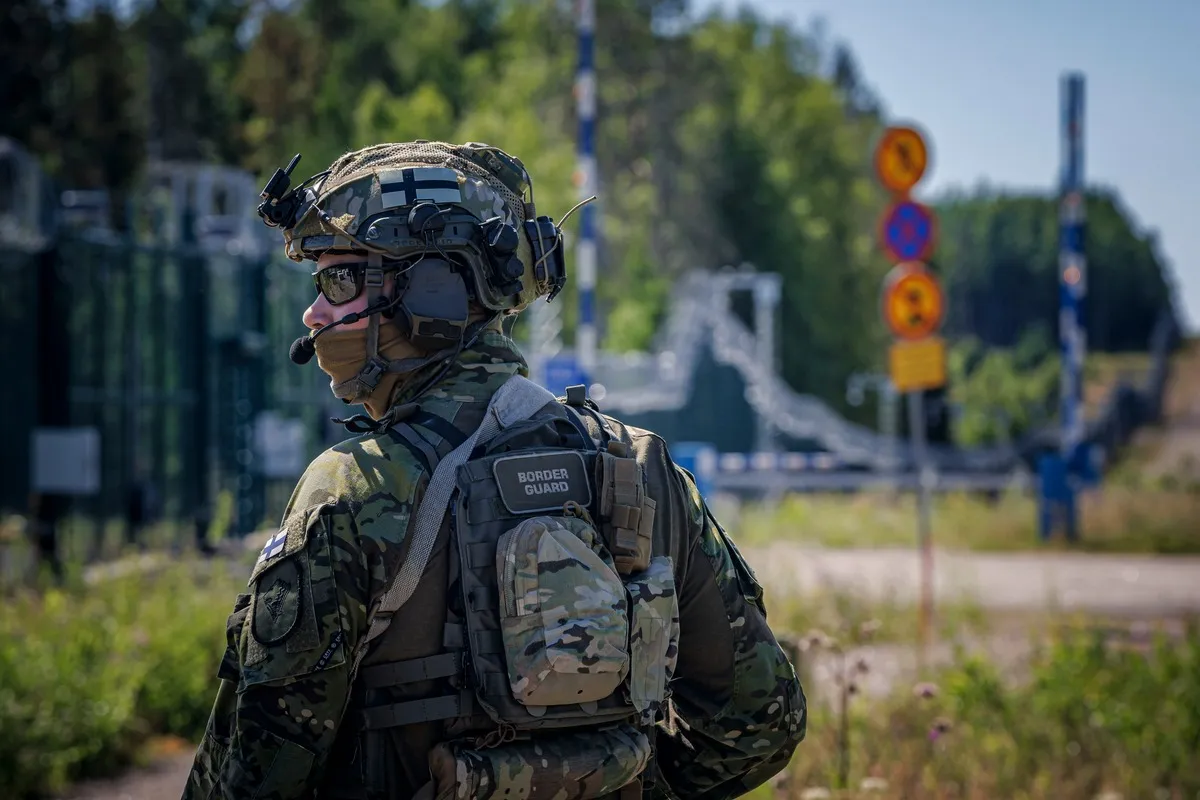
But Russia is already building an entirely new garrison to house up to 6,000 soldiers in Petrozavodsk, a city in Russia's northwest near Finland, the country's YLE broadcaster reported in June. Russian media separately reported Russia was constructing "more than 50 facilities from scratch" in the Karelia region bordering Finland.
Another scenario could be operations around the Suwałki Gap, said Ed Arnold, a senior adviser for defense with The D Group organization of business leaders and experts.
A small strip of land close to the Polish-Lithuanian border that links Belarus to the Russian exclave of Kaliningrad, the Suwałki Gap is a constant, rumbling concern in Eastern Europe. The 40-mile Suwałki Gap has been intermittently described as NATO's weak point and the alliance's most fortified boundary.
Russian soldiers could push into the gap from Kaliningrad or from Belarus, sweeping outward and broadening up the corridor by eating into Polish and Lithuanian territory, Arnold told Newsweek.
But it wouldn't need to be an attack made up of bloated numbers of Russian soldiers. A war-game run by German newspaper Die Welt in December, simulating a Russian incursion into Lithuania in October 2026, found that with just 15,000 troops, Russia was able to seize the Lithuanian city of Marijampole from the Suwałki Gap.
In the war-game, the U.S. didn't invoke Article 5, and Germany dithered, ultimately leaving Russia victorious in its territorial snatch and in its goal of undermining NATO.
Putin "knows he can't do NATO militarily, but he can do it politically," Arnold said.
Hybrid Attacks
"Hybrid attacks" is a catch-all term for operations that stop short of open fighting, like cyberattacks, information campaigns, arson incidents or the targeting of vulnerable infrastructure, such as undersea cables. NATO says Russia has been waging a hybrid war with the alliance for years.
"We call on Russia to stop these destabilising activities," the alliance said in a statement last month after what it called "persistent malicious cyber activities" from Moscow.
And at least 13 cables under the Baltic Sea were damaged between fall 2023 and the start of 2025. The overwhelming majority of the world’s data travels via undersea cables, effectively underpinning much of normal daily life. Targeting these cables can have huge military and civilian implications and give an adversary a major advantage for carrying out other operations.
German authorities said on Wednesday they had found a drone carrying explosives at Leipzig airport, a major military nexus and logistics hub in the east of the country. German police were deployed to dispose of the device, which they said was found near planes belonging to Ukraine's Antonov Airlines.
Much of the aid for Ukraine is routed through Leipzig, as well as many NATO operations.
German Interior Minister Alexander Dobrindt said officials were treating the incident as a "professional hybrid threat" and investigating whether it was set up by a foreign power.
In late 2024, it emerged that Western intelligence officials suspected Russia of plotting to put incendiary devices aboard cargo planes, including aircraft bound for the U.S.
Four packages were sent from Lithuania to the United Kingdom and Poland in July 2024, one of which caught fire just before it was loaded onto an aircraft in Leipzig. Another caught fire in a warehouse in the U.K., and a third was set ablaze on a truck in Poland.
Moscow has been linked to a string of arson attacks on properties connected to then-U.K. Prime Minister Keir Starmer, with two people thought to be in touch with Russian intelligence sentenced in the U.K. in June.
"We reject any attempt to associate Russia or its foreign ministry with unlawful activities," the Russian Embassy in the U.K. said at the time.
"The speed, scale and intensity of hybrid threats have increased in recent years," NATO Secretary General Mark Rutte said in January. "Being prepared to prevent, counter and respond to hybrid attacks, whether by state or non-state actors, is a top priority for NATO."
Contact Newsweek editors on this story: John Fitzpatrick and Sam Wilson.
View 0 Comments
Submit Correction
View Editorial & AI Guidelines