...

By Anna Skinner
Associate News Editor
0
Share
Newsweek is a Trust Project member
See more of our trusted coverage when you search.Prefer Newsweek on Googleto see more of our trusted coverage when you search.
National Weather Service (NWS) meteorologists across the United States have issued myriad weather alerts along the East, West, Gulf, Alaskan, and Hawaiian coasts on Thursday.
There are 95,509 miles of coastline in the U.S., according to the National Oceanic and Atmospheric Administration (NOAA). As of Thursday afternoon around 1 p.m. Eastern time, roughly 90 percent of that was under some form of weather alert from the National Weather Service (NWS), including the entire East Coast, Gulf Coast, Hawaiian coast, nearly all of the Alaskan coast, and part of the Pacific Northwest coast.
Gulf Coast
Small craft advisories were issued across all Gulf Coast states, and some beach hazards statements or rip current statements were in place as well.
Read More on News
By 2 p.m. Eastern time, the warnings had expired for most of Texas and Louisiana.
"A cold front from south Florida to the Bay of Campeche will shift southeast of the area by this evening," an NWS marine forecast said. "Fresh to strong winds and rough seas prevail in the wake of the front. Conditions will improve from NW to SE through tonight. A reinforcing front and surge of fresh to strong northerly winds may impact the basin this weekend."
NWS meteorologist Christianne Pearce told Newsweek that in Florida, the unsettled ocean waters were a result of the cold front, which ushered in high winds.
"Anytime we get those cold fronts to come through, usually high winds accompany them," Pearce said, adding that the ocean advisories were normal for this time of year.
West Coast
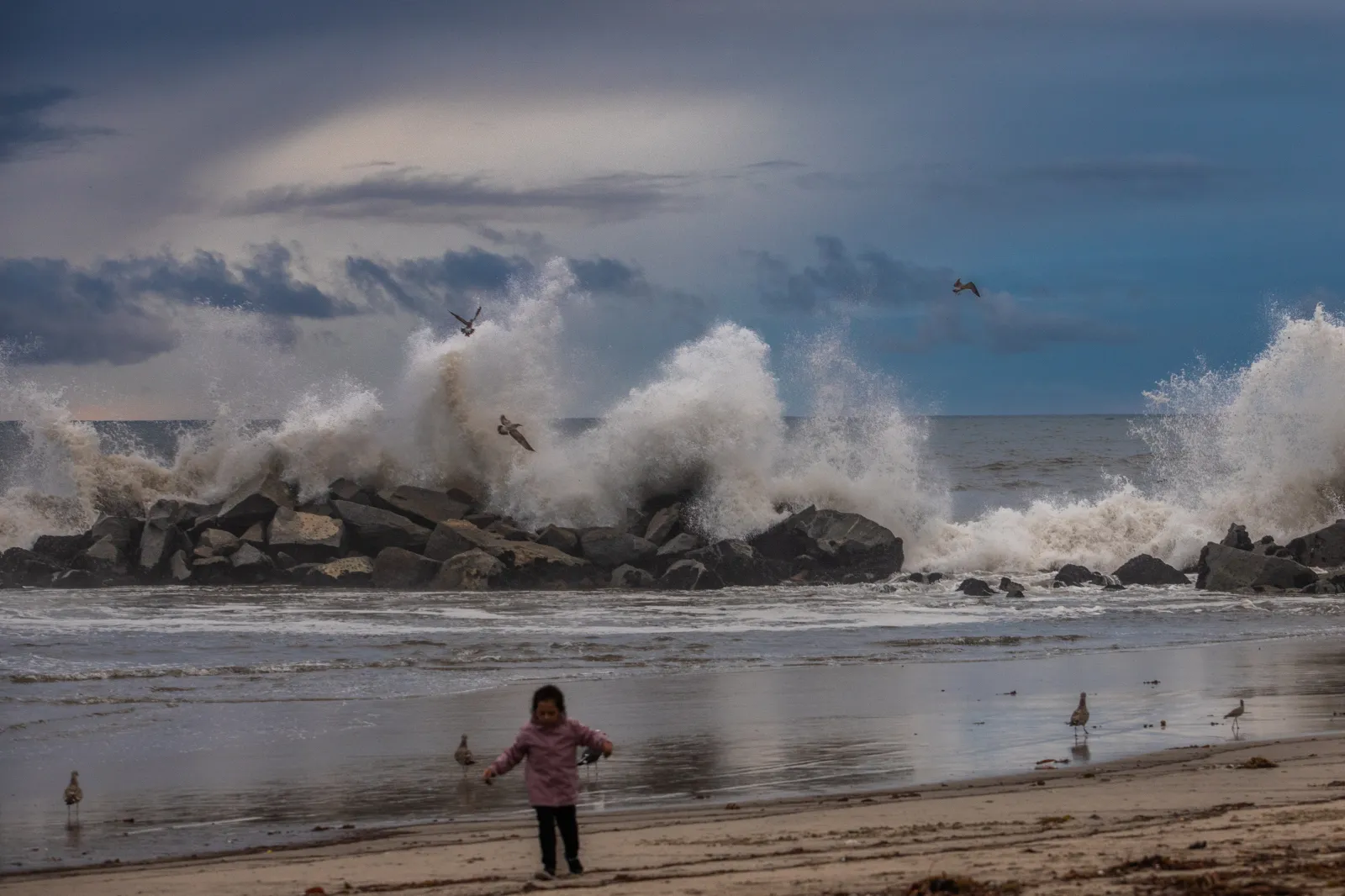
Along the West Coast, a small craft advisory extends from Southern Washington through Northern California. The small craft advisory warned of strong winds and large waves and suggested that inexperienced mariners avoid venturing out. In addition to the small craft advisory, a hazardous seas warning was issued by the NWS office in Medford, Oregon.
...
"Very steep and hazardous seas could capsize or damage vessels. Bar crossings will become especially treacherous," the warning said.
Meanwhile, a beach hazards statement was in place for Pacific coastal beaches in the San Francisco, California, area as sneaker waves threatened to sweep people off of rocks, jetties, and piers.
East Coast
A gale warning dominated the East Coast, stretching from Maine through coastal South Carolina. A small craft advisory was issued for the Georgia coast and the Florida Atlantic coast.
The gale warning goes into effect in the early morning hours on Friday.
"Strong winds will cause hazardous seas which could capsize or damage vessels and reduce visibility," NWS Gray, Maine, warned. "Mariners should alter plans to avoid these hazardous conditions. Remain in port, seek safe harbor, alter course, and/or secure the vessel for severe conditions."
Alaskan Coast
Almost the entirety of Alaska's coastline was under an NWS alert, including heavy freezing spray warnings, numerous winter weather warnings, including a blizzard warning; gale warnings; and brisk wind advisories, among others.
Heavy freezing spray warnings are issued to alert mariners of freezing water that can accumulate on their vessels.
"A warning for an accumulation of freezing water droplets on a vessel at a rate of two cm per hour or greater (0.7 cm per hour or greater in Alaska Region) caused by some appropriate combination of cold water, wind, cold air temperature, and vessel movement," NWS said in a definition of the warning on its website.
Hawaiian Coast
Small craft advisories surrounded all of Hawaii's Islands on Thursday. In addition, there was a high surf advisory in place along the west-facing shores of the Big Island.
"An extra large long period northwest (320-340) swell will build this morning, peak this afternoon, then gradually fade through Friday afternoon," NWS Honolulu said in the high surf advisory. "Surf heights will swiftly rise to above warning criteria along all exposed north and west facing shores."
View 0 Comments
Submit Correction
View Editorial & AI Guidelines