
By Lucie Tiberghien
Founding Executive Director of Molière in the Park
0
Share
Newsweek is a Trust Project member
See more of our trusted coverage when you search.Prefer Newsweek on Googleto see more of our trusted coverage when you search.
There are moments in history when people instinctively bury their heads in the sand, not because they want to, but because they feel they have to, to survive.
We are living in one of those moments.
...
Read More on Opinion
Across Brooklyn and across the country, families are grappling with rising costs, job insecurity and a persistent sense that the ground beneath us is cracking. The cost of everyday living continues to rise, and unspeakable acts of violence are being perpetrated against people in our cities by the federal government. Even people who are lucky enough to have a roof over their head, families to return to after work and decent salaries, feel uneasy about what comes next. I can only imagine the dread for those who don’t. And this quiet anxiety that many carry does not always show up in conversation, but it shapes how we move through our days, affecting our health in ways we can’t always recognize.
When things feel this uncertain, talking about theater can sound out of step. I hear that reaction often. But it is precisely why theater matters right now.
I started Molière in the Park because I had spent years powerlessly witnessing the disconnect between the stories I was telling as a freelance director and the people who were able to hear them. The communities I wanted to touch were not coming to the theater, not because of a lack of curiosity or desire, but because access was a privilege they couldn’t afford. Within these communities, as a result, theater is often positioned as something inaccessible, irrelevant or intimidating. Yet the stories themselves—the comedies, the tragedies, the sharp observations of human behavior—belong to everyone. And when we remove the barriers, something extraordinary happens.
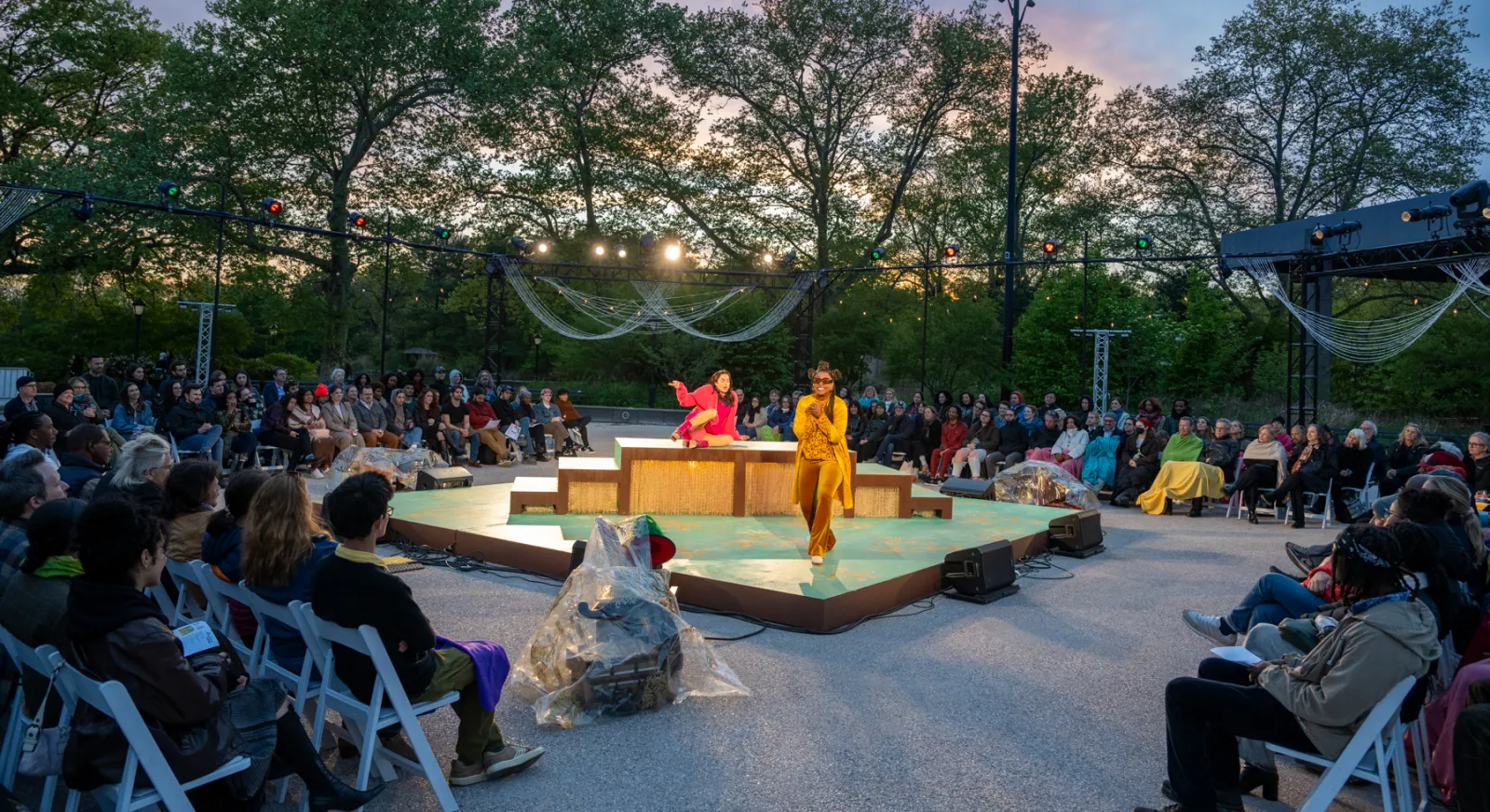
I have watched people arrive at Prospect Park to see our Moliere productions as separate individuals and slowly become, for a few hours, one community. Neighbors who have never spoken to each other sit side by side. Strangers, wealthy or living below the poverty line, who would otherwise never share space, laugh at the same joke. Conversations are opened between parents and their kids. For a little while, differences fall away and something reveals itself: our commonalities. Our shared humanity.

...
Molière’s plays have stayed with us for 400 years because they are about human nature. When presented with a true understanding of the text and the context, they invariably expose our frailties, our deepest fears and the imperfections we all share. They transcend time and take aim at hypocrisy and inflated egos today. They remind us how easily power has always slipped into absurdity and how compassion always begins with self-recognition. And when the many people who know nothing about Molière learn that the ideas that were just presented to them, the characters they just encountered, were written centuries ago, something shifts in their mind because of how relevant these themes still are. Is this not exactly what the arts can do?
Theater is not an escape from reality for only the few. It is an opportunity to understand who we are, where we come from, how we’ve evolved or haven’t, for all. Theater is a way of facing reality together. For a moment, the pressure of the outside world loosens its grip. We are reminded that we are not alone.
New York City is feeling the pressures of our time acutely. In this context, a free and accessible theater in an area of Brooklyn that has long been culturally active but historically under-resourced does something quietly radical. It is how our city takes care of its people.
This is why Molière in the Park exists.
We are seeing this spirit of affordability echoed across the city in powerful ways, including recent initiatives by Mayor Zohran Mamdani, who made a point of giving away theater tickets for free by partnering with the Under the Radar Festival to ensure that bold, contemporary theater could reach audiences who might otherwise be shut out. These gestures are acts of cultural generosity that affirm a simple truth: As enshrined in the U.N.’s Universal Declaration of Human Rights: “Everyone has the right freely to participate in the cultural life of the community, to enjoy the arts and to share in scientific advancement and its benefits.”
Coming together is an act of care. Offering art freely is an act of faith. And sometimes, coming together in the park, and believing as one, is exactly what helps us keep going.
Lucie Tiberghien is the founding executive director of Molière in the Park. Specializing in new work, Lucie spent 15 years developing and directing new plays in New York City and across the country.
The views expressed in this article are the writer's own.
View 0 Comments
Submit Correction
View Editorial & AI Guidelines