10
Loading video...

By Ellie Cook—reporting from northern Germany
Senior Defense Reporter
0
Share
Newsweek is a Trust Project member
See more of our trusted coverage when you search.Prefer Newsweek on Googleto see more of our trusted coverage when you search.
New underwater drones, designed to sniff out hard-to-detect submarines and threats to vulnerable undersea cables, are being tested in the Baltic Sea.
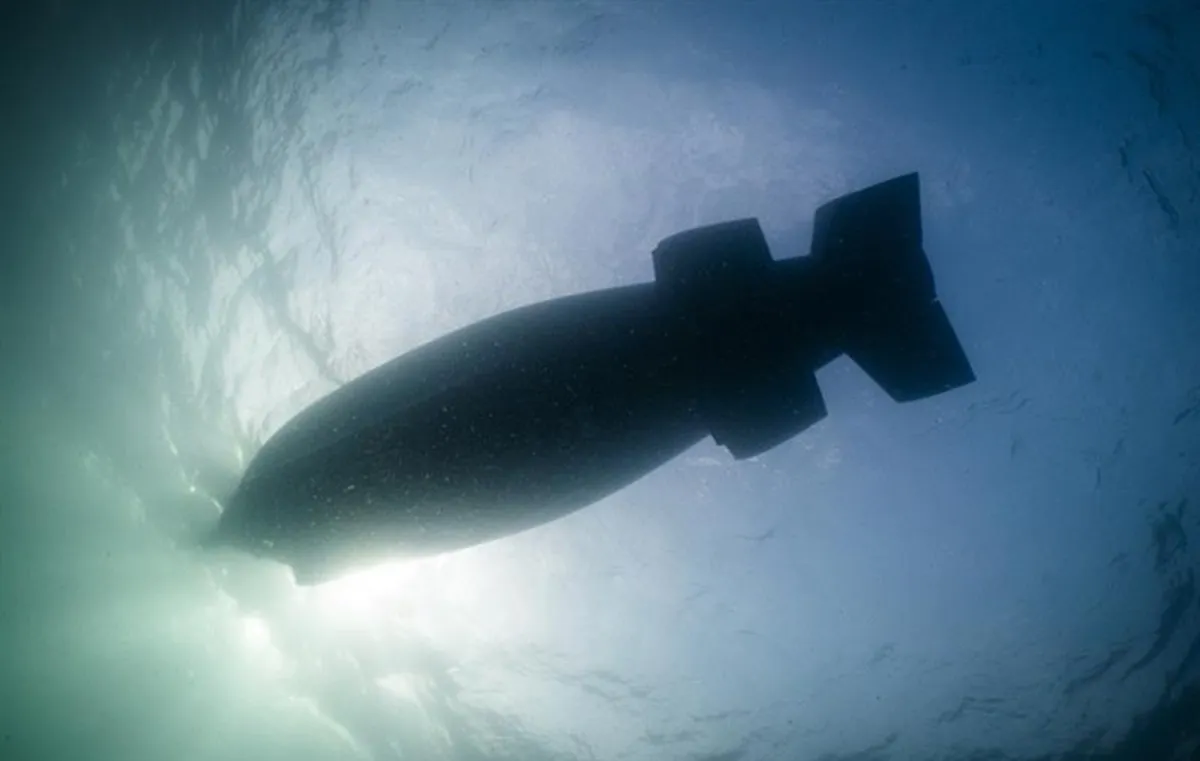
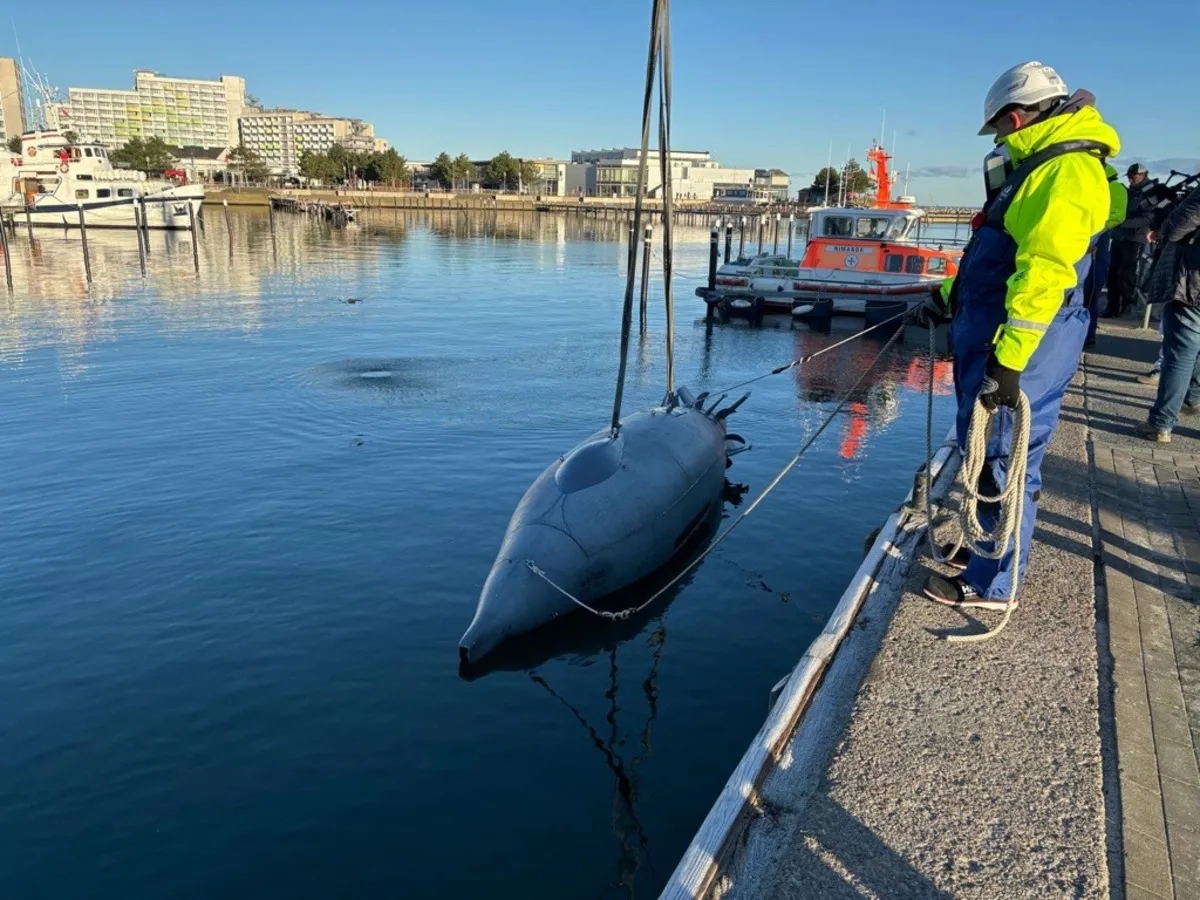
The GreyShark, developed by German technology companies EUROATLAS and EvoLogics, is a penguin-shaped autonomous underwater vehicle (AUV) able to spend up to four months at sea in one go.
The high-endurance version has been christened Foxtrot, and a shorter-range, battery-powered model of the GreyShark is known as Bravo.
Read More on News
The drone is described by its developers as silent, cost-effective, and able to switch between protecting critical undersea infrastructure to detecting stealthy submarines—or helping to clear mines—without receiving new instructions from a human operator.
Several European NATO nations around the Baltic Sea are interested in buying the drones.
...
NATO is investing heavily in its anti-submarine warfare (ASW) capabilities and has attempted to shore up its protection of vital infrastructure, like pipelines and data cables snaking across the seabed in regions like the Baltic Sea.
The alliance is the dominant presence in the Baltic, with Russia the only non-NATO country looking out onto the sea. Its Kaliningrad exclave is home to the Kremlin’s Baltic fleet and a wealth of other military assets.
Several cables and pipelines were damaged in the Baltic Sea in late 2024 under suspicious circumstances. Although blame for the incidents has been very difficult to pin down, NATO officials and experts say Russia is well-versed in hybrid warfare. This term broadly refers to acts of sabotage on infrastructure, including cables, or tactics like weaponizing migration and executing crippling cyberattacks.
A Finnish court last month dismissed a case against the crew of the Eagle S tanker, a vessel detained shortly after five Baltic Sea cables were damaged on December 25, 2024. Prosecutors in the country had alleged the tanker, believed to be part of Russia’s so-called “shadow fleet” of oil-carrying, sanctions-evading vessels, had dragged its anchor along the seabed for approximately 56 miles. The crew had denied wrongdoing.
NATO has beefed up its assets in the region under its Baltic Sentry initiative, formally announced back in January.
The overwhelming majority of the world’s data travels via undersea cables, effectively underpinning much of normal daily life. The GreyShark can detect changes as small as two square centimeters in a section of cable or pipeline, Markus Beer, EUROATLAS's chief sales officer for AUVs, told Newsweek aboard a vessel observing GreyShark demonstrations in the Baltic Sea, close to the northern German coastline.
Russia’s submarine fleet is generally considered a formidable force, far superior to the surface vessels Moscow operates. They are often very tough for NATO militaries to detect, including areas like the Arctic and the so-called Greenland-Iceland-UK (GIUK) Gap that flows out into the northern Atlantic.
The 17-sensor GreyShark drones were not designed with Russia in mind specifically, but can help plug gaps currently yawning in NATO military stocks before they can be backfilled, said Eugen Ciemnyjewski, EUROATLAS's managing director. This may be some of the most expensive platforms, like frigates or submarines, he told Newsweek.
But the drones are designed to work alongside NATO vessels, including when combating Russian submarines, Ciemnyjewski said. The AUV moving ahead of a ship may pick up a signal from a Russian submarine, and can then relay that back to the larger platform to then target, he added.
A swarm, or group, of the underwater drones can also form a "protective shield" around much larger, more expensive vessels, Ciemnyjewski said.
...
NATO nations in Europe have pledged to dramatically raise defense spending, spurred on by the threat of Russia and by the uncertainty around the U.S.'s future on the continent under President Donald Trump. Washington has historically propped up defense in Europe, providing many of the most costly capabilities.
The war in Ukraine has also driven a firm push toward often cheap, unmanned systems that can be mass-produced and pack a punch against much more complicated, pricey platforms.
Drones have ripped away hiding spaces for expensive, sophisticated kit like frigates, and peeled back the role manned systems will have going forward, said Ciemnyjewski. "You cannot hide as a frigate, you cannot hide as a mine-hunter, you cannot hide as a tank," he said. "There's no hiding space anymore in the world, unless [you're] in the undersea domain."
Intelligence assessments from Western security agencies say Russia could be only a few years away from being able to launch a full-scale armed attack on a NATO state, most likely the Baltic nations of Estonia, Latvia and Lithuania. The timing, which changes slightly with different analyses, hinges on the outcome of the war in Ukraine.
Many politicians across the alliance insist NATO is quickly driving forward with a vast military buildup, underpinned by a defense industrial boom in Europe. Others, including industry sources, are less convinced Europe is moving fast enough to meet the potential threat in time.
"We are under threat," said Ciemnyjewski. "Everyone should have understood this."
Update 11/28/25 06.15 a.m. ET: This article was updated with new video.
View 0 Comments
Submit Correction
View Editorial & AI Guidelines