10
Loading video...

By Martha McHardy
US News Reporter
0
Share
Newsweek is a Trust Project member
See more of our trusted coverage when you search.Prefer Newsweek on Googleto see more of our trusted coverage when you search.
Legendary investor Warren Buffett has criticized Donald Trump's economic policy, saying: Tariffs "can be an act of war."
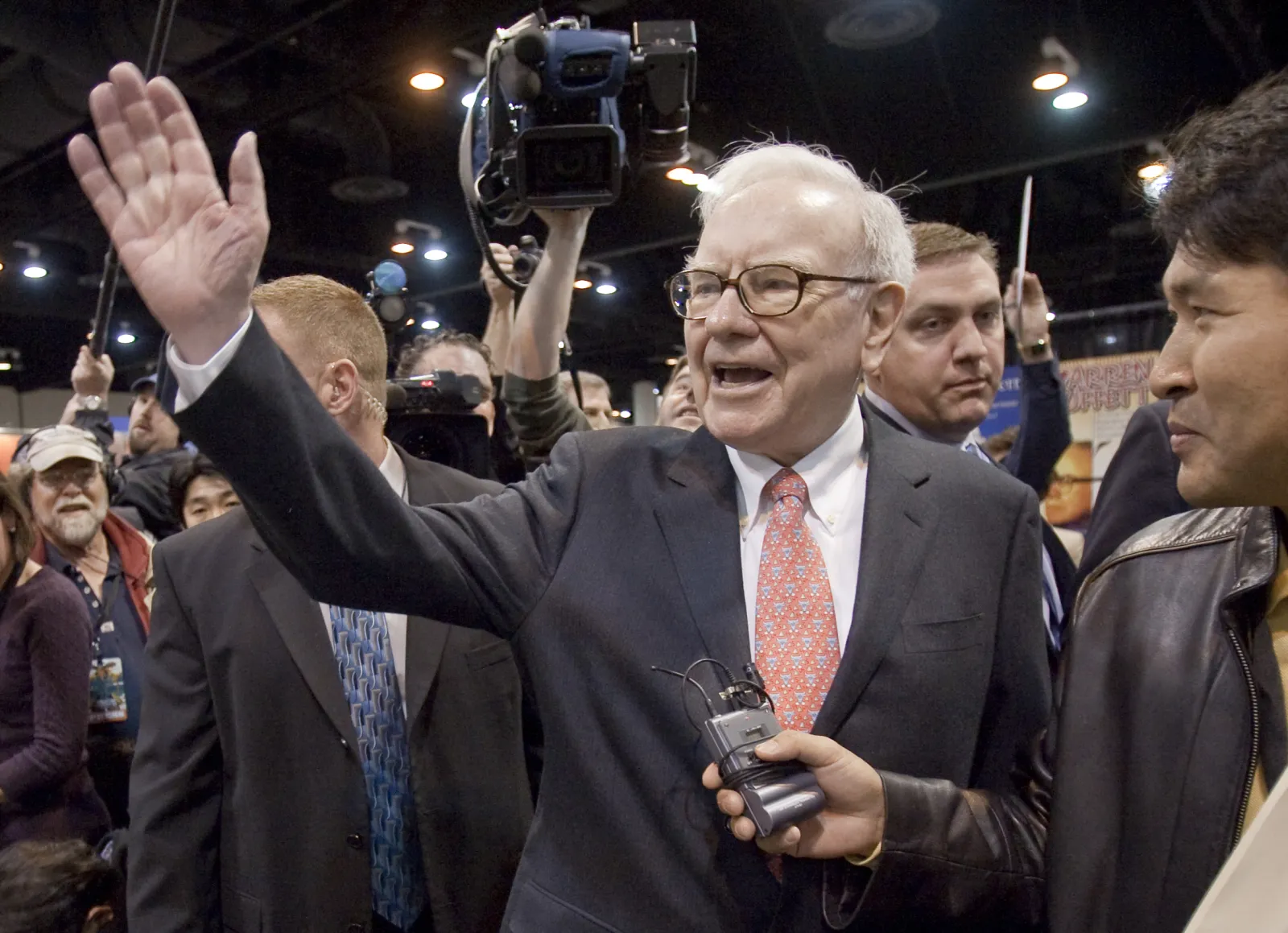
Buffet, 94, spoke out at Berkshire Hathaway's annual shareholder meeting Saturday, the financial world keen to hear any advice on navigating the turbulent economic landscape shaped by Trump.
Why It Matters
The meeting comes after the U.S. economy shrunk for the first time in three years, with businesses rushing to avoid new tariffs. This has created uncertainty and disruption across supply chains.
Read More on U.S.
...
What To Know
At a four-hour meeting of Berkshire Hathaway's shareholders, Buffet criticized President Trump's hard-line trade policy, without naming him directly, saying it's a big mistake to slap punitive tariffs on the rest of the world.
"Trade should not be a weapon," Buffett said. He added that tariffs had "led to bad things."
"Just the attitudes it's brought out. In the United States, I mean, we should be looking to trade with the rest of the world and we should do what we do best and they should do what they do best," Buffet said.
Buffett cautioned that protectionist policies could ultimately harm the U.S. in the long run, especially now that it has established itself as the world's leading industrial power.
"It's a big mistake, in my view, when you have seven and a half billion people that don't like you very well, and you got 300 million that are crowing in some way about how well they've done, I don't think it's right, and I don't think it's wise," Buffett said.
He added: "The United States won. I mean, we have become an incredibly important country, starting from nothing 250 years ago. There's not been anything like it."
It comes after Berkshire said in its first-quarter earnings report that tariffs and other geopolitical events created "considerable uncertainty" for the conglomerate.
His comments follow Trump's introduction of new "Liberation Day" tariffs in April. The tariffs, ranging from 10 percent on all imports to as high as 245 percent on Chinese goods, were implemented under the guise of correcting trade imbalances and bolstering domestic manufacturing.
This move triggered immediate market turmoil, with the S&P 500 dropping over 10 percent within days, marking its worst performance since the 2020 pandemic-induced crash, before rebounding days later.
Despite market turmoil, Berkshire's stock was up 18.9 percent this year, while the S&P 500 has fallen 3.3 percent. The company also revealed before the meeting its earnings totaled a record $334.2 billion in cash at year-end.
However, Buffett's investment approach is facing questions, the company having sold more stocks than it has bought for nine straight quarters
Still, in March, Buffett increased Berkshire's stakes in five major Japanese trading firms to nearly 10 percent, suggesting he's still investing internationally despite the uncertainty at home.
Buffett has been a vocal critic of Trump's tariffs, previously warning that they could have a disastrous impact on American consumers.
In a rare admission for the so-called "Oracle of Omaha," Buffett told CBS News' Norah O'Donnell in March that tariffs constituted an "act of war" and "a tax on goods."
And asked about the state of the nation's economy, Buffett told O'Donnell that he could not talk about it. "I think that's the most interesting subject in the world, but I won't talk, I can't talk about it, though. I really can't," he said.
That was not the first time that Buffet has spoken up about Trump's tariff agenda. In 2018 and 2019, he wrote at length about the trade conflicts triggered by the president's policies, warning that they could have negative consequences on the global economy as well as the America's.
What People Are Saying
Cathy Seifert, an analyst at CFRA, told Reuters: "The far-reaching nature of their businesses and investments make them a microcosm for the whole economy. The overarching concern is we need insight into the degree to which tariffs will cause demand destruction or a slowdown in the economy."
Robin Nasser, a certified public accountant from Newport Beach, California who is attending the meeting, told Reuters: "Warren Buffett has steered away from discussing tariffs, and people are clamoring to hear what he thinks. He obviously knows something we don't because he's stockpiling cash."
View 0 Comments
Submit Correction
View Editorial & AI Guidelines