10
Loading video...

By Liz O'Connell
Reporter
0
Share
Newsweek is a Trust Project member
See more of our trusted coverage when you search.Prefer Newsweek on Googleto see more of our trusted coverage when you search.
What began as a routine morning walk in Central Park on May 15 quickly escalated into a dangerous situation for New York City resident Rachel Hechtman. While concluding her walk with her rescue dog, George, and a friend's dog, Mitzi, Hechtman was blindsided by an aggressive canine.
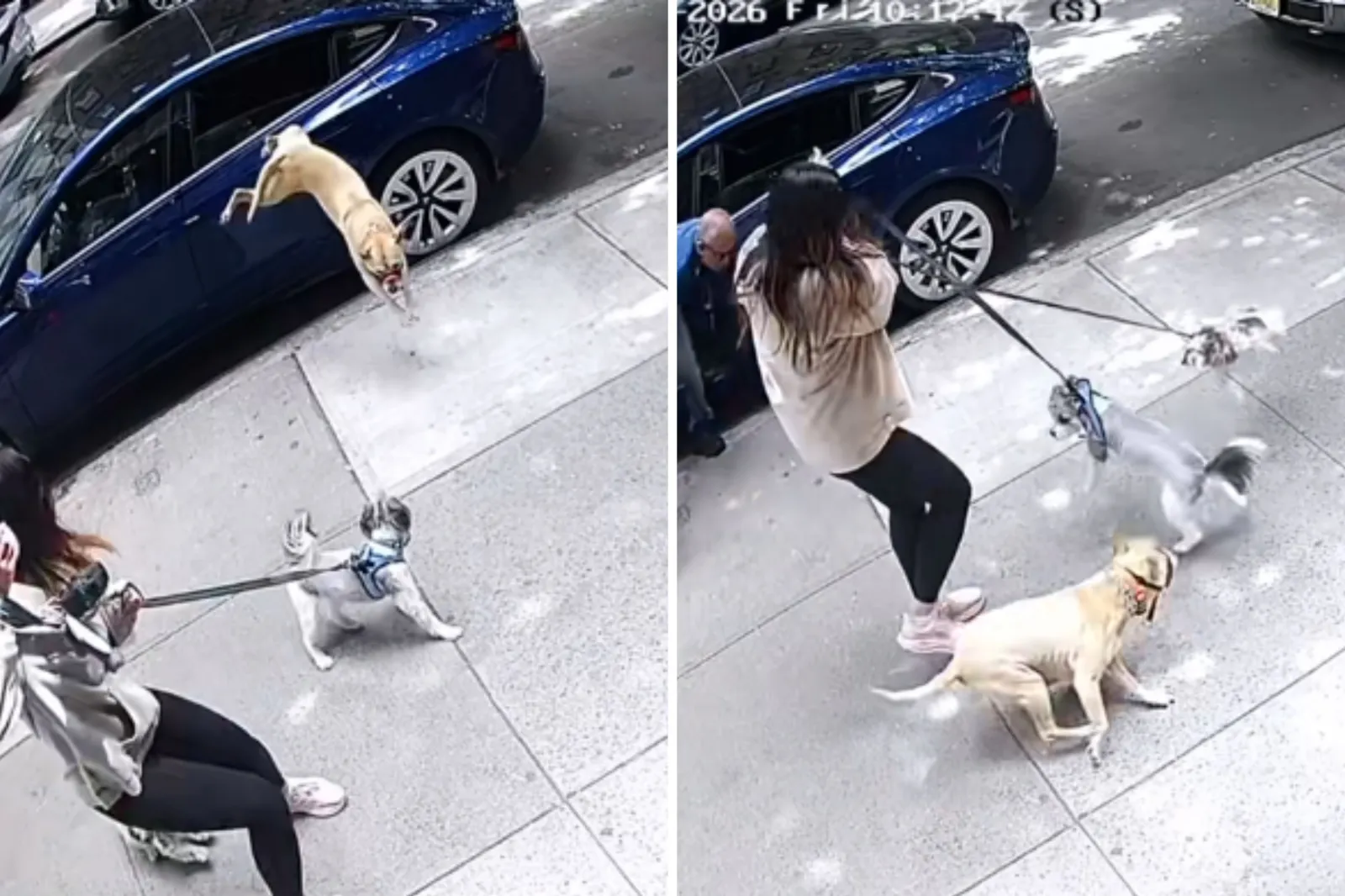
"All of a sudden, I saw a flash of yellow fly in front of my face," Hechtman told Newsweek. "This dog, which looked like a mountain lion, came charging at my dog."
Security footage of the incident, later reviewed frame-by-frame, dog behavior expert and founder of the BARKType Behavioral System Stephanie Frank, revealed critical insights into canine body language and prevention. Frank told Newsweek the attacking dog had already locked onto George while crouched in the backseat of its owner's car. Rather than barking or growling, the dog remained silent and intensely focused. That, Frank says, is the warning sign many owners miss.
Read More on Life
In security camera footage shared by Hechtman on her TikTok account (@soberincentralpark), the dog—estimated by Hechtman to weigh between 75 and 80 pounds—lunged through the vehicle window the moment Hechtman and the dogs walked past.
"I just remember panicking and thinking my dog George was going to die," she said. "He looked at me like, 'Help me.'"
During the ensuing struggle, Mitzi was thrown through the air. In a desperate bid to protect both animals, Hechtman ultimately intervened physically, punching the attacking dog until it released its grip.
"I didn't know what else to do," she stated.
Both dogs were transported immediately to an emergency veterinary hospital. George required stitches for a significant bite wound, while Hechtman sustained a hand injury and ongoing emotional trauma.
...
Decoding Canine Warning Signs
Public perception often links aggression exclusively to overt behaviors such as barking, lunging, or growling. However, Frank emphasizes that early indicators of canine aggression are frequently subtle.
"The most common warning sign starts with silence," she said.
Although the attack appeared sudden to Hechtman and onlookers, Frank noted that the dog communicated extensively through posture and demeanor prior to the physical contact.
"There was a lot of communication between the dogs," Frank said. "We usually don't notice that conversation until it becomes barking, loud, or in this case, an attack."
Subtle Indicators of Stress or Aggression:
- Freezing in place or assuming a rigid posture
- Locking into a hard, unwavering stare
- Closing the mouth tightly or lip licking
- Carrying a stiff tail and exhibiting overall physical tension
Recognizing these precursors allows handlers to increase distance proactively before escalation occurs. "If you see any of those signs, create distance," Frank advised. Recommended preventive measures include crossing the street, changing direction, or utilizing an "emergency U-turn" to exit potential hazard zones swiftly.
Protocol During and After an Incident
For owners caught in the middle of a dog attack, Frank said one of the biggest mistakes is trying to separate the animals with bare hands. Highly aroused dogs may redirect their bite toward people, and physically pulling dogs apart can worsen injuries.
Instead, Frank advocates for establishing a "non-contact interruption," such as introducing a physical barrier or generating a loud distraction to break the animals' focus. Once separated, the animals should be kept apart to prevent secondary confrontations.
Post-Incident Guidelines:
- Seek Veterinary Care: Even minor puncture wounds require professional evaluation due to the risk of deep-tissue damage.
- Exchange Information: Document contact details and verification of vaccinations.
- Preserve Evidence: Retain video footage, photographs, and medical records.
- Report the Incident: File formal reports with local law enforcement or animal control authorities.
Recovery requires a measured approach. Canines often exhibit lingering fear, reactivity, or hesitation regarding walks, while owners frequently experience secondary trauma. Frank stresses that recovery should prioritize gradual confidence-building over rushing a return to normalcy.
Nearly three months later, Hetchman said George has largely recovered physically, though the experience remains difficult for her to talk about.
"I think I was more traumatized than he was," she said.
Mitzi has also largely recovered, though there are lingering concerns she may have suffered a head injury when she was thrown during the attack.
Calls for Greater Accountability
The attack has also prompted a civil lawsuit, with Mitzi's owner, Sheila Tendy, arguing the incident exposed shortcomings in New York's legal protections for pets.
"In New York, dogs are legally classified as personal property," Tendy told Newsweek. "That legal framework fails to recognize the profound emotional harm caused when a beloved pet is seriously injured or killed."
Tendy pointed to New York's dog laws, arguing that the current legal framework does not go far enough when owners fail to control animals with a history of aggressive behavior. The dog who jumped from the car window had a prior attack on a different canine.
"An owner who repeatedly permits a dangerous dog to attack other animals should not be able to dismiss the consequences as mere 'property damage,'" she said.
For Hechtman, the attack remains a reminder of how quickly an ordinary walk can turn dangerous, and she hopes sharing her story will encourage owners to learn the warning signs of aggression before a situation escalates.
View 0 Comments
Submit Correction
View Editorial & AI Guidelines