
10
Loading video...

By Anna Skinner
Associate News Editor
0
Share
Newsweek is a Trust Project member
See more of our trusted coverage when you search.Prefer Newsweek on Googleto see more of our trusted coverage when you search.
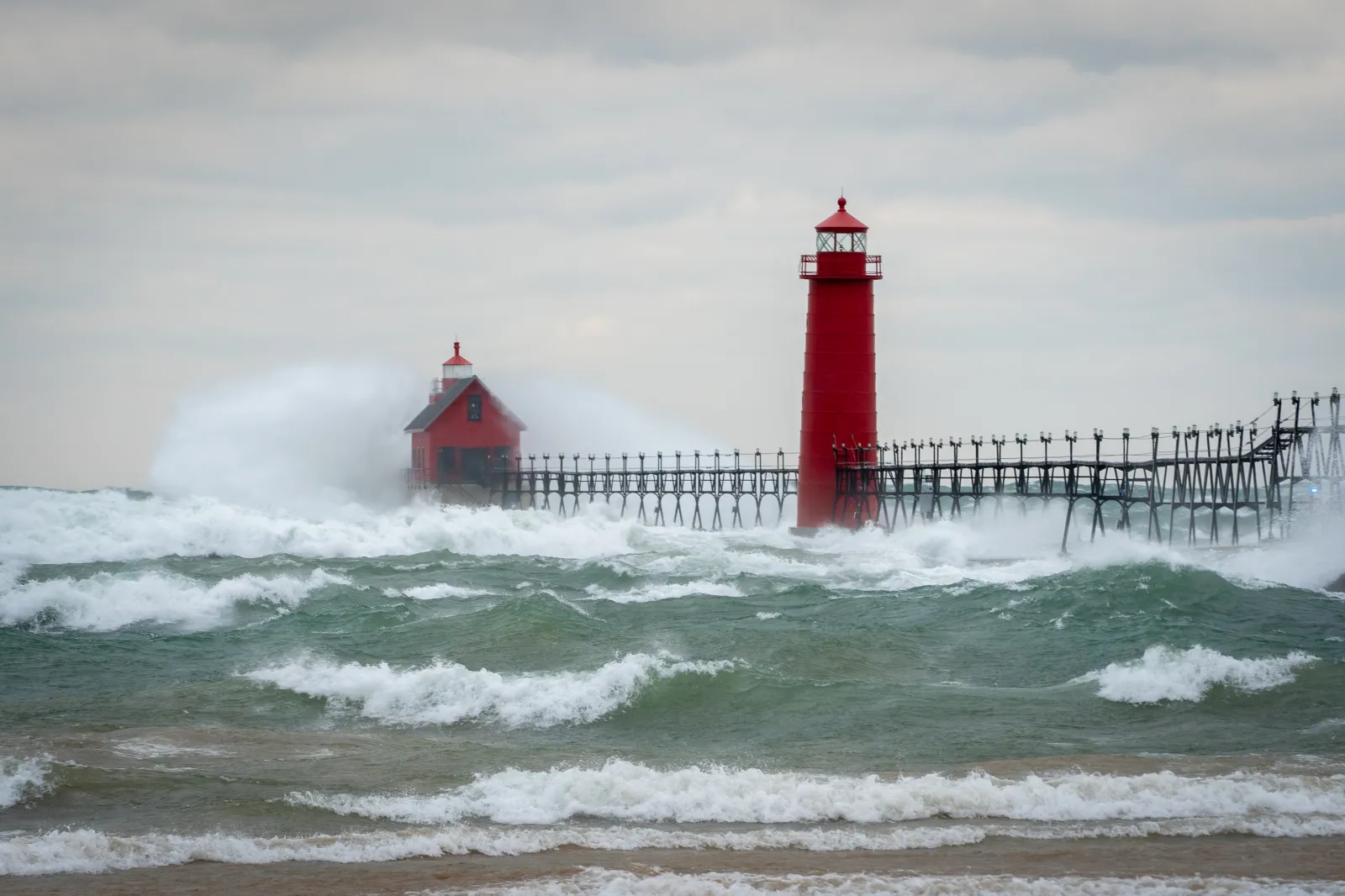
Nearly 1 million people living along the shores of the Great Lakes were under beach hazard statements on Wednesday, as National Weather Service (NWS) offices warned of dangerous swimming conditions, powerful currents and high waves across lakes Michigan, Superior, Huron, Erie and Ontario.
Officials urged residents and visitors to stay out of the water at beaches stretching from western Michigan to New York, warning that strong currents and rough surf could quickly turn deadly even for experienced swimmers. At least 65 people have drowned in the Great Lakes this year, according to statistics from the Great Lakes Surf Rescue Project, with 35 occurring in Lake Michigan. There have been 1,480 Great Lakes drownings since 2010, underscoring the importance of water safety when recreating in or near the lakes.
Beach hazards statements persisted in New York along Lake Ontario into Thursday, with warnings remaining in place for Oswego, Cayuga and Jefferson counties. The danger is especially high after Labor Day, as lifeguards are not stationed at every Great Lake.
Read More on Weather
"This time of year there are no lifeguards on the beaches across the Great Lakes," Great Lakes Surf Rescue Project Executive Director Dave Benjamin told Newsweek. "Beaches that do have lifeguards in the summertime, are usually lifeguarding Friday of Memorial Day Weekend through Monday of Labor Day weekend."
On Wednesday, the most widespread warnings were issued along Lake Michigan, where the NWS in Grand Rapids said dangerous swimming conditions were expected in Mason, Oceana, Muskegon, Ottawa, Allegan and Van Buren counties, accounting for roughly 145 miles of Lake Michigan shoreline.
The agency warned of high wave action, strong currents and waves capable of sweeping people off piers, with the beach hazards statement remaining in effect through 8 p.m. Wednesday. Residents were told to remain out of the water and avoid piers because of hazardous conditions.
Newsweek reached out to the NWS office in Grand Rapids by phone for comment.
On Lake Superior, forecasters issued a beach hazards statement for Alger County in Michigan's Upper Peninsula. The NWS office in Marquette warned that high wave action and strong rip currents would create life-threatening swimming conditions from Wednesday afternoon into the evening. Officials noted that similar conditions have been associated with past rescues and fatalities at the Au Train River mouth, exposed portions of Grand Marais Harbor and Pictured Rocks National Lakeshore.
...
Another warning was posted for Eastern Mackinac County along Lake Huron. The NWS in Gaylord said waves of 3 to 5 feet and dangerous rip currents were expected throughout the day. Forecasters cautioned that the surf could sweep people off piers and jetties and advised beachgoers to stay out of the water until conditions improve.
Meanwhile, along Lake Erie, the NWS in Buffalo issued beach hazard statements for southern Erie County.
"Strong currents and dangerous swimming conditions expected," NWS Buffalo said in the alert, which will remain active through Thursday morning.
Farther north, NWS Buffalo also issued a beach hazards statement for Jefferson County on Lake Ontario. Strong currents and dangerous swimming conditions are expected through Thursday afternoon. Officials again urged swimmers to avoid entering the water.
Related Story

Republican Lawmaker Wants to Rename Lake Erie
Why Are These Conditions Dangerous?
Although many people associate rip currents with ocean beaches, dangerous currents can also develop in the Great Lakes when strong winds and high waves push water toward shore. The water must eventually flow back out, creating narrow, fast-moving channels that can pull swimmers away from the beach.
The NWS said Wednesday's hazards included rip currents and structural currents near piers and breakwalls. Combined with wave heights of up to 5 feet in some locations, the conditions can exhaust even strong swimmers within minutes.
How to Survive a Rip Current
Safety experts say the most important thing a swimmer can do if caught in a rip current is avoid fighting it.
Instead, remain calm and float or tread water. Swimming directly against the current can quickly lead to exhaustion. If possible, swim parallel to the shoreline until out of the current's grip, then angle back toward the beach. If escape is not possible, float, conserve energy and signal for help by waving and calling out.
The NWS repeatedly emphasized that avoiding the water altogether is the safest option when beach hazard statements are in effect.
Wednesday's warnings come during a busy late-summer beach season across the Great Lakes, when warm air temperatures can draw visitors into the water despite increasingly rough conditions. Forecasters said the dangerous currents and elevated waves are expected to persist through at least Wednesday evening in many locations, and in parts of New York through Thursday.
Contact Newsweek editors on this story: Anna Skinner and Dave Siminoff.
View 0 Comments
Submit Correction
View Editorial & AI Guidelines