...

By Joe Edwards
Reporter
0
Share
Newsweek is a Trust Project member
See more of our trusted coverage when you search.Prefer Newsweek on Googleto see more of our trusted coverage when you search.
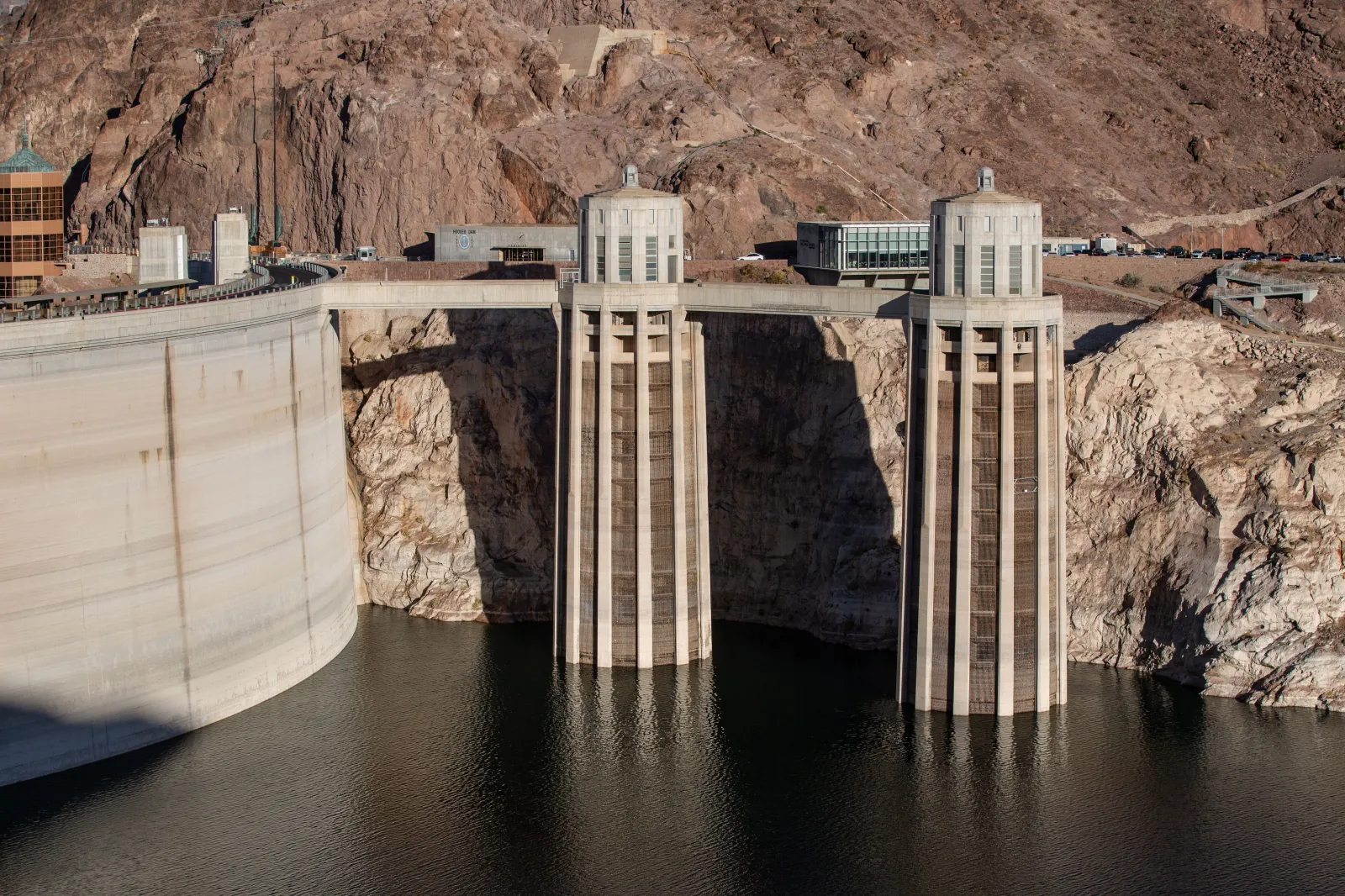
Rising temperatures in Lake Mead are straining southern Nevada's water treatment systems and could disrupt Hoover Dam hydropower if heat persists, according to a recent report.
Why It Matters
The Colorado River system, which includes the U.S.'s largest reservoirs—Lakes Mead and Powell—supplies water to about 40 million people and irrigates more than 5 million acres of farmland, according to the National Agricultural Law Center.
Read More on News
What To Know
Surface temperatures in Lake Mead have risen amid extended drought and climate change, with warmer water now passing through Glen Canyon Dam as Lake Powell shrinks and sending hotter inflows downstream, the Nevada Current reported on Thursday.
Water in the Colorado River typically warms about 1.8 degrees Fahrenheit every 30 miles during warmer months, so water can be several degrees hotter by the time it reaches Lake Mead compared to upstream, per the outlet.
Inflow to Lake Mead is projected to be at least 10.8 degrees Fahrenheit warmer than usual by the end of fall, said Todd Tietjen, the regional water quality manager for the Southern Nevada Water Authority, who cautioned that sustained heat remains an uncertain challenge.
"We really rely on the cold water being present for our treatment process. Our treatment process was designed around cooler, colder waters. Our buildings on-site are cooled by this water," Tietjen said, according to the Nevada Current.
Ozone systems used for disinfecting water also lose efficiency when their cooling water is not cold, Tietjen said.
...
Hydropower turbines and generators at Hoover Dam are cooled with Lake Mead water, and Bureau of Reclamation guidance indicates operations could be disrupted if cooling water reaches at least 78.8 degrees Fahrenheit for three or more consecutive days, the Nevada Current reported.
"Most of the turbines are cooled by Lake Mead water, so they run into problems if they have hot water, and if we lose power at Glen Canyon and Hoover Dam, that's a big problem for the West," Tietjen said, per the outlet.
Arizona water leaders previously warned that a 1922 agreement that divides water from the Colorado River among seven Western states could be breached as soon as 2026 amid falling snowpack, declining reservoir levels and stalled negotiations over river operations.
Brenda Burman, the general manager of the Central Arizona Project, said releases to the river's Lower Basin might be reduced this year. She warned, "We may breach the compact in 2026, and almost certainly it will be breached in 2027," AZPM reported.
Recent federal projections indicated Lake Mead could be at elevation 1,036.5 feet at the end of November 2027, a level lower than any end-of-month elevation recorded in 2022, when the reservoir was grappling with critically low water levels.
What People Are Saying
Sharon Megdal, the director of the University of Arizona Water Resources Research Center, told Newsweek in December: "Currently, the water-in-storage situation for the Colorado River system is not good.
"[There is] less in storage than last year, and current snow conditions are not good. Even if early 2026 snowpack is robust, the system will remain highly stressed. The region is faced with difficult choices regarding Colorado River water deliveries and dam operations, including those related hydropower generation.
"The debates regarding river management reflect these physical realities. There are many trade-offs to consider. We cannot keep drawing from savings (system storage) when the system is not making sufficient deposits of water. We must work with what nature is providing."
What Happens Next
The states that depend upon the Colorado River's water are in a race against time to establish new water sharing agreements, with current guidelines set to expire this year.
View 0 Comments
Submit Correction
View Editorial & AI Guidelines