...

By Lauren Giella
Senior Reporter
0
Share
Newsweek is a Trust Project member
See more of our trusted coverage when you search.Prefer Newsweek on Googleto see more of our trusted coverage when you search.
In August 1945, President Harry S. Truman spoke in front of distinguished military officials and civilians to honor servicemen with the Medal of Honor for their valor during World War II. All of the 28 men he addressed had displayed incredible bravery and selflessness in battle that went above and beyond the call of duty. Another thing they had in common? They were all white. Despite over one million African Americans serving in the Second World War, not a single one was honored with the nation’s highest distinction in the immediate aftermath of the war.
In previous conflicts, like the Civil War, Indian Campaigns, Spanish-American War and World War I, several Black soldiers were honored, alongside Jewish, Hispanic and Native American soldiers. But rising racial tensions in the early 20th century had masked the gallantry of Black World War II veterans, and it would take decades before they would be recognized.

...
Read More
250 Great American Heroes2 min read

Living with Honor: Medal of Honor Recipients on Courage and Civilian Life 8 min read

Battlefield to the Big Screen: The Real Stories of Hollywood’s Heroes 4 min read

The Medal of Honor is supposed to transcend politics and prejudice, but it is a product of America and therefore subject to the country’s complicated history, too. Robert Child, a journalist, documentarian and author of military history books, including Immortal Valor: The Black Medal of Honor Winners of World War II told Newsweek that he didn’t realize the extent of racism these men faced in the 1940s, forcing them often to fight a war on two fronts—at home and overseas. "That's why the Black soldiers tended to fight harder to prove themselves, so they could gain their equality back home,” he said. “And, unfortunately, that didn't really happen when they came back from war.”
In the military, everyone is expected to have the same training, equipment and expectation of risk. But their experiences weren’t equal. Black, Hispanic, Asian and Native American soldiers often endured inequality in the military that impacted service, promotions and led superiors to overlook their accomplishments. It was not until after the war, in 1948, that President Truman signed an executive order officially desegregating the U.S. military, guaranteeing “equality of treatment and opportunity for all persons in the armed services without regard to race, color, religion or national origin.”
In more recent decades, there have been several concerted efforts to re-examine the service records of those whose heroism was not recognized in its time.
In 1993, President Bill Clinton commissioned Shaw University to research Black soldiers who may have been overlooked for their service during World War II, resulting in the award of the Medal of Honor to seven veterans decades after their service: Ruben Rivers, Edward Carter, Willy James, Charles Thomas, George Watson, John Fox and Vernon Baker. During the 1997 ceremony to honor them, Clinton said he was filling the gap in recognition so that “now and forever, the truth will be known about these African-Americans who gave so much that the rest of us might be free.”
...
Similar efforts have followed. In 1995, Senator Daniel Akaka of Alaska introduced a bill to consider upgrading the Distinguished Service Cross and Navy Cross honors given to Asian Americans in World War II. As a result, Clinton bestowed the Medal of Honor to 22 veterans in a White House ceremony in 2000. Two years later, Congress set up a review for recognition or bravery by Jewish and Hispanic veterans who served in combat through the Defense Authorization Act. One of the beneficiaries of this act was Leonard Kravitz, uncle and namesake of musician Lenny Kravitz.
After taking over for the lead machine gunner while under attack in 1951 during the Korean War, Kravitz, who was Jewish, took charge. He volunteered to stay behind to save his platoon and deliver final blows to the enemy, losing his life in the process. Kravitz was initially awarded the Distinguished Service Cross, but his friends and family suspected he had not been considered for the Medal of Honor because he was Jewish.
It was his childhood friend from Crown Heights, Mitchel Libman, who began a decades-long campaign to correct this oversight. When the decision was made to upgrade Kravitz’s recognition to the Medal of Honor in 2012, President Barack Obama called Libman personally to deliver the news.
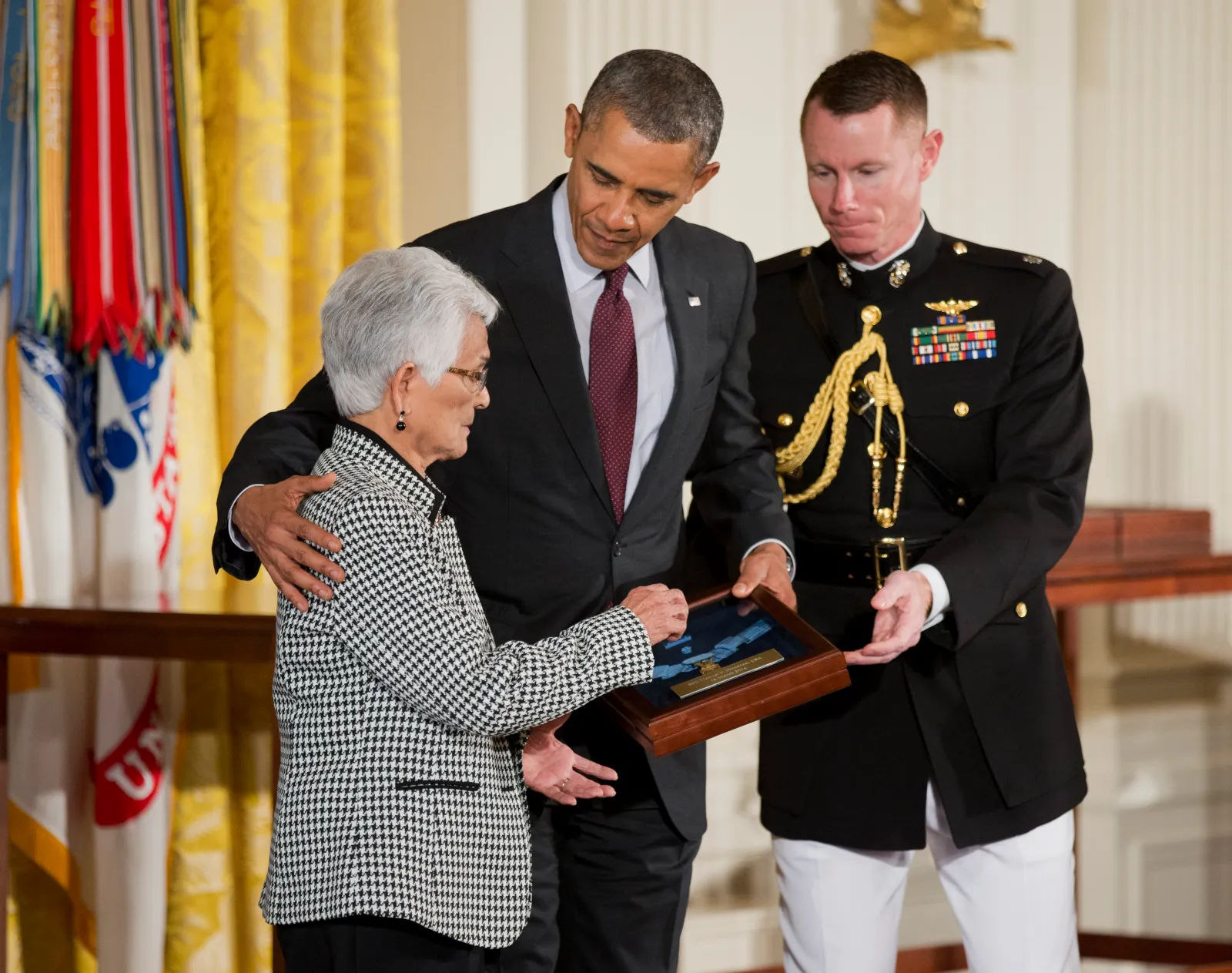
In a 2014 ceremony, Kravitz was one of 24 Jewish, Hispanic and Black veterans from World War II, Korea and Vietnam with whom President Obama presented the Medal of Honor, many of them posthumously.
At the ceremony, Obama said “no nation is perfect” but in America, “we confront our imperfections and face a sometimes painful past, including the truth that some of these soldiers fought and died for a country that did not always see them as equal."
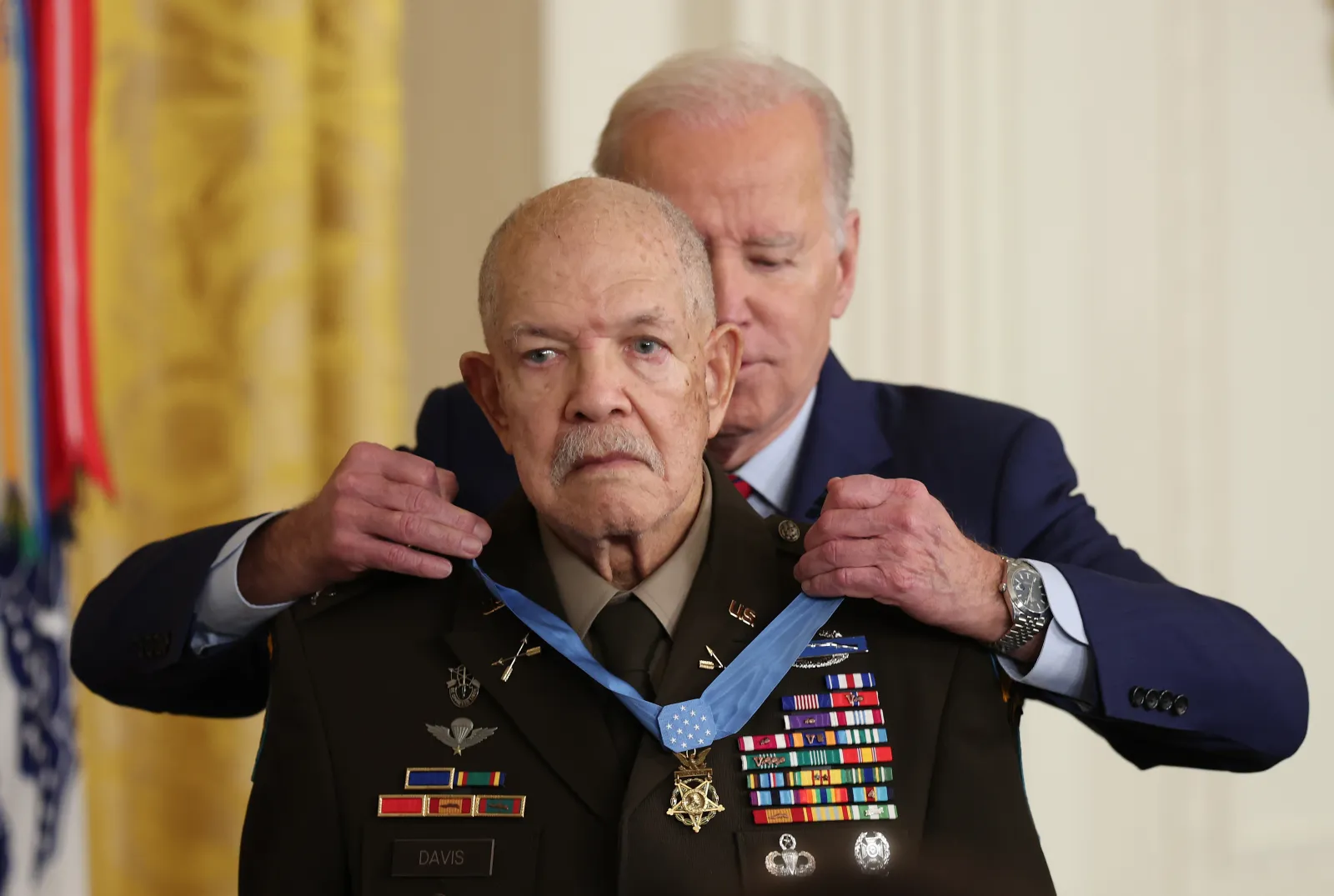
Before he took command of his Special Forces team, Col. Paris Davis said he was warned that some soldiers might resent having a Black commander.
After attending Southern University at Baton Rouge, Louisiana, on an ROTC scholarship, Davis moved up the Army ranks, earning his Special Forces qualification in 1962. During his second tour in Vietnam in 1965, Davis’ team came under heavy attack near Bong Son. They were outnumbered and under relentless fire. At one point, Davis was ordered to withdraw, but he refused because there were still American troops on the battlefield who he could not leave behind.
“People often think courage means not being afraid. That’s not true,” he told Newsweek. “Courage is acting despite fear. I wasn't thinking about being brave. I was thinking about what had to be done next.”
Davis experienced racism his whole life: growing up, in the Army and in his career after. But the most painful example he faced came when he was nominated for the Medal of Honor.
“My commanding officer submitted it. Then it disappeared. It was submitted again. It disappeared again,” he said.
...
It was later explained to Davis that racism most likely contributed to the delay in recognition. The order was eventually processed upon review, and Davis was awarded the Medal of Honor by President Joe Biden in 2023. Despite those experiences, he never lost faith in America.
“America's history includes injustice, but it also includes progress,” Davis said. “The same country that failed to recognize my actions for decades ultimately corrected the record. That matters.”
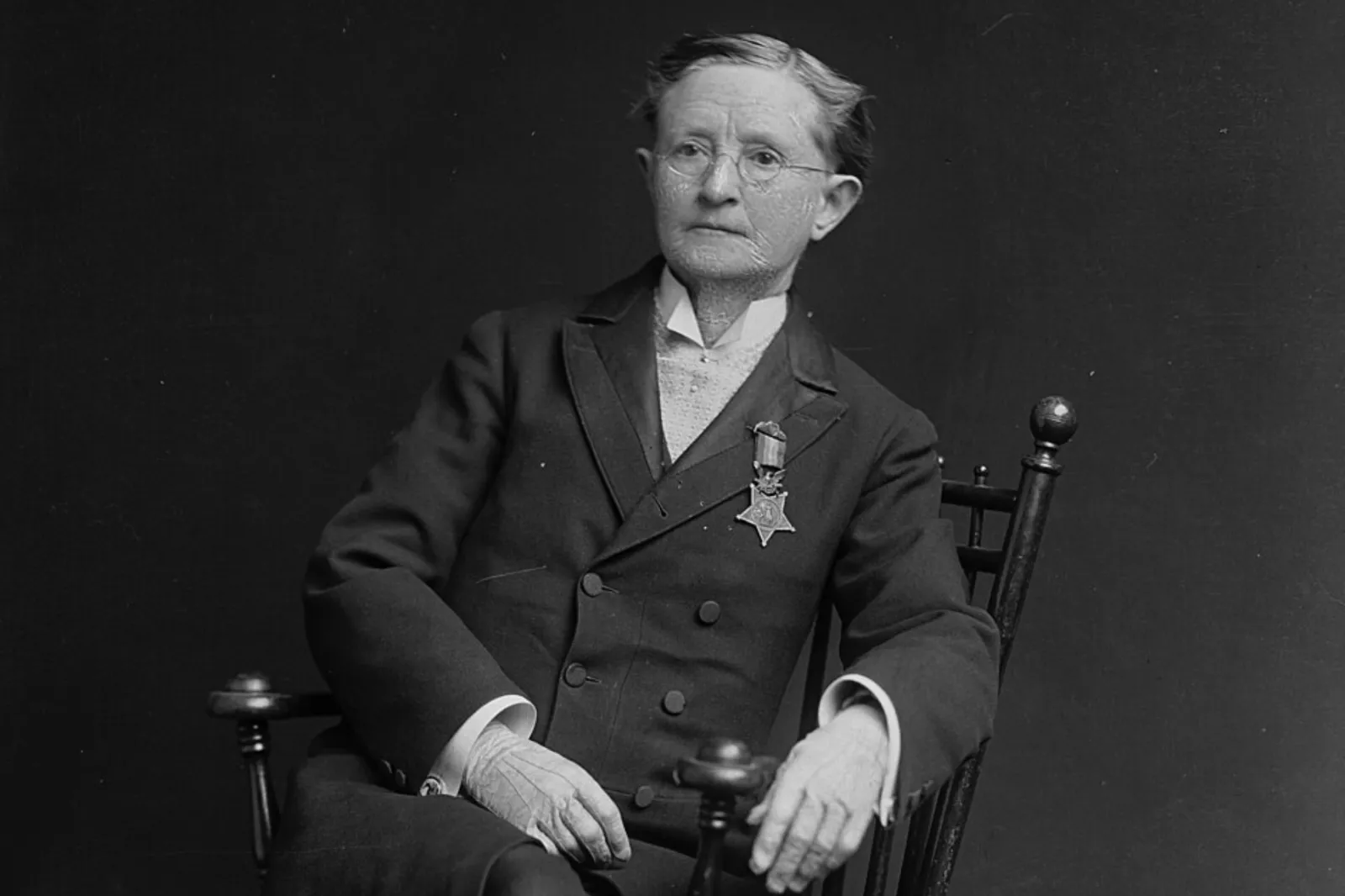
So far, there have been 97 Black, 60 Hispanic, 37 Asian-Pacific Islander, 33 Native American and 18 Jewish Medal of Honor recipients. And only one woman: Mary Edwards Walker, a trailblazing battlefield medic during the Civil War who went on to fight for women’s rights until the day she died—about 500 days before the passage of the 19th Amendment guaranteeing women the right to vote.
These recipients embody America's central contradiction better than any others: citizens denied full standing in their own country who gave everything for it anyway. They fought for the soldiers beside them and for the ideals of a nation that had not yet kept its promises to them.
“The Medal of Honor tells an American story,” Davis said. “My own story is an example of that. I served a country that was still wrestling with racial discrimination. I experienced racism during my lifetime and military career. Yet I also lived long enough to see the country correct a wrong and recognize a sacrifice that had gone unrecognized for nearly 60 years.”
Many came home only to be denied the very rights they had risked their lives to defend. Decades passed before their valor was formally recognized, and for some, that recognition came only after death—not from wounds suffered in battle, but because they simply ran out of time waiting for justice.
As America celebrates its 250th anniversary, Davis notes that patriotism and honest criticism are not opposites, and loving one’s country includes acknowledging its shortcomings and working to improve it.
"I hope Americans understand that patriotism is not pretending our history is perfect,” he said. “Patriotism is believing our ideals are worth striving for. The Medal of Honor represents people who were willing to sacrifice for those ideals.”
Read more in ourcover story about the Medal of Honor, our stories on the living Medal of Honor recipients and the Medal of Honor in film; and see our gallery of 250 recipients
View 0 Comments
Submit Correction
View Editorial & AI Guidelines