10
Loading video...

By Rachael O'Connor
Reporter
0
Share
Newsweek is a Trust Project member
See more of our trusted coverage when you search.Prefer Newsweek on Googleto see more of our trusted coverage when you search.
A woman expecting her first child got thinking about DNA, and sparked major debate with one simple question.
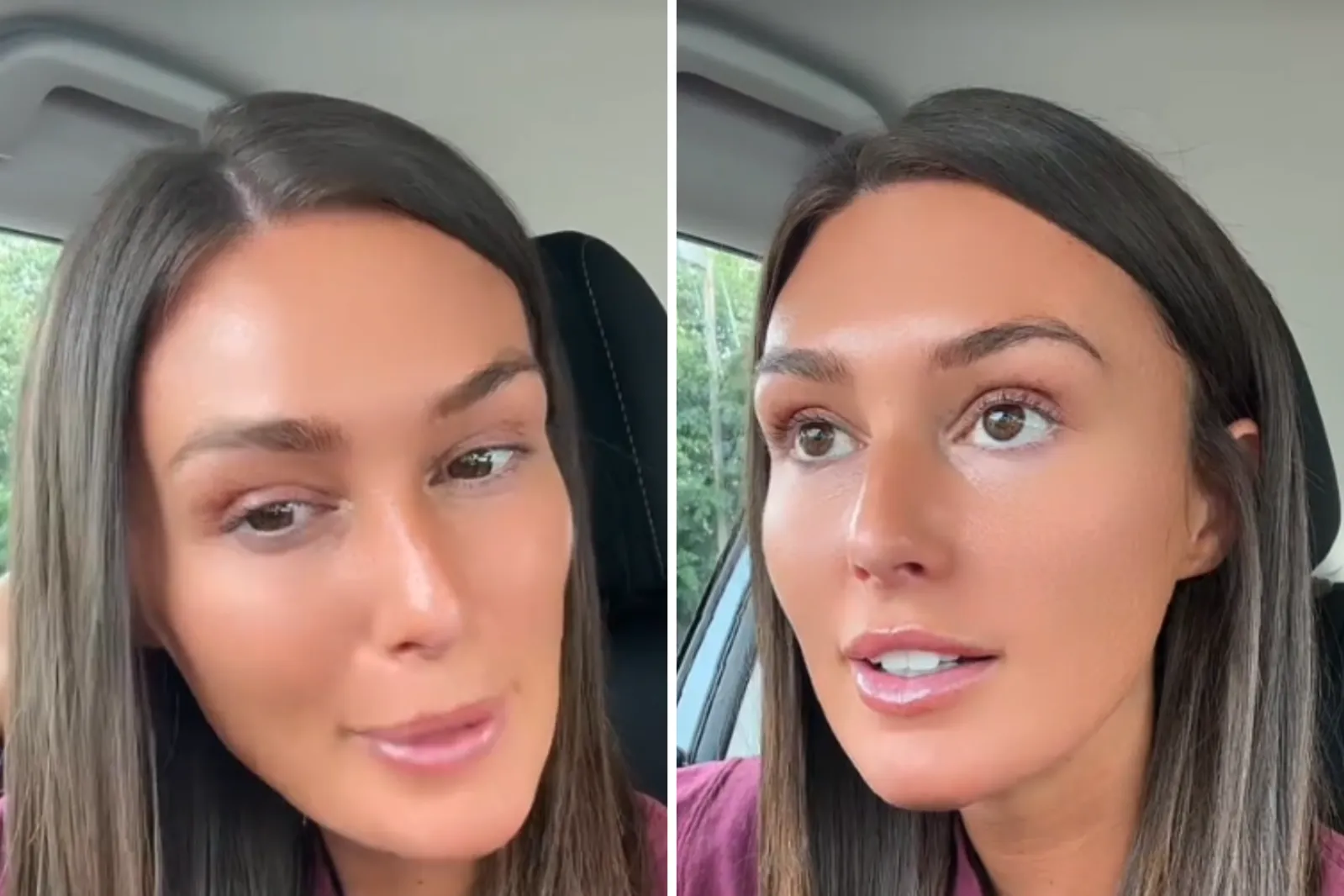
Brianna Donovan, 28 and from Boston, Massachusetts, took to her TikTok account @brianna.donovan on August 29, and asked: "Are you more related to your siblings or your children?"
"I had just found out I was pregnant and was thinking about the resemblance between me and my siblings and it made me wonder who I will be more related to," she told Newsweek.
Read More on Relationships
In the clip taken in her car, which she captioned "useless thoughts by me," she mused: "With your siblings, you have the exact same parents, and then your children, they have your DNA. But they also have your husband's DNA, who you're not related to."
She said she had been thinking a lot about this, because it seems like you should be more related to your own child—"but don't you share more DNA with your siblings?"
Her video went viral, with almost 400,000 views and hundreds of comments—and nobody could agree on the answer. One wrote: "Siblings are our closest biological relatives."
But another insisted: "Your child. They have 50 percent of your DNA."

...
Another TikTok user joked she would now be referring to her child as "my half daughter," while one shared that she was an identical twin, so she was guaranteed to be more closely related to her sister.
"I think it's really funny that no one seems to know the answer," Donovan said.
Newsweek reached out to experts on the viral question. Dr. Adelheid Lempradl, an assistant professor at the Van Andel Institute in Grand Rapids, Michigan, said that despite the apparent simplicity of what Donovan had asked it was "actually a very complicated question."
"Relationship on the DNA level to children and siblings is about the same," she explained. "You share 50 percent of your DNA with your siblings and your children."
But Lempradl, whose area of expertise includes epigenetics and intergenerational inheritance, said siblings could inherit different "alleles"—alternate versions of a gene—leading to "variations in traits and genetic predispositions."
A child, however, will always receive the "same specific half of the parent's genome."
While a person will share between 40 percent and 60 percent of DNA with their siblings, "only about 25 percent of the total DNA is identical," Lempradl said, while "about 25 percent are half-identical, where siblings inherit different versions of the same location on a chromosome from a parent."
...
She gave an example of "one sibling gets the father's chromosome 1a while the other gets chromosome 1b."
"On average," she added, "about 25 percent of their DNA falls into this category."
Research into DNA has flourished since the molecule was first identified in the 1860s by Swiss chemist Johann Friedrich Miescher. He had been researching the makeup of white blood cells when he discovered what he first called a "nuclein," initially believing it to have come from the cell nucleus of a white blood cell, according to Your Genome.
Almost 100 years later, in 1953, James Watson and Francis Crick first described the physical structure of DNA, including the discovery that DNA can be copied when cells divide.
Do you have funny and adorable videos or pictures you want to share? Send them to life@newsweek.com with some extra details, and they could appear on our website.
View 0 Comments
Submit Correction
View Editorial & AI Guidelines