
By Ed Browne
Reporter
0
Share
Newsweek is a Trust Project member
See more of our trusted coverage when you search.Prefer Newsweek on Googleto see more of our trusted coverage when you search.
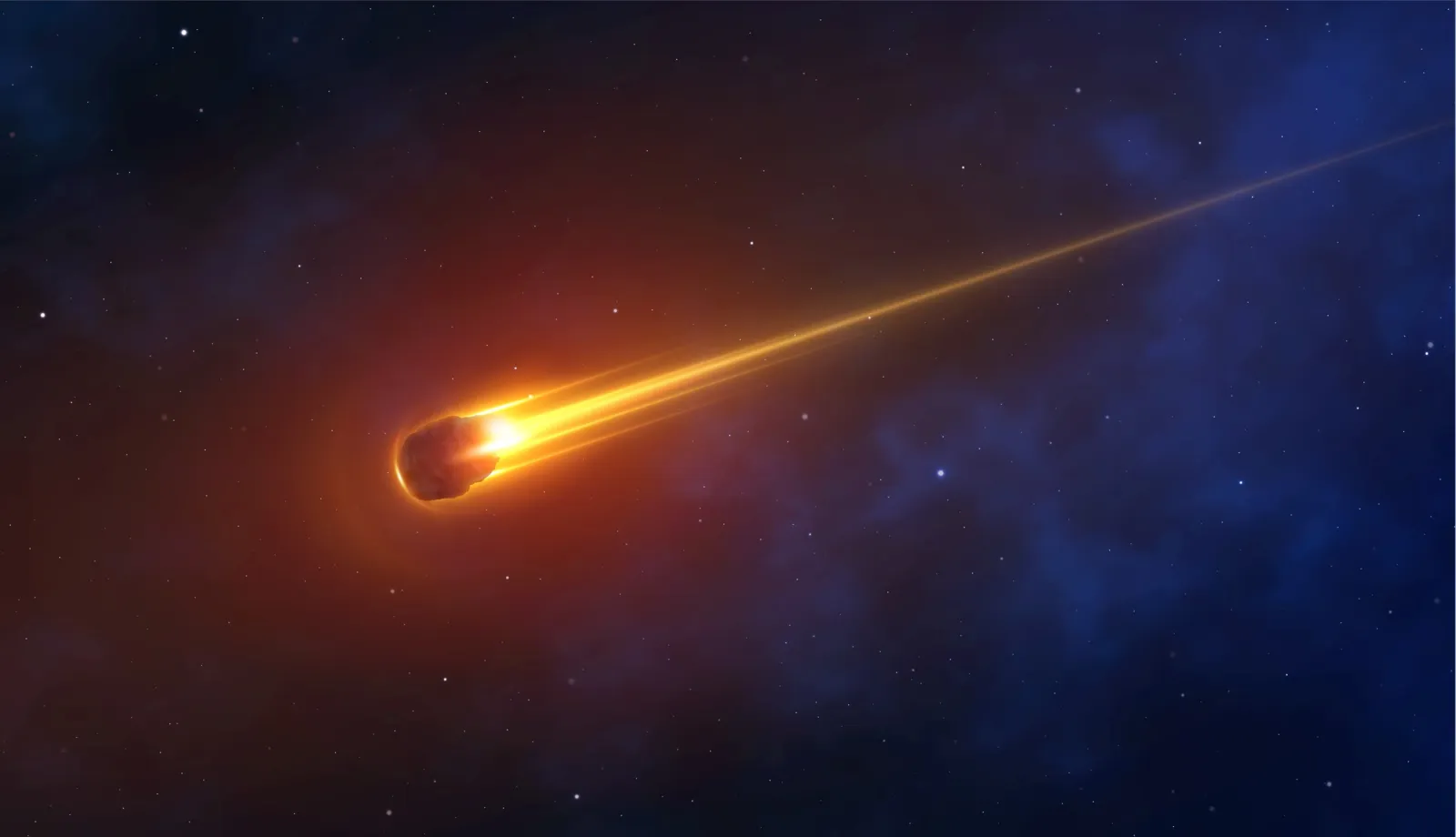
A fireball shot through the sky over Texas on Sunday night, prompting dozens of eyewitness reports, with one person saying it "shook our entire house."
The streak of light, which was most likely a meteor, occurred over a northeast area of the state just before 10 p.m. EDT.
According to NASA's Meteor Watch service, the space rock was travelling at a speed of more than 52,000 miles per hour when it ploughed through Earth's atmosphere and burnt up.
Read More
Scientists Find Evidence Dinosaur-Killing Asteroid Caused Mile-High Tsunami3 min read

Number of City-Sized Asteroids That Smashed Into Ancient Earth Underestimated: Study3 min read

When Is the Perseid Meteor Shower 2021 and Where Can I Watch?3 min read

The fiery streak lasted about 4.1 seconds and occurred at a height of around 53.2 miles down to 34.6 miles, NASA added, based on more than 50 eyewitness reports and American Meteor Society (AMS) data.
In response to NASA's report, even more people came forward to describe their own sightings on Facebook.
'Sounded Like a Gas Well Exploding'
One said the meteor "shook our entire house close to 9 p.m. in Holly Lake Ranch, Tx. We thought it was an earthquake."
Another said they managed to hear the sound caused by the fireball, which they said "sounded like a gas well exploding."
Footage apparently showing the meteor from the perspective of car dashcams and security cameras has been uploaded online.
They show the fiery space rock travelling quickly through the sky, at times flashing particularly brightly.
Currently, Earth is experiencing the Perseid meteor shower which lasts from the middle of July through to late August. During this time skywatchers can spot more shooting stars than normal as the Earth passes through the debris left behind by the comet Swift-Tuttle.
However, NASA's Meteor Watch service said that the Texas fireball last night was not due to the Perseids because it was not travelling in the same direction and was also going too slowly.
A meteor and a fireball are technically different, though they are caused by the same thing—a relatively small space rock, known as a meteoroid, entering the Earth's atmosphere at high speed.
A meteor is the name given to the light that a meteoroid gives off as it does so. A fireball is simply a meteor that is particularly bright—brighter than the planet Venus appears in the sky.
Fireballs are actually common; several thousand take place every single day. But many occur over oceans or uninhabited regions or otherwise are covered up by daylight.
Plus, the ones that occur at night may be missed because people tend to be inside sleeping. Nonetheless, the AMS encourages people to report fireballs to them whenever they are spotted.
Sometimes space rocks can enter Earth's atmosphere with such force that the energy released causes a harmful shockwave.
This was the case with the fireball that exploded over Chelyabinsk in Russia in 2013, injuring around 1,200 people and damaging buildings.
...
View 0 Comments
Submit Correction
View Editorial & AI Guidelines