10
Loading video...

By Aristos Georgiou
Science and Health Reporter
0
Share
Newsweek is a Trust Project member
See more of our trusted coverage when you search.Prefer Newsweek on Googleto see more of our trusted coverage when you search.
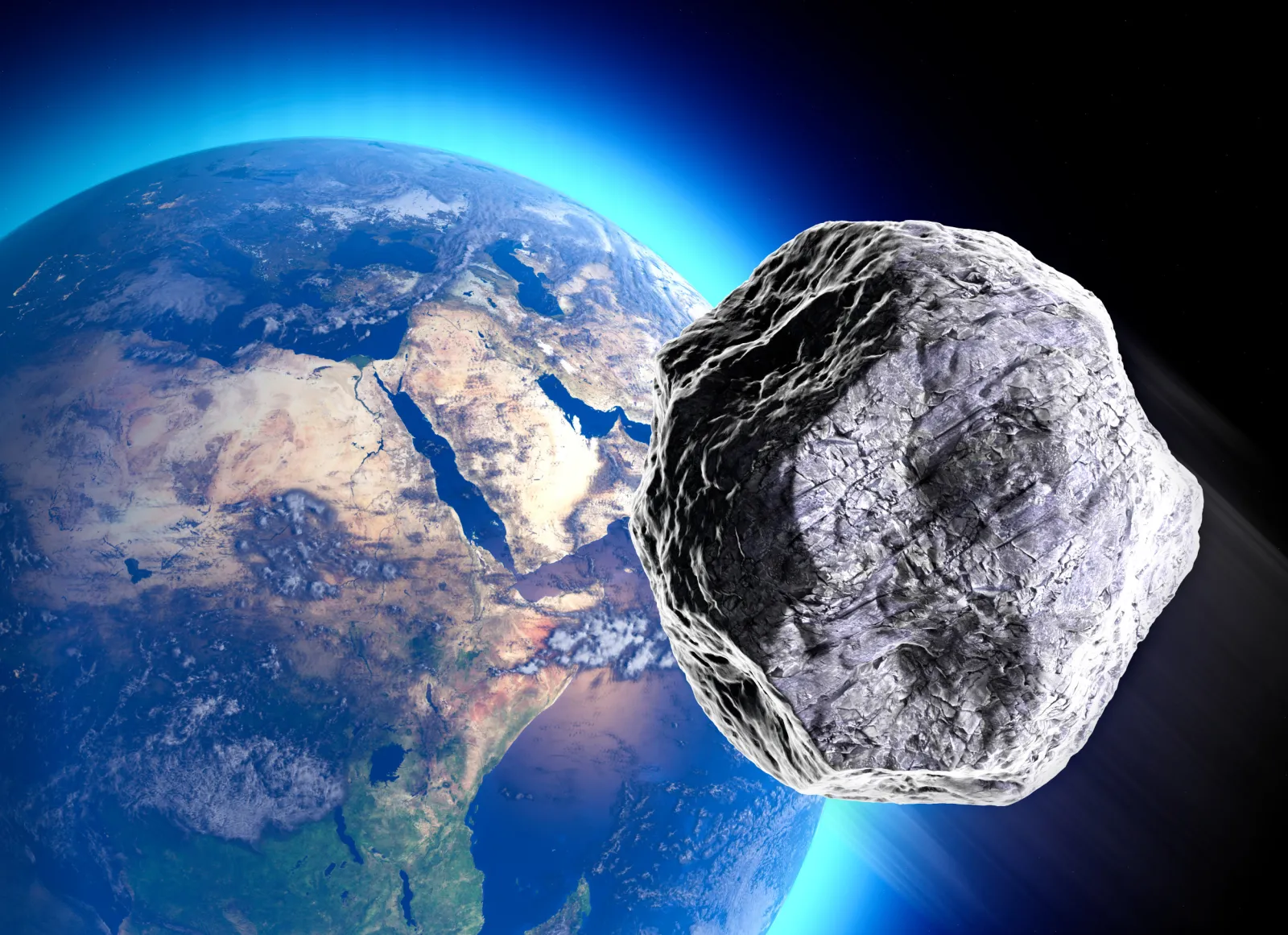
A time-lapse video shows a 200-foot asteroid that had a "very close" encounter with Earth as it approached our planet.
The space rock—called 2023 DZ2—made a close approach to us on Saturday, flying past at a safe distance.
As it approached, astronomer Gianluca Masi with The Virtual Telescope Project (VTP) captured a series of images of the asteroid, which he used to create the time-lapse.
Read More
Watch Live as 200-Ft. Asteroid Zooms Past Earth at 17K Mph in ‘Close’ Flyby6 min read

Watch Live As Asteroid Passes Earth in ‘Very Close’ Approach3 min read

Immense Fireball Flying Over Siberian City Captured in Spectacular Footage4 min read

The VTP is a service provided by the Bellatrix Astronomical Observatory in Ceccano, Italy, that operates and provides access to robotic, remotely operated telescopes.
The images used to produce the time-lapse come from individual 30-second exposures taken remotely with one of the VTP's robotic telescopes.
When Masi took the images on March 22, 2023, DZ2 was located around 1.1 million miles away from our planet and was flying closer to us, getting brighter and brighter.
"With this sequence, I wanted to share the motion of asteroid 2023 DZ2, at that time still safely approaching our planet," Masi told Newsweek. "This way, it is easy to spot it against the stars in the background."
...
The space rock subsequently came within a minimum distance of around 108,000 miles at around 4 p.m. ET on Saturday, figures from NASA's Center for Near Earth Object Studies (CNEOS) database show. This is less than half the average distance between the Earth and the moon.
The asteroid is sufficiently large and flew close enough to our planet that it was even possible for stargazers to observe it with the help of good binoculars or a small telescope, Masi said.
2023 DZ2 likely measures about 230 feet across, although the available data accounts for a range of possible sizes.
Figures from the CNEOS database show that the asteroid could measure anywhere from 124 feet to 282 feet in diameter. At the upper end of this size range, the asteroid would stand slightly shorter than the Statue of Liberty.
At the time of its close approach, the asteroid flew past Earth at a speed of 17,400 miles per hour. This is more than eight times faster than a rifle bullet.
The asteroid was only discovered shortly before its close encounter with Earth—astronomers first spotted the space rock on February 27, 2023.
In January, the VTP captured "extraordinary" images of another asteroid, 2023 BU, that made an "extremely close" approach to Earth, flying just 2,200 miles above the southern tip of South America.
Do you have a tip on a science story that Newsweek should be covering? Do you have a question about asteroids? Let us know via science@newsweek.com.
View 0 Comments
Submit Correction
View Editorial & AI Guidelines