10
Loading video...

By Maria Azzurra Volpe
Reporter
0
Share
Newsweek is a Trust Project member
See more of our trusted coverage when you search.Prefer Newsweek on Googleto see more of our trusted coverage when you search.
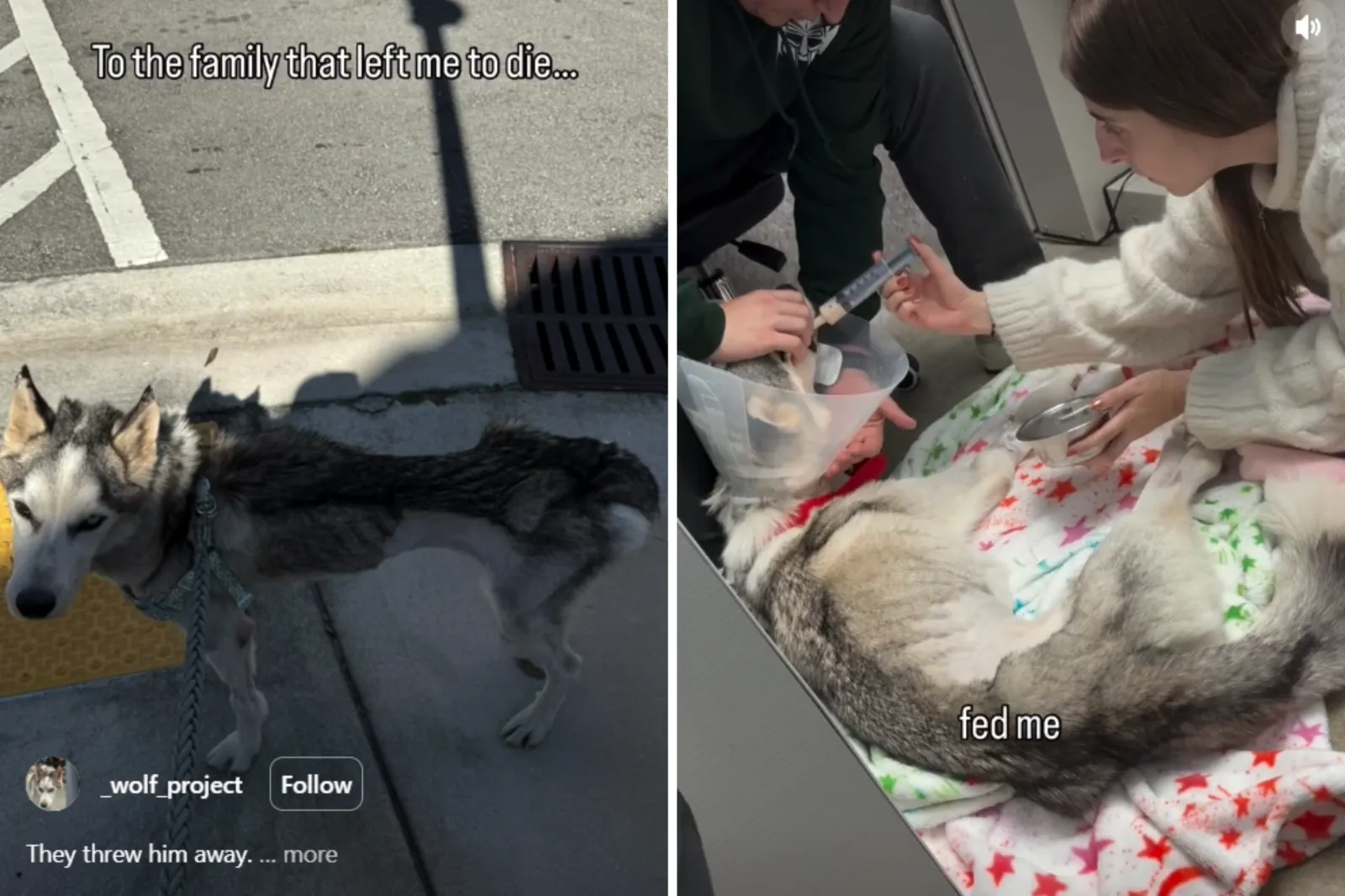
When a Miami-based dog rescuer came across an emaciated husky who only weighed 19lbs, veterinarians told her repeatedly to put him down, but she never gave up on him—now thanks to her determination and the support of her community, the pup is recovering well, and is ready to give life another chance.
“I don’t believe in it, especially without a confirmed diagnosis,” Megan Tate, owner of SGT Canines, told Newsweek, talking about euthanasia, a word that she says has left her suffering from “PTSD” because of how many times she heard it and fought against it.
Tate first saw the pup, Wolf, on a social media post—a local shelter had posted about him after a kind-hearted stranger who spends her free time feeding strays in the neighborhood reported him.
Read More on Pets
It was at that point that Tate immediately got in contact with the shelter and offered to take care of the pup regardless of his condition—which turned out to be worse than she had thought.
“There was a reason why I saw the photo at the time I did so I had her bring him," she said.
...
When Wolf was first examined, his case was described as “very interesting," by doctors.
Emergency diagnostics, including ultrasounds and X-rays, were largely inconclusive. Wolf was stable, and nothing appeared immediately life-threatening. The only consistent abnormality was severe thickening of the stomach wall in his lower GI tract.
Despite concerns about GI lymphoma or terminal cancer, Tate was not convinced. Having previously lost her own dog to aggressive lymphoma, she felt Wolf’s condition did not align with what she had experienced before.
Another possibility was severe starvation combined with GI disease, preventing his body from absorbing nutrients. One of the first recommendations was euthanasia, but Tate once again refused to move forward with it.
Wolf was placed on a strict low-fat diet with a careful refeeding plan and received IV fluids. His progress fluctuated, but his bloodwork steadily improved. Doctors suggested continuing treatment for six more weeks to determine whether terminal disease could be ruled out.
About three weeks later, after Wolf had begun gaining weight slowly, he suddenly collapsed. Tate rushed him to the emergency hospital. Full-body diagnostics were repeated, including ultrasounds and a CT scan. For days, no clear diagnosis emerged. The CT scan showed severe stomach wall thickening in one area, but no widespread disease. Doctors continued to describe the case as unusual.
By this point, Tate had already spent thousands of dollars and still had no answers. She was mentally exhausted and lacked support, but she chose to continue. She decided to listen to Wolf.
Throughout his hospitalization, he remained alert and stable. Tate visited him every day, bonding with him and trusting what she saw rather than what she was being told.
After turning to social media for support, Tate continued researching possible causes, and she came across Pythium, a rare and often fatal fungal infection linked to contaminated water. Shortly after, a veterinary professional reached out and suggested testing for it.
The next morning, doctors confirmed Wolf had a severe fungal infection within the Pythium category and told Tate it was fatal. Once again, euthanasia was presented as an option. Instead, Tate chose surgery. Doctors explained that most dogs with Pythium survive only about 26 days, but Wolf had already surpassed that timeline.
The surgery required a large upfront payment and came with no guarantee of survival, but she felt something inside her telling her to keep going, and so she did, with the help of her community, who helped raise funds to pay for Wolf’s costly treatments.
The surgery lasted over six hours. Surgeons achieved clear margins, meaning all infected tissue was removed—something extremely rare with this disease.
Against all odds, Wolf survived. Eight weeks later, he was Pythium-free, astonishing every doctor involved. Through community support, Tate was able to fundraise all of the $40,000 spent on his care.
During his early visits, veterinarians were able to find a microchip and contact his original owners, but it did not go as expected.
His owners had reported Wolf, at the time named Ghost, missing over a year earlier, but had since changed home and moved on with their life—and were no longer willing to take him back.
This didn’t stop Tate, who kept showing her unwavering support to Wolf. Today, the pup continues to recover steadily. He has survived what he was never expected to survive, and he’s now safe with his foster carers.
Wolf is now expected to stay with his foster family, who have made him their first priority since day one—they also have huskies of their own, who can Wolf’s life as fun and exciting as he deserves.
“If for any reason they didn't end up adopting him, I 100 percent would keep him within my family. But I do have high hopes, and I do believe that they intend on adopting him," she added.
Do you have funny and adorable videos or pictures of your pet you want to share? Send them to life@newsweek.com with some details about your best friend and they could appear in our Pet of the Week lineup.
View 0 Comments
Submit Correction
View Editorial & AI Guidelines