...

By Tom O'Connor
Deputy Editor, National Security and Foreign Policy
0
Share
Newsweek is a Trust Project member
See more of our trusted coverage when you search.Prefer Newsweek on Googleto see more of our trusted coverage when you search.
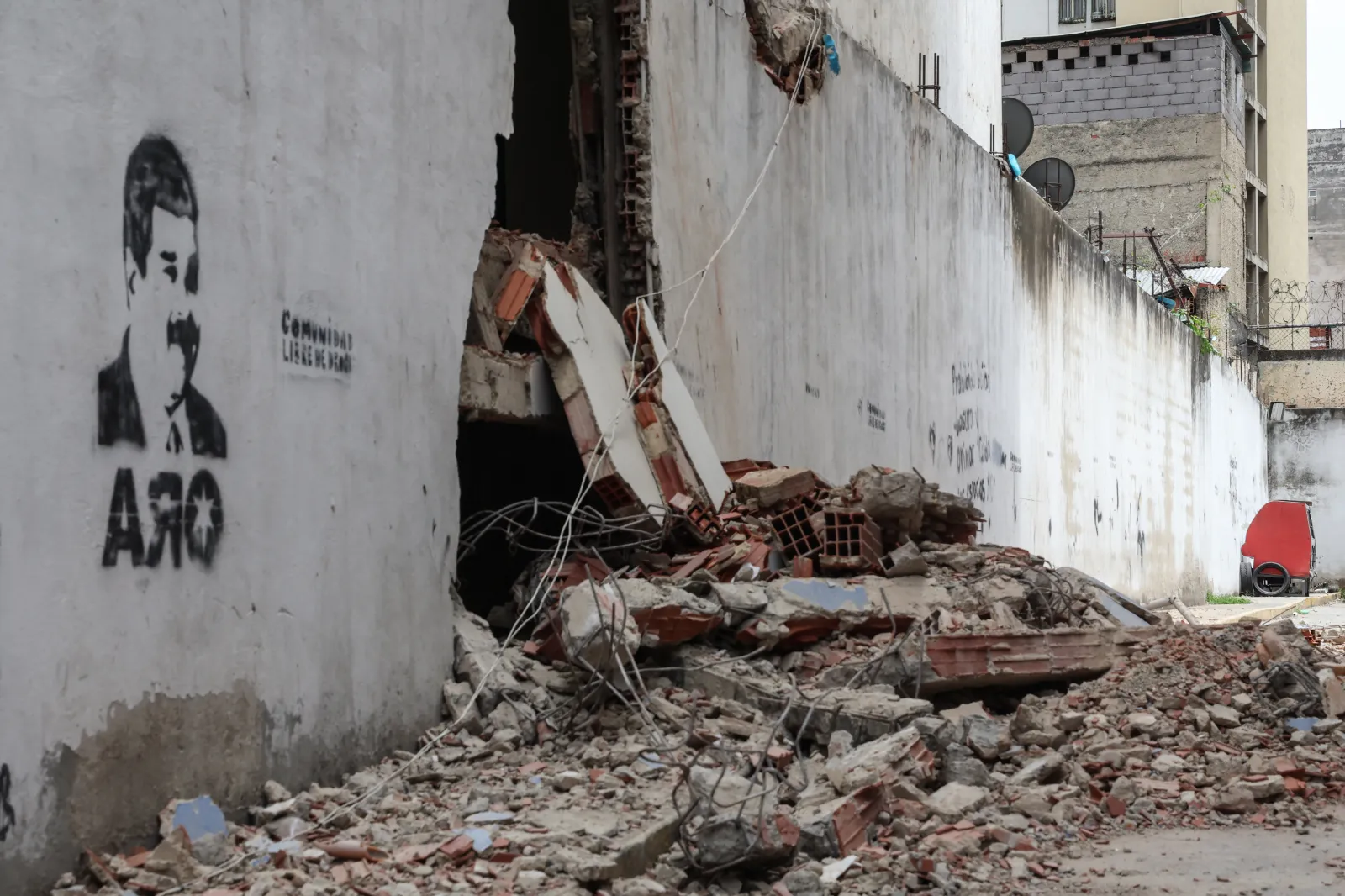
The devastating back-to-back earthquakes that tore through Venezuela late Wednesday have shed new light on the otherwise opaque relationship between the White House and the South American nation's new leader brought to power upon the U.S. abduction of her predecessor six months ago.
The twin 7.2 and 7.5 quakes erupted just 39 seconds from one another, killing at least 164 people and injuring more than 1,000, with authorities anticipating a steep rise in the toll while emergency efforts are underway.
As the international community reacted to the still-unfolding disaster, U.S. President Donald Trump was among the first to pledge aid. He said he had "instructed all agencies of our government to get ready to move quickly."
Read More on World
Acting Venezuelan President Delcy Rodríguez, the former vice president who succeeded President Nicolás Maduro after he was seized by U.S. forces on "narcoterrorism" charges in January, was similarly quick to express her gratitude, and in a manner deeply uncharacteristic for a socialist politician who has spent much of her career condemning Washington's influence in the region.
"We thank U.S. President Donald Trump and his administration, who have been in constant contact with Venezuelan authorities, offering support and solidarity to the people of Venezuela in the face of this tragedy that has plunged us into mourning," Rodríguez wrote on X. "Venezuela will never forget the helping hand extended to our people during these difficult times."
An identical message earlier published on X by Venezuela's state-owned VTV Channel 8 without direct attribution to Rodríguez prompted some social media users to suspect the account was hacked.
...
'Form of Guardianship'
It was one of many official statements of appreciation issued by Rodríguez as her country reels from the most powerful tremor to hit the region in more than a century.
Behind her words, however, is another challenge to remain autonomous in the face of a more assertive U.S. policy.
"In the aftermath of Maduro’s removal, the Trump administration warned Rodríguez and the coalition she represents that obedience was part of the deal to keep them in power," Maria Puerta-Riera, adjunct professor at Valencia College in Florida and research fellow at the Government and Political Analysis A.C., told Newsweek.
"The decisions by the Trump administration to provide financial openings for Rodríguez to implement the changes they view as necessary to fulfill their economic interests, suggest that there is an agreement between both parties," Puerta-Riera said.
Now, she argued, "yesterday’s dramatic earthquakes could potentially increase the grip the White House has on Rodríguez, and this is a sign that what’s in place is a form of guardianship that the president has been eager to tout as a success story."
While the precise nature of the newfound Washington-Caracas partnership remains murky, Trump has readily broadcast his dominance of the once vehemently anti-U.S. country he has claimed to be "seriously considering" making the 51st state.
Trump has further boasted of being in control of the nation's oil reserves, the largest in the world, all while the country is still led by the United Socialist Party of Venezuela (PSUV). The movement was founded by Maduro's predecessor, Hugo Chávez, who died in 2012 but continues to loom large in the form of the left-wing populist Chavismo ideology.
Yet Venezuelan officials all the same received CIA Director John Ratcliffe just 10 days after Maduro's capture. His visit was followed by a litany of tours by U.S. representatives of oil and gas, mineral and defense sectors.
The U.S. has even begun cooperating directly with the influential Venezuelan military in a campaign to uproot deeply entrenched drug-trafficking criminal groups that the Trump administration has previously alleged to be under the direct influence of Maduro's government.
One such joint operation this month reportedly killed the leader of the Tren de Aragua gang. The strike took place in the rural regions that Defense Secretary Pete Hegseth has vowed to make safe for foreign mining companies in yet another sign of the White House's designs.
David Smilde, chair of the Tulane University School of Liberal Arts' Sociology Department, argued that the "U.S. wields considerable power in three ways."
"Trump has made the threat of another military action against Venezuela if the government does not cooperate with the U.S.," Smilde told Newsweek. "In addition, the U.S. controls the revenue coming from oil sales, which is the main source of the government's budget. In addition, it is clear that the U.S. Justice Department has been collecting information on Delcy Rodriguez and others that could be used in trials against them if the relationship were to sour."
"This all is quite evident in the open compliance and outright collaboration of the Rodriguez government with the Trump administration," Smilde said. "It is still too early to see this working out in the hours since the earthquake. But the Rodriguez government's open embrace of the Trump administration's promises of support are consistent with it."

...
Make or Break Moment
The degree to which the White House can truly come through on such promises remains to be seen, and the disaster response could prove consequential.
"This is an important moment for U.S. policy towards Venezuela," Smilde said. "A timely and robust effort at assistance would go a long way towards convincing the Venezuelan people that the Trump administration's policy is more than just an effort to shore up U.S. energy security."
"On the other hand, a slow and tepid response would be consistent with Venezuelans' sense that the U.S. is more interested in Venezuela's oil than their democracy and well-being," he added. "Even before this tragedy, there was growing frustration at the lack of improvement in daily life."
Anti-PSUV opposition elements who have long joined the U.S. in branding Maduro an illegitimate leader since the disputed 2019 election have also begun to express disappointment in a perceived lack of democratic reform since his removal from power.
There have been some notable developments, however.
Rodríguez announced an amnesty law that freed thousands of prisoners shortly after assuming power in January. She has also overseen some shuffling of political and military positions.
And just last week, her brother, National Assembly President Jorge Rodríguez, received the head of the U.S.-recognized 2015 National Assembly, Dinorah Figuera, in a move applauded by the State Department as a step toward progress.
The burgeoning dialogue sidestepped another prominent opposition figure, right-wing Vente Venezuela party leader María Corina Machado. Despite Machado's repeated efforts to win over the White House, even gifting Trump her Nobel Peace Prize in April, the administration appears set on working with candidates of its own choosing.
But the earthquake and the ensuing crisis may test this fragile experiment in U.S. management over Venezuela, perhaps necessitating an even more prominent role for Washington—and all the burdens that come with it.
"I think this crisis in particular will test the acting government, and therefore, the White House will push for more efficiency in their response, which will be a very tall order for a political elite responsible for the highest debt in history, as well as other record indicators such as hyperinflation," Puerta-Riera said.
"The lack of capacity in the current government is likely to force the Trump administration to exercise a larger role in the recovery, and that could eventually carry consequences as well for President Trump."
Contact Newsweek editors on this story: Frances Mao and Dave Siminoff.
View 0 Comments
Submit Correction
View Editorial & AI Guidelines