...

By Ellie Cook
Senior Defense Reporter
0
Share
Newsweek is a Trust Project member
See more of our trusted coverage when you search.Prefer Newsweek on Googleto see more of our trusted coverage when you search.
Venezuela said it "denounces and condemns" the U.S. after President Donald Trump said the airspace around the South American country should be considered shuttered.
Trump's remarks are a "colonialist threat" and a "new, extravagant, illegal and unjustified aggression" against Venezuela, Caracas' Foreign Minister Yván Gil Pinto said in a statement posted to social media on Saturday.
Trump had said in a post to his Truth Social platform that "all Airlines, Pilots, Drug Dealers, and Human Traffickers" should consider Venezuela's airspace "CLOSED IN ITS ENTIRETY."
Read More on World
Why It Matters
The U.S. president's announcement came little over a week after the U.S. Federal Aviation Administration (FAA) warned airlines of a "potentially hazardous situation" when flying over Venezuela, urging air crews to exercise caution when traveling in the area. Aircraft could be at risk when in the air, arriving or departing from the country, as well as when on the ground, the FAA said.
Multiple airlines suspended flights to and from Venezuela shortly after. Venezuela then revoked the operating rights for several airlines after Caracas said it had told the companies to resume flights within two days or risk losing their ability to operate around the country.
The International Air Transport Association (IATA), which represents hundreds of airlines, said it urged Venezuela to "reconsider" its decision and that its members were committed to keeping the country connected to the rest of the world.
...
What To Know
Venezuela's foreign minister said Trump's statements "constitute a hostile, unilateral, and arbitrary act, incompatible with the most fundamental principles of international law."
Caracas "demands unrestricted respect for its airspace," Gil said.
One country cannot close another's airspace, but can order its own airlines not to operate in another nation or issue warnings that discourage flight traffic.
The Trump administration is almost three months into a strike campaign on alleged drug vessels it says were ferrying narcotics from South America up to the U.S. More than 80 people have been killed in the strikes in the southern Caribbean and eastern Pacific since early September, according to Washington's own numbers.
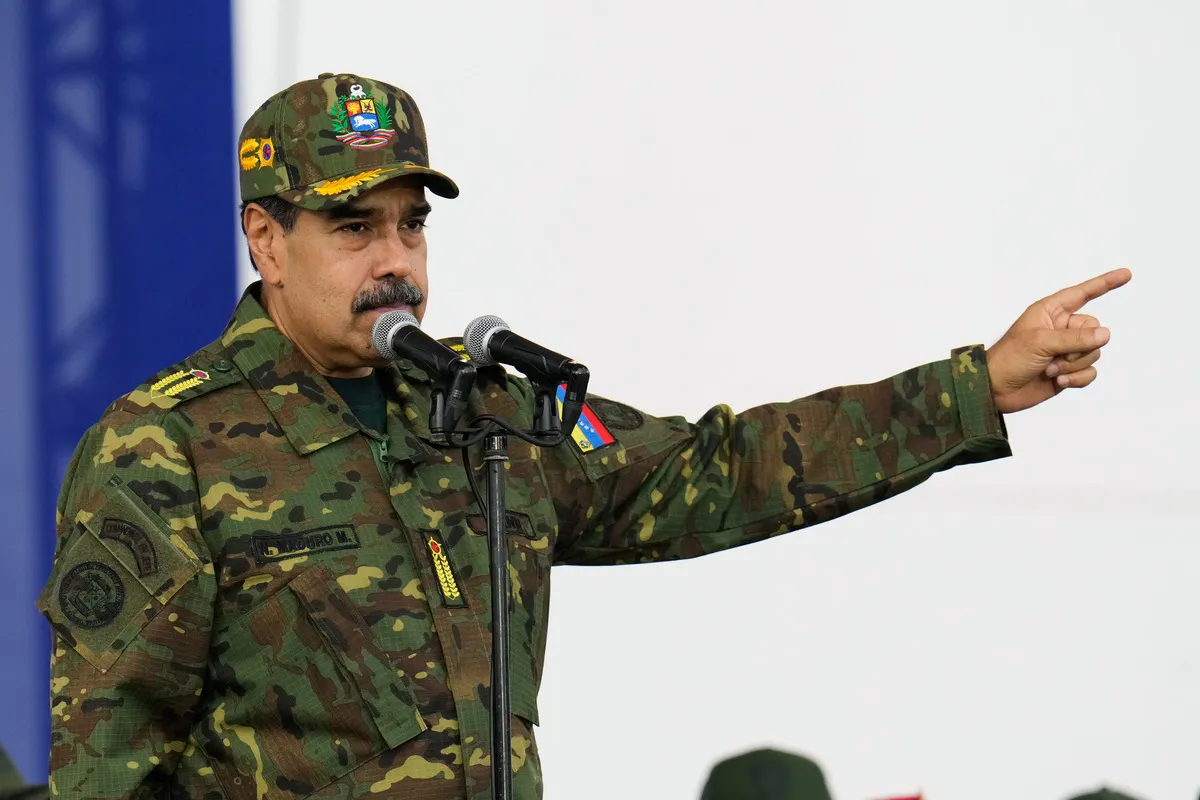
U.S. military assets close to Venezuela's coast have ballooned, with U.S. actions increasingly seen as a way to pressurize, and possibly to topple, Venezuela's authoritarian socialist leader, Nicolás Maduro. The world's largest aircraft carrier, the USS Gerald R. Ford, arrived in the Caribbean Sea earlier this month with its additional warships, thousands of personnel and extra stealth aircraft.
The U.S., which doesn't recognize Maduro as the winner of the country's 2024 elections, has accused him of heading a drugs cartel, which he denies.
Washington has offered a $50-million reward for information leading to Maduro's arrest. He has for years faced narcotrafficking charges in the U.S.
Venezuela has appealed for peace, but also carried out military drills and said it is prepared to respond to any American attack on the country.
Trump's plan for Venezuela remains unclear, and the president has not ruled out sending troops into the country. International observers, former officials and current lawmakers have raised serious concerns that the strikes violate international law.
Republican Senator Roger Wicker of Mississippi, who chairs the Senate Armed Services Committee, and Rhode Island Senator Jack Reed, the top Democrat on the committee, called on Friday for "vigorous oversight" after The Washington Post reported Defense Secretary Pete Hegseth had verbally ordered all crew members aboard a suspected drug vessel on September 2 to be killed.
Two people initially survived the first U.S. strike on suspected narcotrafficking vessels in the southern Caribbean, but were killed in a follow-up attack, the Post reported.
Hegseth called the report "fake news."
Trump spoke with Maduro at an unspecified point late last week by telephone, The New York Times reported on Friday.
What People Are Saying
Venezuelan Foreign Minister Yván Gil Pinto said on Saturday: "Venezuela will continue to fully exercise its sovereignty, protected by international law, through its airspace.
Update 11/30/25 6:05 a.m. ET: This article has been updated with additional information.
View 0 Comments
Submit Correction
View Editorial & AI Guidelines